Primavera
Sandro Botticelli · c. 1477–1482
Tempera on panel
Quick answer
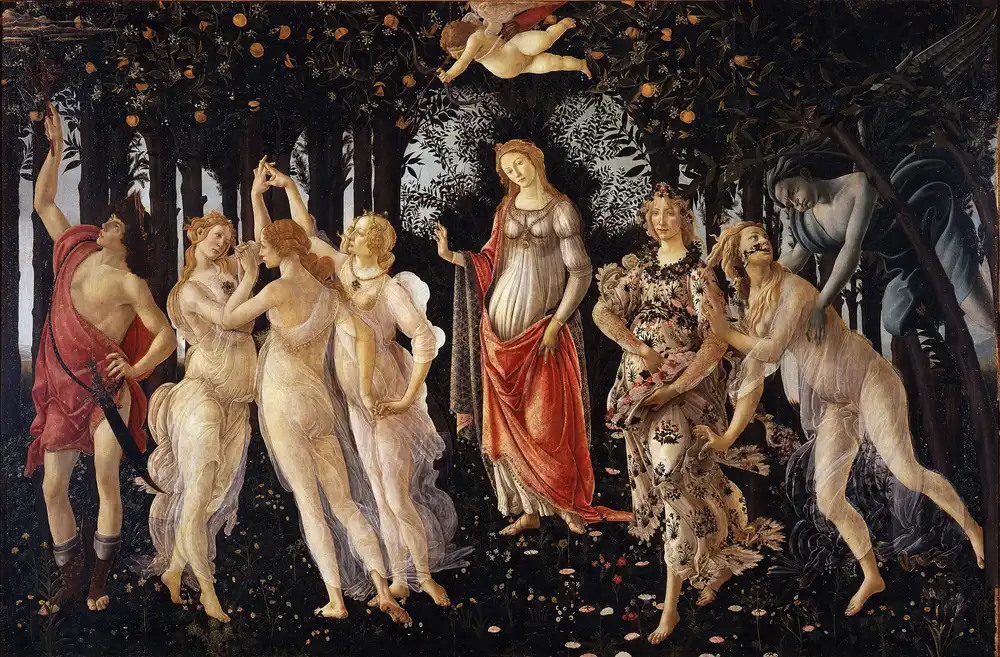
Primavera (c. 1477–1482) by Sandro Botticelli is in Uffizi Gallery, Florence. Primavera (meaning 'Spring') is a large tempera painting by Italian artist Sandro Botticelli, created around 1477–1482. It depicts a complex allegorical scene in a spring garden with nine mythological figures: Venus at the centre, the Three Graces dancing, Mercury dispersing clouds, the Hora of Spring dressing Flora, and the wind god Zephyr pursuing Chloris. The painting is in the Uffizi Gallery in Florence, Italy, and is displayed alongside Botticelli's Birth of Venus. Its exact meaning remains debated. World Museum Guide explains what you're looking at and how to see it.
Frequently asked questions
What does Primavera mean?
Primavera is the Italian word for Spring. The painting's conventional title simply refers to its subject — the coming of spring, represented through the transformation of Chloris (pursued by the wind god Zephyr) into Flora (the goddess of flowers), and the gathering of mythological figures in a spring garden. The allegorical meaning behind this scene has been debated for over 500 years.
Where is Primavera by Botticelli?
Primavera is in the Botticelli Rooms (Rooms 10–14) of the Uffizi Gallery in Florence, Italy, displayed alongside The Birth of Venus. Together they are the most visited works in the Uffizi. The gallery is at Piazzale degli Uffizi 6, Florence.
Who are the nine figures in Primavera?
From right to left: Zephyr (wind god, blue), pursuing Chloris (nymph, white), who is being transformed into Flora (goddess of flowers, flower-strewn dress). Venus stands at the centre under an arch of trees. Above her, Cupid aims an arrow. Three Graces dance at the left. At far left, Mercury (in winged helmet) disperses clouds with his caduceus. The figures represent different aspects of love, beauty, and natural renewal.
How old is Primavera?
Primavera was painted around 1477–1482, making it approximately 542–547 years old. It was created for the Medici family of Florence during the height of the Florentine Renaissance, probably for a villa rather than a church — reflecting the period's growing interest in pagan classical mythology as a subject for major artworks.
Why is Primavera significant?
Primavera is significant as one of the first large-scale mythological paintings of the Italian Renaissance — a work in which pagan classical mythology is treated with the seriousness and scale previously reserved for religious subjects. It demonstrates the Florentine Neoplatonist synthesis of Christian and classical thought: the figures represent philosophical truths about love, beauty, and the soul using the poetic language of ancient myth.