The Anatomy Lesson of Dr. Nicolaes Tulp
Rembrandt van Rijn · 1632
Oil on canvas
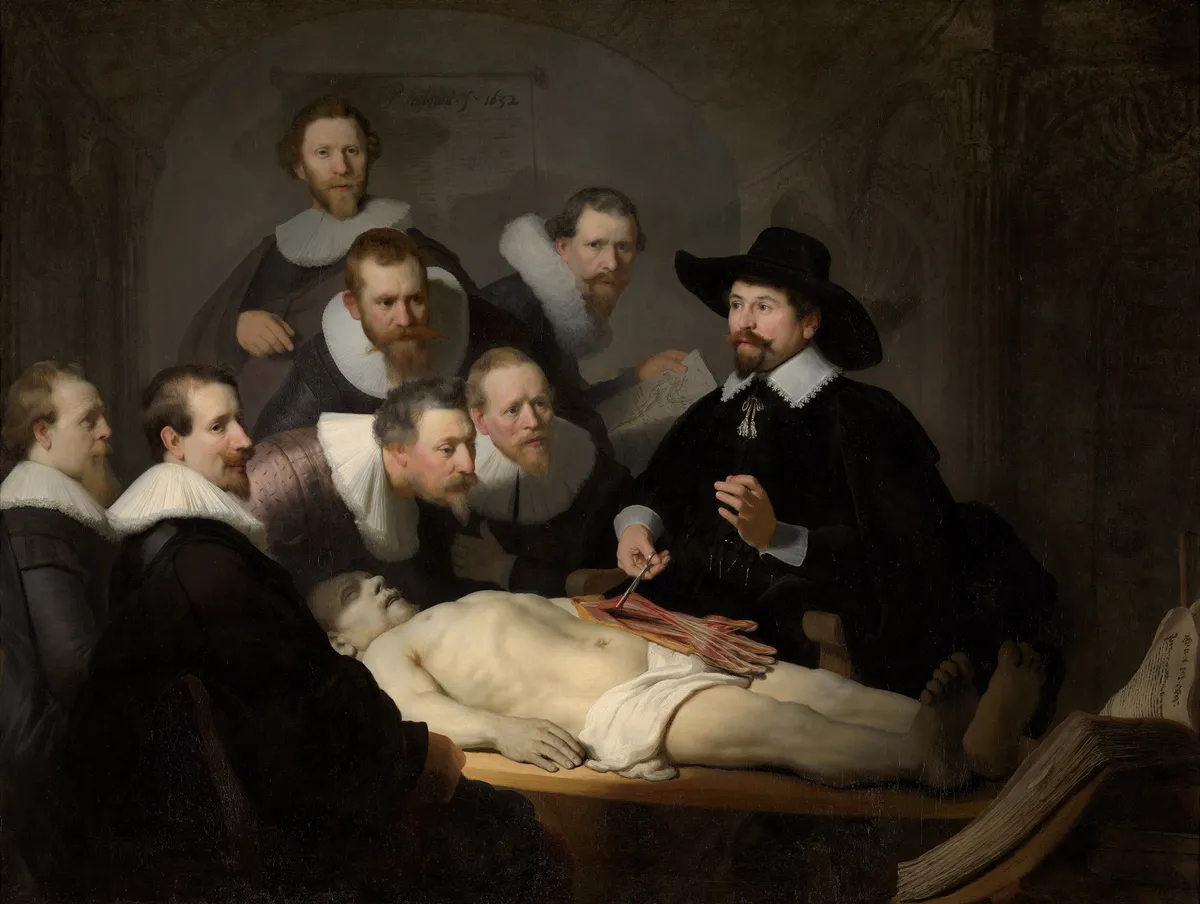
Quick answer
The Anatomy Lesson of Dr. Nicolaes Tulp (1632) by Rembrandt van Rijn is in Mauritshuis, The Hague. The Anatomy Lesson of Dr. Nicolaes Tulp is an oil painting by Rembrandt van Rijn, painted in 1632 when the artist was 26 years old. It depicts Dr. Nicolaes Tulp, the official city anatomist of Amsterdam, performing a public dissection of the arm of a recently executed criminal, Aris Kindt. Seven observers crowd around the table. The painting is in the Mauritshuis in The Hague, Netherlands, and is Rembrandt's first major group portrait and one of his earliest masterpieces. World Museum Guide explains what you're looking at and how to see it.
Frequently asked questions
Where is The Anatomy Lesson?
The Anatomy Lesson of Dr. Nicolaes Tulp is in Room 11 of the Mauritshuis museum in The Hague, Netherlands — displayed near Vermeer's Girl with a Pearl Earring in one of the world's great collections of Dutch Golden Age painting.
Who is Dr. Nicolaes Tulp?
Nicolaes Tulp (1593–1674) was a Dutch surgeon and Amsterdam politician who served as the city's praelector anatomiae (official anatomist) from 1628 to 1653. He was responsible for conducting the annual public anatomy lesson — a civic and educational event held in the anatomical theatre. He is also famous for being one of the characters in Rembrandt's painting and for writing influential medical case studies.
Was the cadaver in The Anatomy Lesson a real person?
Yes. The body is that of Aris Kindt (real name Adriaan Adriaanszoon), a convicted thief and robber who was hanged on the morning of the anatomy lesson, 31 January 1632. The use of executed criminals' bodies for public dissection was the standard practice of the period — it was both a legal punishment for capital crimes and a medical necessity, as no other source of cadavers was available.
Why is The Anatomy Lesson considered significant?
It is significant for several reasons: it was Rembrandt's first major breakthrough work; it transformed the Dutch group portrait by replacing the static lineup of heads with a dynamic, theatrically lit scene; and it is one of the first major paintings to depict scientific practice as a subject worthy of monumental treatment. It also records an actual historical event — a specific anatomy lesson on a specific day — with unusual documentary specificity.
How old was Rembrandt when he painted The Anatomy Lesson?
Rembrandt was 26 years old when he painted The Anatomy Lesson in 1632. He had recently moved from his hometown of Leiden to Amsterdam, which was the commercial and cultural capital of the Dutch Republic. The commission was a major breakthrough — it established his reputation in Amsterdam and led to many further portrait commissions from the city's merchant and professional class.