The Fighting Temeraire
J.M.W. Turner · 1839
Oil on canvas
Quick answer
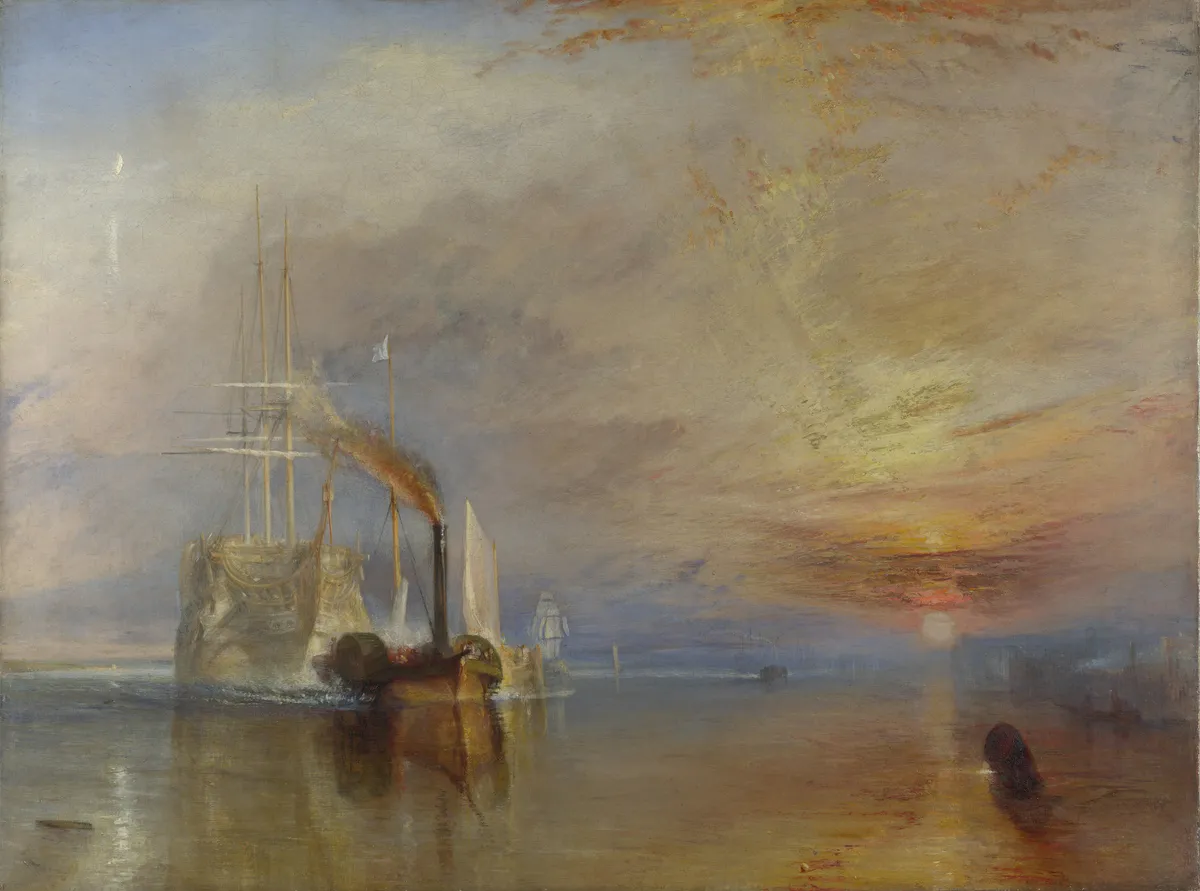
The Fighting Temeraire (1839) by J.M.W. Turner is in The National Gallery, London. The Fighting Temeraire is an oil painting by English Romantic artist J.M.W. Turner, completed in 1839. It depicts the HMS Temeraire — a veteran of the Battle of Trafalgar (1805) — being towed by a small steam tug to a breaker's yard on the Thames. The ghostly white sailing ship contrasts with the dark, industrial steam tug against a blazing sunset sky. The painting is displayed at the National Gallery in London and was voted the greatest painting in British collections in a 2005 public poll. World Museum Guide explains what you're looking at and how to see it.
Frequently asked questions
Where is The Fighting Temeraire?
The Fighting Temeraire is displayed in Room 34 of the National Gallery in London, alongside Constable's Hay Wain. Turner bequeathed it to the British nation on his death in 1851, stipulating it should never leave the country, and it has been in the National Gallery since 1856.
What happened to the real HMS Temeraire?
HMS Temeraire fought heroically at the Battle of Trafalgar on 21 October 1805, coming alongside the French ship Redoubtable and preventing it from sinking Nelson's Victory. After the battle, it served in various capacities before being declared obsolete. In 1838 it was sold to John Beatson, a breaker, for £5,530 and towed to Rotherhithe to be broken up for timber and metals. Nothing of the ship now survives.
Why is the steam tug dark in The Fighting Temeraire?
Turner painted the steam tug dark and belching black smoke to contrast it with the ghostly, luminous whiteness of the sailing ship. The contrast is symbolic: the dirty, industrial, mechanical steam age displacing the natural, graceful age of sail. The tug is small and ungainly; the Temeraire towers over it even in its ghostly, diminished final state.
Is The Fighting Temeraire historically accurate?
The scene is emotionally accurate but physically imaginative. Turner likely saw the Temeraire's final journey and was inspired by it, but the painting is not a documentary record — the sunset, the positioning of the vessels, and the luminous quality of the sailing ship are artistic interpretations. The direction of travel may also be reversed for symbolic purposes.
What does The Fighting Temeraire represent?
The painting represents the end of the age of sail and the arrival of the industrial age. On a personal level it may reflect Turner's own awareness of aging and mortality — he was 64 when he painted it. More broadly it is an elegy for a world passing away: the great sailing warship, which had participated in Britain's greatest naval victory, being hauled to destruction by a small, ugly modern machine.