The Thinker
Auguste Rodin · 1902 (large version)
Bronze
Quick answer
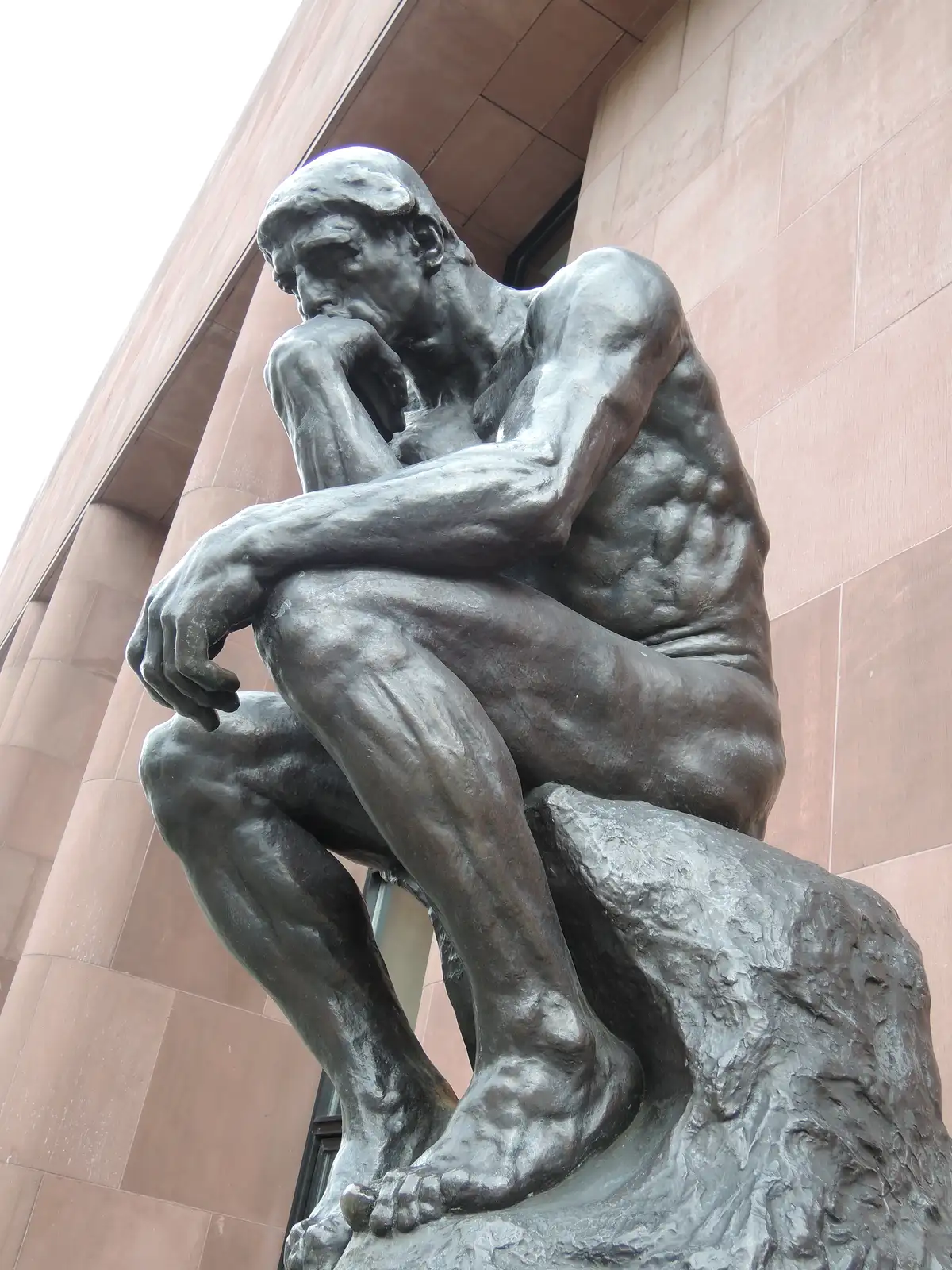
The Thinker (1902 (large version)) by Auguste Rodin is in Musée Rodin, Paris. The Thinker is a bronze sculpture by French artist Auguste Rodin, originally created in 1880 as part of his monumental Gates of Hell and enlarged to its current 189 cm height in 1902. It depicts a male figure seated in deep contemplation, chin resting on one fist. As a bronze cast, multiple authorised versions exist worldwide. The most significant are at the Musée Rodin in Paris and the Rodin Museum in Philadelphia. It is the most recognised sculpture of the modern era. World Museum Guide explains what you're looking at and how to see it.
Frequently asked questions
Where is The Thinker?
Multiple authorised bronze casts exist worldwide. The most significant are: the garden of the Musée Rodin in Paris (also inside the museum), the Rodin Museum in Philadelphia, the Kunsthaus Zürich in Switzerland, the Ny Carlsberg Glyptotek in Copenhagen, and museums in Buenos Aires, São Paulo, Tokyo, and many others. Approximately 28 large-scale authorised casts are recognised by the Musée Rodin.
What is The Thinker thinking about?
In Rodin's original conception as 'The Poet' for the Gates of Hell, the figure is Dante Alighieri contemplating the scenes of Hell playing out below him. More broadly, Rodin intended the figure to represent the creative act of artistic and intellectual effort — the poem not yet written, the thought not yet formed, the intense mental labour that precedes expression. The physical tension of the pose embodies thinking as a bodily act.
How many copies of The Thinker exist?
Approximately 28 large-scale (189 cm) authorised bronze casts are recognised worldwide, authorised by the Musée Rodin in Paris. The Musée Rodin holds the original rights and continues to authorise new casts (with 'Musée Rodin' stamped on them). An unknown number of unauthorised copies and smaller-scale reproductions also exist globally.
Why is The Thinker's pose unusual?
The Thinker rests his chin on the back of his right fist (not his left as might be expected) — which requires the arm to cross the body in an awkward twist. This creates maximum physical tension and suggests that thinking is effortful and even painful. Rodin based the pose on his study of Michelangelo's sculptures of the Medici in Florence, incorporating that Renaissance physicality into a modern subject.
Was The Thinker ever damaged?
Yes. The cast at the Cleveland Museum of Art was damaged by a pipe bomb explosion in March 1970, planted by an anti-Vietnam War group. The base of the sculpture was destroyed and partially repaired, but the damage was later preserved deliberately as a historical record. The cast remains on display with its damaged base. The Rodin Museum cast in Paris was also involved in a theft attempt in 2010, when thieves cut off its thumb.