Wanderer Above the Sea of Fog
Caspar David Friedrich · c. 1818
Oil on canvas
Quick answer
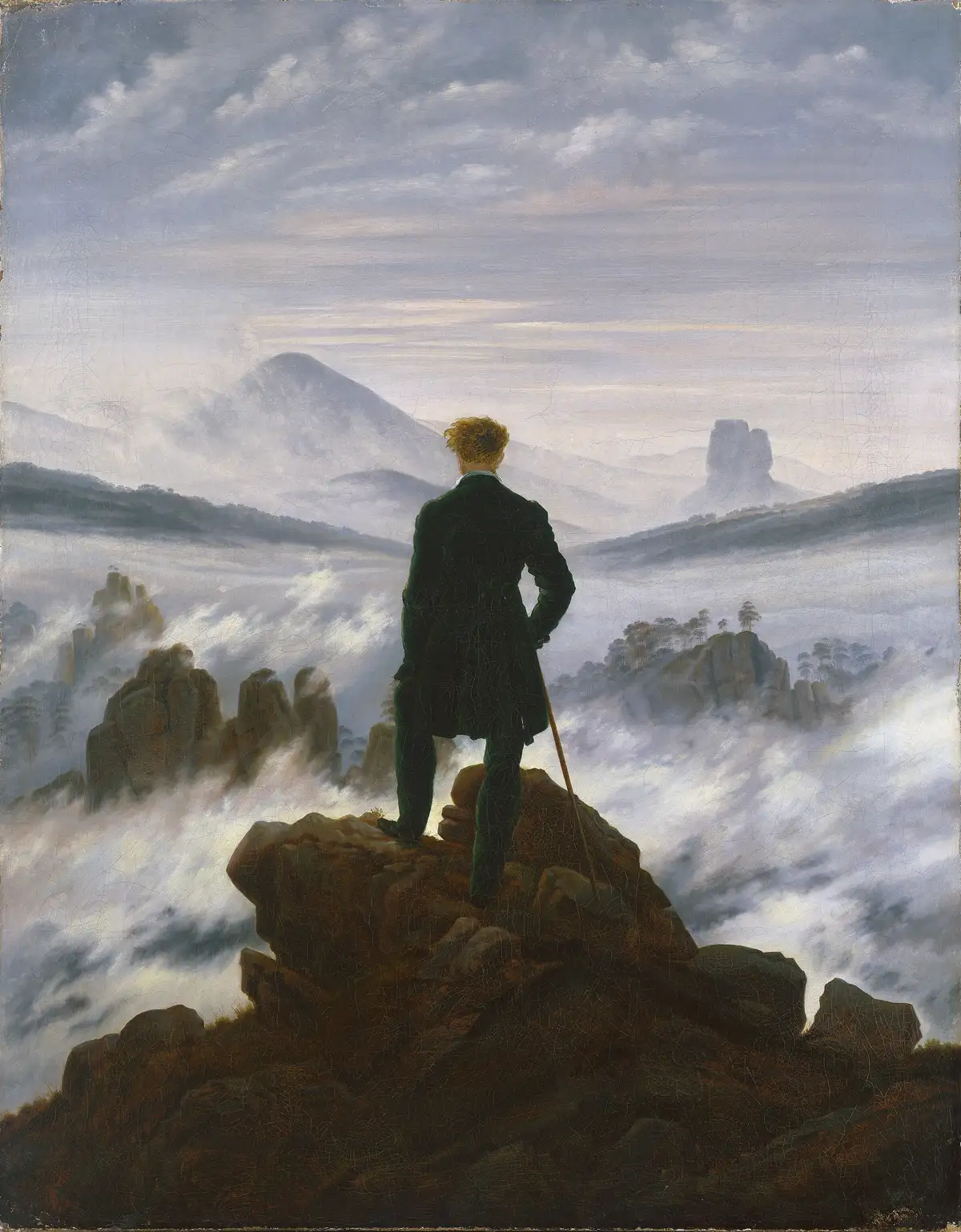
Wanderer Above the Sea of Fog (c. 1818) by Caspar David Friedrich is at Hamburger Kunsthalle, Hamburg. Wanderer Above the Sea of Fog is an oil painting by German Romantic artist Caspar David Friedrich, created around 1818. It depicts a man in a green coat standing on a rocky peak, looking out over a landscape dissolving in fog. His back is to the viewer. The painting is at the Hamburger Kunsthalle in Hamburg, Germany. It is the most iconic image of German Romanticism and of the Romantic concept of the sublime. World Museum Guide explains what you're looking at and how to see it.
Where to see it
Hamburger Kunsthalle — Hamburg, Germany
One of Germany's largest art museums — not yet covered by a full visitor guide on World Museum Guide.
This venue is not yet covered by a full World Museum Guide page — we link to the official site for tickets and hours.
Frequently asked questions
Where is Wanderer Above the Sea of Fog?
The painting is at the Hamburger Kunsthalle in Hamburg, Germany. The museum is at Glockengiesserwall 5, near Hamburg's main station. It holds one of Germany's most important collections of Old Masters, German Romantic paintings, and modern art.
Who is the man in Wanderer Above the Sea of Fog?
The figure's identity has never been established. Friedrich often used his own likeness for his Rückenfigur characters, and this has been proposed for the Wanderer. Another theory identifies the figure as Saxon military officer Colonel Friedrich Gotthard von Brincken, who died fighting Napoleon in 1813 and may have been a patron or subject of the painting. No documentary evidence confirms either identification.
What does Wanderer Above the Sea of Fog mean?
The painting depicts the Romantic experience of the sublime — the overwhelming sensation of standing before something vast, powerful, and incomprehensible that both diminishes and exalts the individual. The wanderer stands alone on the highest peak, surveying a landscape that dissolves into formlessness below him. He is simultaneously master of the view and dwarfed by it. The fog represents the unknown, the unconscious, the divine, or simply the limits of human understanding.
Why does Friedrich show the figure's back?
Friedrich's back-turned figures (Rückenfiguren) are his signature technique. By showing the figure's back, Friedrich prevents the viewer from reading the character's expression and forces them to project their own imagination into the scene — to see through the figure's eyes, not to observe the figure as a separate personality. This device transforms landscape painting into an invitation to psychological and spiritual self-reflection.
What style is Wanderer Above the Sea of Fog?
The painting is German Romanticism — the movement that dominated German cultural life from the 1790s to the 1840s. German Romantic painters, poets, and philosophers were deeply interested in nature as a spiritual experience, the individual's confrontation with the infinite, and the concept of the sublime. Friedrich is the central painter of German Romanticism and the Wanderer is its defining image.