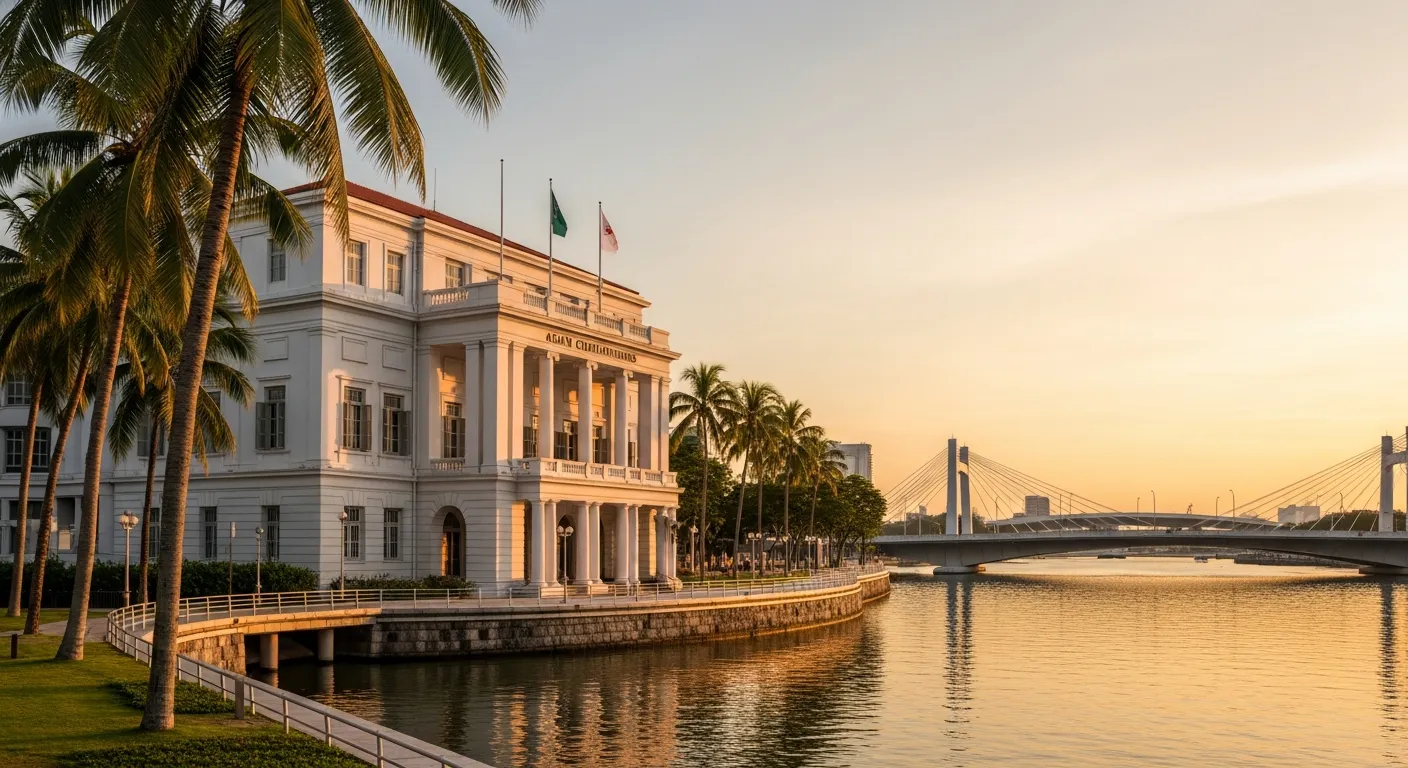
Asian Civilisations Museum
Singapore · Singapore · Founded 1997
Good for: History Enthusiasts · Art Lovers · First-timers
1997
Year Founded
60,000
Tang Shipwreck Ceramics
2 hours
Recommended Visit
Quick answer
Asian Civilisations Museum in Singapore, Singapore — the Asian Civilisations Museum sits in the Empress Place Building, a 19th-century neoclassical landmark on the north bank of the Singapore River. Open Daily: 10:00 AM – 7:00 PM (Friday until 9:00 PM). Admission: ✓ S$20 standard adult admission; free for Singapore citizens and PRs. World Museum Guide covers the highlights, getting there, and how long to allow (2 hours).
Verified 2026-06-30 against official sources.
About Asian Civilisations Museum
The Asian Civilisations Museum sits in the Empress Place Building, a 19th-century neoclassical landmark on the north bank of the Singapore River. Founded in 1997, it is the only museum in the region devoted to exploring the rich artistic heritage of Asia, especially the ancestral cultures of Singaporeans.
Its galleries cover trade, faith, and materials from across Asia, with celebrated holdings from the Tang Shipwreck — cargo from a 9th-century Arab dhow recovered off Belitung Island containing some 60,000 ceramics. Christian and Islamic art collections reflect Singapore's position at the crossroads of civilisations.
Free admission for Singapore citizens and PRs, and a central location steps from the Fullerton Hotel and the river, make it one of the easiest museums to combine with a walk through colonial Singapore.
2 hours highlights route
A focused route through 4 must-see highlights at Asian Civilisations Museum without museum fatigue. · 2 hours
- 1
Tang Shipwreck Gold Cup
📍 Maritime Trade Gallery, Level 1
A gilt-silver wine cup from the Belitung shipwreck — part of the most important early Chinese trade cargo ever recovered, proving maritime Silk Road connections a millennium ago.
- 2
Tang Shipwreck Ceramics
📍 Maritime Trade Gallery, Level 1
Thousands of Changsha painted bowls recovered intact from the shipwreck — displayed in quantity to convey the scale of medieval Indian Ocean trade.
- 3
Khmer Vishnu
📍 Faith and Belief Gallery
A sandstone figure of Vishnu from the Angkor period — representative of the museum's strong Southeast Asian sculpture collection.
- 4
Empress Place Building
📍 Exterior and Riverfront
The neoclassical building itself — designed as a courthouse and government offices — is a national monument and one of the finest colonial buildings on the Singapore River.
Masterworks & must-see highlights
The works that define Asian Civilisations Museum — and why they matter.
Tang Shipwreck Gold Cup
Tang dynasty · c. 826 CE
📍 Maritime Trade Gallery, Level 1
A gilt-silver wine cup from the Belitung shipwreck — part of the most important early Chinese trade cargo ever recovered, proving maritime Silk Road connections a millennium ago.
Tang Shipwreck Ceramics
Changsha kilns · c. 826 CE
📍 Maritime Trade Gallery, Level 1
Thousands of Changsha painted bowls recovered intact from the shipwreck — displayed in quantity to convey the scale of medieval Indian Ocean trade.
Khmer Vishnu
Khmer · c. 11th century
📍 Faith and Belief Gallery
A sandstone figure of Vishnu from the Angkor period — representative of the museum's strong Southeast Asian sculpture collection.
Empress Place Building
Colonial architecture · 1865
📍 Exterior and Riverfront
The neoclassical building itself — designed as a courthouse and government offices — is a national monument and one of the finest colonial buildings on the Singapore River.
Collections & highlights
- • Tang Shipwreck cargo from a 9th-century vessel
- • Khmer and Hindu-Buddhist sculpture
- • Chinese export porcelain galleries
- • Christian and Islamic art collections
- • Empress Place riverfront architecture
Frequently asked questions
What is the Tang Shipwreck?
It is the cargo of a 9th-century Arab dhow recovered off Belitung Island, including some 60,000 ceramics — the most important early Chinese trade ceramics ever found.
Is it walkable from National Gallery Singapore?
Yes, it is a five-minute walk across the Padang and Cavenagh Bridge.
How long should I spend at Asian Civilisations Museum?
Plan 2–3 hours for the highlights. Add time for temporary exhibitions, the museum shop, and café.
What is Asian Civilisations Museum best known for?
The Asian Civilisations Museum sits in the Empress Place Building, a 19th-century neoclassical landmark on the north bank of the Singapore River. Key highlights include Tang Shipwreck cargo from a 9th-century vessel, Khmer and Hindu-Buddhist sculpture, Chinese export porcelain galleries.
How do I get tickets for Asian Civilisations Museum?
✓ S$20 standard adult admission; free for Singapore citizens and PRs Tickets are usually available on the day, but booking online saves queue time in peak season. Official site: https://www.nhb.gov.sg/acm
How was the Tang Shipwreck discovered?
In 1998, Indonesian sea cucumber divers found the wreck off Belitung Island. The cargo of an Arab dhow included 60,000 Changsha ceramics, gold and silver vessels, and bronze mirrors — all dated to approximately 826 CE, proving early trade between China and the Middle East.
Is ACM the same as the Asian Art Museum?
The Asian Civilisations Museum (ACM) is Singapore's national museum for pan-Asian art and archaeology. It is distinct from the National Gallery (Southeast Asian and Singapore art) and the ArtScience Museum (temporary exhibitions).
Can I walk from ACM to the Merlion?
Yes — a 10-minute walk along the Singapore River from Empress Place to Merlion Park, passing the Fullerton Hotel and the Cavenagh Bridge.
World Animal Rescue Network
Protect sea turtles
Sea turtles need safe nesting beaches and hatchling protection from pollution and illegal trade. Donations fund patrols, rescue, and release. Please consider a donation to support this work.
Enjoying our free guides? Support World Museum Guide — optional, and every guide stays free.