Capitoline Museums
Good for: History Enthusiasts · Art Lovers · First-timers
1471
Founded
World's first
Public Museum
2–3 hours
Recommended Visit
Quick answer
Capitoline Museums in Rome, Italy — founded in 1471 when Pope Sixtus IV donated a group of bronzes to the people of Rome, the Capitoline Museums became the first public museum in the world. Open Daily: 9:30 AM – 7:30 PM. Admission: €16 standard admission. World Museum Guide covers the highlights, getting there, and how long to allow (2–3 hours).
Verified 2026-06-30 against official sources.
About Capitoline Museums
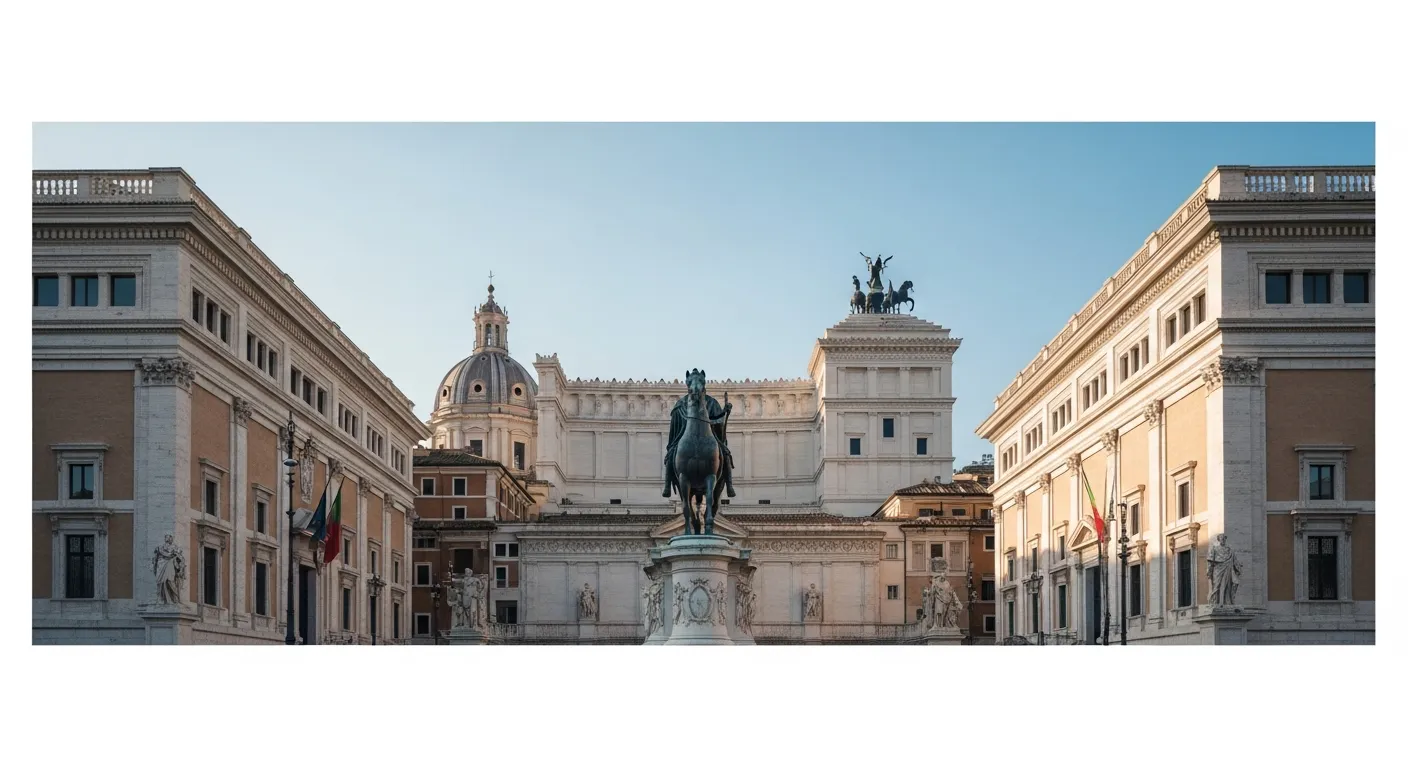
The Capitoline Museums on Rome's Campidoglio are the oldest public museum in the world — founded in 1471 when Pope Sixtus IV donated a group of bronze statues to the people of Rome. Michelangelo redesigned the piazza in 1536, creating the trapezoidal space with the equestrian Marcus Aurelius (now a copy; the original is inside) as its centrepiece.
The museums occupy two palaces — Palazzo dei Conservatori and Palazzo Nuovo — connected by an underground gallery through the Tabularium, the ancient Roman archive whose windows offer an unforgettable view across the Roman Forum. The collection spans ancient Roman sculpture, Renaissance painting, and medieval art.
The She-Wolf (Capitoline Wolf) — the bronze symbol of Rome suckling Romulus and Remus — is the collection's most iconic object, though the twins were added in the 15th century. The Dying Gaul, the Capitoline Venus, and the colossal head of Constantine are among the supreme masterpieces of ancient sculpture anywhere.
A combined ticket with the Centrale Montemartini (an former power plant displaying classical sculpture among industrial machinery) offers excellent value. The Campidoglio piazza itself is one of Rome's most beautiful public spaces — free to visit and best enjoyed at sunset.
2–3 hours highlights route
A focused route through 4 must-see highlights at Capitoline Museums without museum fatigue. · 2–3 hours
- 1
Capitoline Wolf
📍 Palazzo dei Conservatori, Hall of the She-Wolf
The bronze she-wolf suckling Romulus and Remus — the symbol of Rome.
- 2
The Dying Gaul
📍 Palazzo Nuovo, Hall of the Galatian
A Roman marble copy of a Hellenistic bronze depicting a wounded Galatian warrior in his final moments — a masterpiece of pathos and anatomical observation that influenced sculpture for two millennia.
- 3
Equestrian Statue of Marcus Aurelius
📍 Palazzo dei Conservatori, Marcus Aurelius Exedra
The only surviving bronze equestrian statue from ancient Rome — preserved because it was mistakenly identified as Constantine the Great.
- 4
The Fortune Teller
📍 Pinacoteca, Palazzo dei Conservatori
Caravaggio's scene of a gypsy girl reading a young man's palm while pickpocketing his ring — painted with the dramatic chiaroscuro that revolutionised Baroque painting.
Masterworks & must-see highlights
The works that define Capitoline Museums — and why they matter.
Capitoline Wolf
Etruscan · c. 5th century BCE
📍 Palazzo dei Conservatori, Hall of the She-Wolf
The bronze she-wolf suckling Romulus and Remus — the symbol of Rome. The wolf is Etruscan; the twins were added in the 15th century by Antonio Pollaiolo. One of the most reproduced images in Western civilisation.
The Dying Gaul
Roman copy · c. 230 BCE original
📍 Palazzo Nuovo, Hall of the Galatian
A Roman marble copy of a Hellenistic bronze depicting a wounded Galatian warrior in his final moments — a masterpiece of pathos and anatomical observation that influenced sculpture for two millennia.
Equestrian Statue of Marcus Aurelius
Roman · c. 175 CE
📍 Palazzo dei Conservatori, Marcus Aurelius Exedra
The only surviving bronze equestrian statue from ancient Rome — preserved because it was mistakenly identified as Constantine the Great. The original now rests in this climate-controlled glass hall; a copy stands in the piazza.
The Fortune Teller
Caravaggio · c. 1595
📍 Pinacoteca, Palazzo dei Conservatori
Caravaggio's scene of a gypsy girl reading a young man's palm while pickpocketing his ring — painted with the dramatic chiaroscuro that revolutionised Baroque painting. One of two Caravaggios in the Capitoline collection.
Collections & highlights
- • Capitoline Wolf — symbol of Rome
- • Dying Gaul and Capitoline Venus — ancient sculpture
- • Marcus Aurelius equestrian statue — original bronze
- • Caravaggio — The Fortune Teller and St John the Baptist
- • Tabularium — Roman Forum panorama gallery
- • Colossal head and hand of Constantine
- • Pinacoteca — Titian, Veronese, and Guercino
- • Michelangelo's Piazza del Campidoglio
Frequently asked questions
Where can I see the original Marcus Aurelius?
The original gilded bronze is indoors at the Capitoline; a copy stands in the piazza.
Is there a viewpoint over the Forum?
Yes, the Tabularium gallery offers an unforgettable view across the Roman Forum.
How long should I spend at Capitoline Museums?
Plan 2–3 hours for the highlights. Add time for temporary exhibitions, the museum shop, and café.
What is Capitoline Museums best known for?
Founded in 1471 when Pope Sixtus IV donated a group of bronzes to the people of Rome, the Capitoline Museums became the first public museum in the world. Michelangelo redesigned the surrounding piazza in 1536. Key highlights include Capitoline Wolf — symbol of Rome, Dying Gaul and Capitoline Venus — ancient sculpture, Marcus Aurelius equestrian statue — original bronze.
How do I get tickets for Capitoline Museums?
€16 standard admission Tickets are usually available on the day, but booking online saves queue time in peak season. Official site: https://www.museicapitolini.org/en
Is the Marcus Aurelius statue in the piazza the original?
No — the equestrian statue in the piazza is a modern copy. The original 2nd-century bronze is inside the Palazzo dei Conservatori in a climate-controlled glass hall on the ground floor. The original was moved indoors in 1981 to protect it from pollution.
What is the Tabularium view?
The Tabularium is the ancient Roman archive connecting the two palaces. Its windows overlook the Roman Forum from above — one of the most spectacular views in Rome. The gallery is included with standard admission and is often the highlight of a visit.
Capitoline Museums or Vatican Museums — which for ancient Roman art?
The Capitoline is better for ancient Roman and Greek sculpture — the Dying Gaul, Capitoline Venus, and Marcus Aurelius are unmatched. The Vatican excels in Renaissance art and the Sistine Chapel. For ancient Rome specifically, the Capitoline is essential and can be seen in 2–3 hours versus a full day at the Vatican.
World Animal Rescue Network
Rescue moon bears
Moon bears suffer in bile farms and illegal trade across Asia. Donations help fund sanctuary care, rescue operations, and advocacy. Please consider a donation to support this work.
Enjoying our free guides? Support World Museum Guide — optional, and every guide stays free.