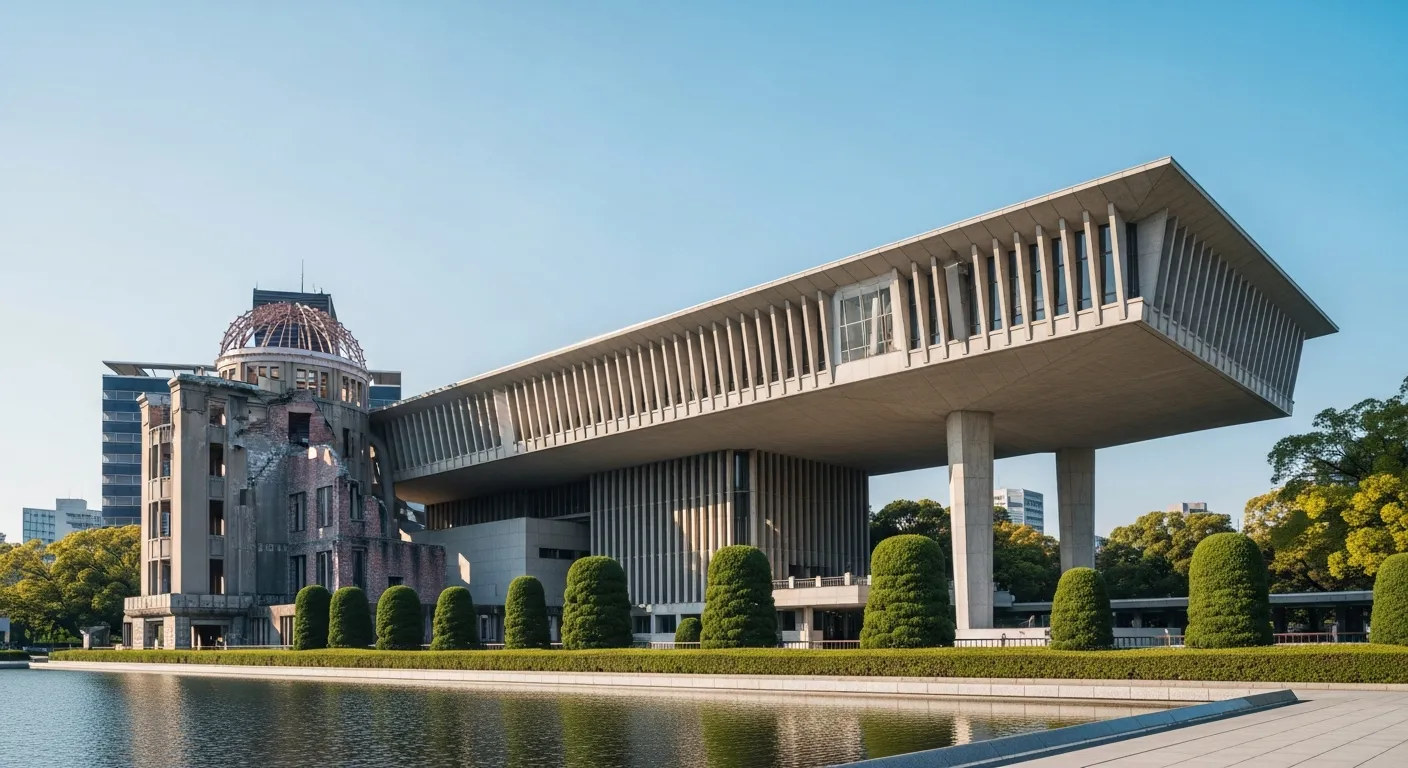
Hiroshima Peace Memorial Museum
Hiroshima · Japan · Founded 1955
Good for: History Enthusiasts
UNESCO
World Heritage Site
¥200
Admission
1.5–2 hours
Recommended Visit
Quick answer
Hiroshima Peace Memorial Museum in Hiroshima, Japan — designed by Kenzo Tange and opened in 1955, the Hiroshima Peace Memorial Museum sits within Peace Memorial Park alongside the Cenotaph and the preserved Atomic Bomb Dome — a UNESCO World Heritage Site. Open Daily: 8:30 AM – 6:00 PM (extended in summer; until 5:00 PM in winter). Admission: ¥200 standard admission. World Museum Guide covers the highlights, getting there, and how long to allow (1.5–2 hours).
Verified 2026-06-30 against official sources.
About Hiroshima Peace Memorial Museum
Designed by Kenzo Tange and opened in 1955, the Hiroshima Peace Memorial Museum sits within Peace Memorial Park alongside the Cenotaph and the preserved Atomic Bomb Dome — a UNESCO World Heritage Site.
The exhibitions document the human and material consequences of the atomic bombing of 6 August 1945 through personal effects, photographs, survivor testimony, and scientific data. The museum's mission is not only remembrance but advocacy for nuclear abolition.
Renovated galleries reopened in 2019 with improved English interpretation and a more focused narrative. The experience is emotionally intense — museum staff recommend visitors be at least middle-school age.
1.5–2 hours highlights route
A focused route through 4 must-see highlights at Hiroshima Peace Memorial Museum without museum fatigue. · 1.5–2 hours
- 1
Tricycle and Helmet of Shinichi Tetsutani
📍 Main Building, East Wing
A three-year-old boy's tricycle and helmet — Shinichi was riding in his garden when the bomb fell.
- 2
Lunch Box with Charred Remains
📍 Main Building, East Wing
A steel lunch box containing carbonised rice and peas — a student's meal that was being prepared when the bomb detonated.
- 3
Atomic Bomb Dome View
📍 View from museum and park
The skeleton of the Hiroshima Prefectural Industrial Promotion Hall — the only structure left standing near the hypocentre, preserved as a UNESCO World Heritage Site and symbol of the city.
- 4
Survivor Testimony Booths
📍 Main Building, West Wing
Video recordings of atomic bomb survivors (hibakusha) sharing their experiences — a living archive that grows as new testimonies are added each year.
Masterworks & must-see highlights
The works that define Hiroshima Peace Memorial Museum — and why they matter.
Tricycle and Helmet of Shinichi Tetsutani
Personal effects · 1945
📍 Main Building, East Wing
A three-year-old boy's tricycle and helmet — Shinichi was riding in his garden when the bomb fell. His father buried the tricycle with him, then exhumed it for the museum decades later.
Lunch Box with Charred Remains
Personal effects · 1945
📍 Main Building, East Wing
A steel lunch box containing carbonised rice and peas — a student's meal that was being prepared when the bomb detonated. One of the most visceral objects in the museum.
Atomic Bomb Dome View
Preserved ruins · 1945
📍 View from museum and park
The skeleton of the Hiroshima Prefectural Industrial Promotion Hall — the only structure left standing near the hypocentre, preserved as a UNESCO World Heritage Site and symbol of the city.
Survivor Testimony Booths
Hibakusha testimony · ongoing
📍 Main Building, West Wing
Video recordings of atomic bomb survivors (hibakusha) sharing their experiences — a living archive that grows as new testimonies are added each year.
Collections & highlights
- • Personal effects of bombing victims
- • Atomic Bomb Dome UNESCO site
- • Survivor testimony archive
- • Peace Memorial Park and Cenotaph
- • Reconstructed post-blast city model
Frequently asked questions
Is the museum suitable for young children?
The exhibits are emotionally intense; museum staff recommend visitors be at least middle-school age.
Is the A-Bomb Dome part of the museum?
It is preserved as a UNESCO World Heritage Site adjacent to the museum.
How long should I spend at Hiroshima Peace Memorial Museum?
Plan 2–3 hours for the highlights. Add time for temporary exhibitions, the museum shop, and café.
What is Hiroshima Peace Memorial Museum best known for?
Designed by Kenzo Tange and opened in 1955, the museum sits within Hiroshima's Peace Memorial Park alongside the Cenotaph and the preserved Atomic Bomb Dome. Key highlights include Personal effects of bombing victims, Atomic Bomb Dome UNESCO site, Survivor testimony archive.
How do I get tickets for Hiroshima Peace Memorial Museum?
¥200 standard admission Tickets are usually available on the day, but booking online saves queue time in peak season. Official site: https://hpmmuseum.jp/?lang=eng
Should I visit the museum or the Atomic Bomb Dome first?
Most visitors walk through Peace Memorial Park first, viewing the Atomic Bomb Dome and Cenotaph, then enter the museum with that context. The dome is free and always accessible; the museum provides the human stories.
Is the Hiroshima Peace Memorial Museum depressing?
It is deeply moving and sombre — not depressing in a gratuitous sense. The museum's tone is educational and forward-looking, emphasising peace and nuclear abolition rather than despair.
Can I visit Hiroshima as a day trip from Kyoto or Osaka?
Yes — the Shinkansen from Kyoto takes approximately 1 hour 40 minutes to Hiroshima. Allow 3–4 hours for the museum, park, and dome. Many visitors combine with Miyajima Island in a long day.
World Animal Rescue Network
End the dog and cat meat trade
Dogs and cats still suffer in the meat trade in parts of Asia. Donations support rescue, shelter care, and advocacy to end the trade. Please consider a donation to support this work.
Enjoying our free guides? Support World Museum Guide — optional, and every guide stays free.