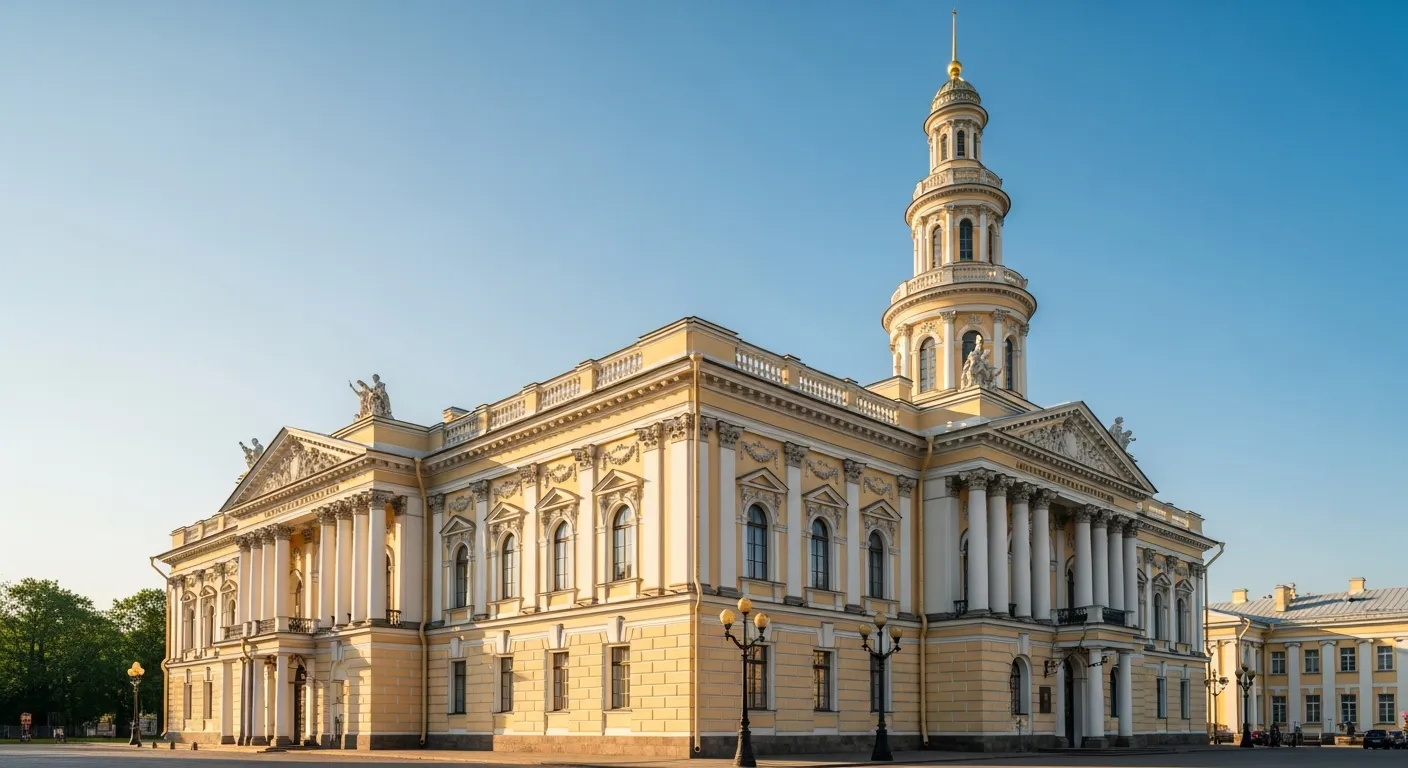
Kunstkamera (Peter the Great Museum of Anthropology and Ethnography)
Saint Petersburg · Russia · Founded 1714
Good for: History Enthusiasts · Art Lovers
1714
Founded
2 million+
Objects in Collection
1.5–2 hours
Recommended Visit
Quick answer
Kunstkamera (Peter the Great Museum of Anthropology and Ethnography) in Saint Petersburg, Russia — founded by Peter the Great in 1714 and opened to the public in 1727, the Kunstkamera is the oldest museum in Russia. Open Tuesday to Sunday: 10:00 AM – 6:00 PM (Closed Mondays). Admission: 400 RUB standard admission. World Museum Guide covers the highlights, getting there, and how long to allow (1.5–2 hours).
Verified 2026-06-30 against official sources.
About Kunstkamera (Peter the Great Museum of Anthropology and Ethnography)
The Kunstkamera — officially the Peter the Great Museum of Anthropology and Ethnography — is the oldest museum in Russia, founded by Peter the Great in 1714 and opened to the public in 1727. Its baroque blue-and-white tower on the eastern tip of Vasilyevsky Island is one of Saint Petersburg's most distinctive landmarks.
Peter established the museum as a cabinet of curiosities to educate Russians in the natural sciences and to dispel superstition through rational inquiry. His personal collection of anatomical specimens — including deformed fetuses preserved in alcohol — was intended to demonstrate that birth defects were natural phenomena, not omens.
The ethnographic collections, assembled through Russian expeditions to Siberia, Alaska, and Central Asia, hold extraordinary artefacts from indigenous peoples: shaman costumes, kayaks, totem poles, and Japanese armour. The Lomonosov Hall in the historic tower displays eighteenth-century scientific instruments.
The anatomical cabinet remains the museum's most controversial and visited section — many visitors with young children choose to skip it. The ethnographic galleries on upper floors offer a more conventional museum experience.
1.5–2 hours highlights route
A focused route through 4 must-see highlights at Kunstkamera (Peter the Great Museum of Anthropology and Ethnography) without museum fatigue. · 1.5–2 hours
- 1
Peter the Great's Anatomical Cabinet
📍 Ground floor, Anatomical Cabinet
Peter's personal collection of anatomical specimens in glass jars — deformed fetuses, two-headed animals, and preserved organs.
- 2
Globe of Gottorf
📍 Lomonosov Hall, Tower
A massive amber-inlaid globe with an interior map of the starry sky — one of the most extraordinary scientific instruments of the seventeenth century, acquired by Peter the Great.
- 3
Shaman Costume from Kamchatka
📍 Ethnography Gallery, Second Floor
An complete shaman's ritual costume with iron pendants, mirrors, and antler headdress — among the finest Siberian ethnographic objects in any museum.
- 4
Japanese Armour Collection
📍 Ethnography Gallery
Complete suits of samurai armour acquired through Russian expeditions to Japan — displayed alongside Ainu artefacts and North Pacific indigenous material.
Masterworks & must-see highlights
The works that define Kunstkamera (Peter the Great Museum of Anthropology and Ethnography) — and why they matter.
Peter the Great's Anatomical Cabinet
Scientific specimens · 1714–1725
📍 Ground floor, Anatomical Cabinet
Peter's personal collection of anatomical specimens in glass jars — deformed fetuses, two-headed animals, and preserved organs. Intended to combat superstition, it remains one of the most unsettling and historically significant collections in any museum.
Globe of Gottorf
German craftsmen · 1654–1664
📍 Lomonosov Hall, Tower
A massive amber-inlaid globe with an interior map of the starry sky — one of the most extraordinary scientific instruments of the seventeenth century, acquired by Peter the Great.
Shaman Costume from Kamchatka
Itelmen people · 18th century
📍 Ethnography Gallery, Second Floor
An complete shaman's ritual costume with iron pendants, mirrors, and antler headdress — among the finest Siberian ethnographic objects in any museum.
Japanese Armour Collection
Edo period · 17th–19th century
📍 Ethnography Gallery
Complete suits of samurai armour acquired through Russian expeditions to Japan — displayed alongside Ainu artefacts and North Pacific indigenous material.
Collections & highlights
- • Peter the Great's anatomical cabinet
- • Lomonosov Hall — eighteenth-century scientific instruments
- • Siberian and Arctic ethnography
- • North American indigenous artefacts — totem poles, kayaks
- • Japanese and Chinese collections
- • Central Asian and Caucasus ethnography
- • Baroque tower architecture by Georg Johann Mattarnovi
- • Egyptian and classical antiquities
Frequently asked questions
Is the anatomical cabinet for everyone?
It is intense — many visitors with younger children skip that section.
Where is the museum?
On Vasilyevsky Island opposite the Hermitage across the Neva.
How long should I spend at Kunstkamera (Peter the Great Museum of Anthropology and Ethnography)?
Plan 2–3 hours for the highlights. Add time for temporary exhibitions, the museum shop, and café.
What is Kunstkamera (Peter the Great Museum of Anthropology and Ethnography) best known for?
Founded by Peter the Great in 1714 and opened to the public in 1727, the Kunstkamera is the oldest museum in Russia. Its baroque blue-and-white tower is a Saint Petersburg landmark. Key highlights include Peter the Great's anatomical cabinet, Lomonosov Hall — eighteenth-century scientific instruments, Siberian and Arctic ethnography.
How do I get tickets for Kunstkamera (Peter the Great Museum of Anthropology and Ethnography)?
400 RUB standard admission Tickets are usually available on the day, but booking online saves queue time in peak season. Official site: https://www.kunstkamera.ru/en/
Is the anatomical cabinet suitable for children?
The anatomical cabinet displays preserved human and animal fetuses with birth defects in glass jars. Many parents skip this section with children under 12. It is historically significant but visually intense. The ethnographic galleries on upper floors are more conventional.
Why did Peter the Great collect deformities?
Peter was motivated by Enlightenment rationalism — he wanted to demonstrate that birth defects were natural biological phenomena, not divine punishments or omens. He ordered mothers of deformed infants to bring them to the museum rather than hiding them.
How does the Kunstkamera relate to the Hermitage?
Both were founded by Peter the Great and are on opposite banks of the Neva. The Hermitage holds art; the Kunstkamera holds ethnography and natural history. Together they represent Peter's vision of a modern, scientifically informed Russia.
World Animal Rescue Network
Adopt a tiger symbolically
Tigers need allies worldwide. A symbolic adoption is a meaningful one-off or monthly gift — with a certificate — that funds real conservation in the field. Please consider a donation to support this work.
Enjoying our free guides? Support World Museum Guide — optional, and every guide stays free.