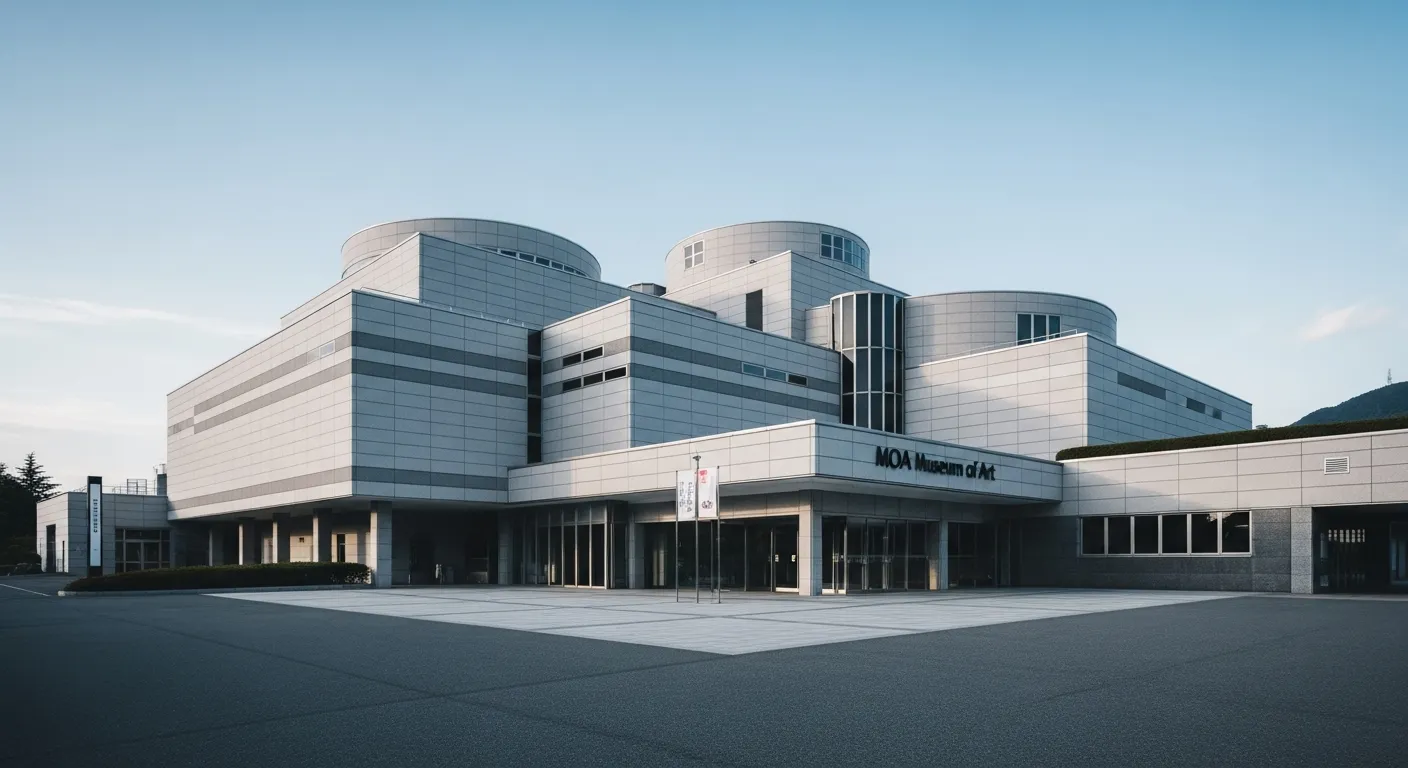
MOA Museum of Art
Good for: Japanese Art Lovers · Garden Enthusiasts · Day Trippers from Tokyo
1982
Founded
3,500+
Collection Items
2–3 hours
Recommended Visit
Quick answer
MOA Museum of Art in Atami, Japan — the MOA Museum of Art stands on a forested hillside above Atami, a hot-spring resort on the Izu Peninsula. Open Friday to Wednesday: 9:30 AM – 4:30 PM (Closed Thursdays). Admission: ¥1,600 standard admission. World Museum Guide covers the highlights, getting there, and how long to allow (2–3 hours).
Verified 2026-06-30 against official sources.
About MOA Museum of Art
The MOA Museum of Art stands on a forested hillside above Atami, a hot-spring resort on the Izu Peninsula. Founded in 1982 by Mokichi Okada, it houses his collection of Japanese and East Asian art in a building designed to harmonise with the natural landscape.
Okada's philosophy of 'living art' shaped the museum's integration of art, nature, and architecture. The main building by architect Kiyoshi Seike features a central atrium with natural light, while a separate Noh theatre and traditional tea houses extend the experience into performing and living arts.
The collection includes Important Cultural Properties of Japan — paintings by Ogata Kōrin, Hokusai, and Itō Jakuchū, as well as Chinese bronzes, Korean ceramics, and Japanese calligraphy. The museum's setting among camellias and overlooking Sagami Bay is integral to the visit.
Atami is easily reached from Tokyo by Shinkansen in under an hour, making MOA a popular day trip combined with hot-spring bathing.
2–3 hours highlights route
A focused route through 4 must-see highlights at MOA Museum of Art without museum fatigue. · 2–3 hours
- 1
Red and White Plum Blossoms
📍 Japanese Painting Gallery
A pair of folding screens depicting plum blossoms in Kōrin's decorative Rinpa style, among the museum's most celebrated works.
- 2
Birds and Flowers of the Four Seasons
📍 Japanese Painting Gallery
Jakuchū's meticulous paintings of birds and plants, reflecting the artist's unique blend of observation and decorative pattern.
- 3
Thirty-Six Views of Mount Fuji
📍 Ukiyo-e Gallery
Selected prints from Hokusai's famous series, including impressions of The Great Wave and Fine Wind, Clear Morning.
- 4
Chinese Bronze Ritual Vessels
📍 East Asian Antiquities Gallery
Ancient Chinese bronze ding and zun vessels from Okada's collection of East Asian antiquities.
Masterworks & must-see highlights
The works that define MOA Museum of Art — and why they matter.
Red and White Plum Blossoms
Ogata Kōrin · early 18th century (attributed)
📍 Japanese Painting Gallery
A pair of folding screens depicting plum blossoms in Kōrin's decorative Rinpa style, among the museum's most celebrated works.
Birds and Flowers of the Four Seasons
Itō Jakuchū · 18th century
📍 Japanese Painting Gallery
Jakuchū's meticulous paintings of birds and plants, reflecting the artist's unique blend of observation and decorative pattern.
Thirty-Six Views of Mount Fuji
Katsushika Hokusai · c. 1830–1832
📍 Ukiyo-e Gallery
Selected prints from Hokusai's famous series, including impressions of The Great Wave and Fine Wind, Clear Morning.
Chinese Bronze Ritual Vessels
Shang and Zhou dynasties · ancient
📍 East Asian Antiquities Gallery
Ancient Chinese bronze ding and zun vessels from Okada's collection of East Asian antiquities.
Collections & highlights
- • Japanese painting — Rinpa, ukiyo-e, and Nihonga
- • Important Cultural Properties of Japan
- • Chinese bronzes and ceramics
- • Korean and Japanese calligraphy
- • Sculpture and Buddhist art
- • Noh theatre performances (seasonal)
- • Traditional tea ceremony houses
- • Camellia garden and hillside landscape
Frequently asked questions
How do I reach Atami?
Atami is fifty minutes from Tokyo on the Shinkansen, and a short bus ride from there to the museum.
Is the Ōgon-no-Chashitsu the original?
It is a faithful reproduction of Toyotomi Hideyoshi's sixteenth-century golden tea room.
How long should I spend at MOA Museum of Art?
Plan 2–3 hours for the highlights. Add time for temporary exhibitions, the museum shop, and café.
What is MOA Museum of Art best known for?
Founded in 1982 by Mokichi Okada, the MOA holds a major collection of Japanese and East Asian art including three National Treasures and over sixty Important Cultural Properties. Key highlights include Red and White Plum Blossoms by Ogata Kōrin, Nō stage in glass-walled theatre, Reconstructed Ōgon-no-Chashitsu (Golden Tea Room).
How do I get tickets for MOA Museum of Art?
¥1,600 standard admission Tickets are usually available on the day, but booking online saves queue time in peak season. Official site: https://www.moaart.or.jp/en/
Is the shuttle bus from Atami Station free?
The museum operates a shuttle from Atami Station — check the current schedule and fare on the official MOA website before visiting.
Can I see a Noh performance?
The museum's Noh theatre hosts seasonal performances. Check the schedule in advance — performances are not daily.
Is this the same as the Hakone Open-Air Museum?
No — MOA is in Atami, further east on the Izu Peninsula. It focuses on Japanese and East Asian art in a hillside setting, not outdoor sculpture.
World Animal Rescue Network
Help working donkeys
Working donkeys carry heavy loads with little rest or veterinary care. Gifts fund mobile clinics, harness relief, and owner education. Please consider a donation to support this work.
Enjoying our free guides? Support World Museum Guide — optional, and every guide stays free.