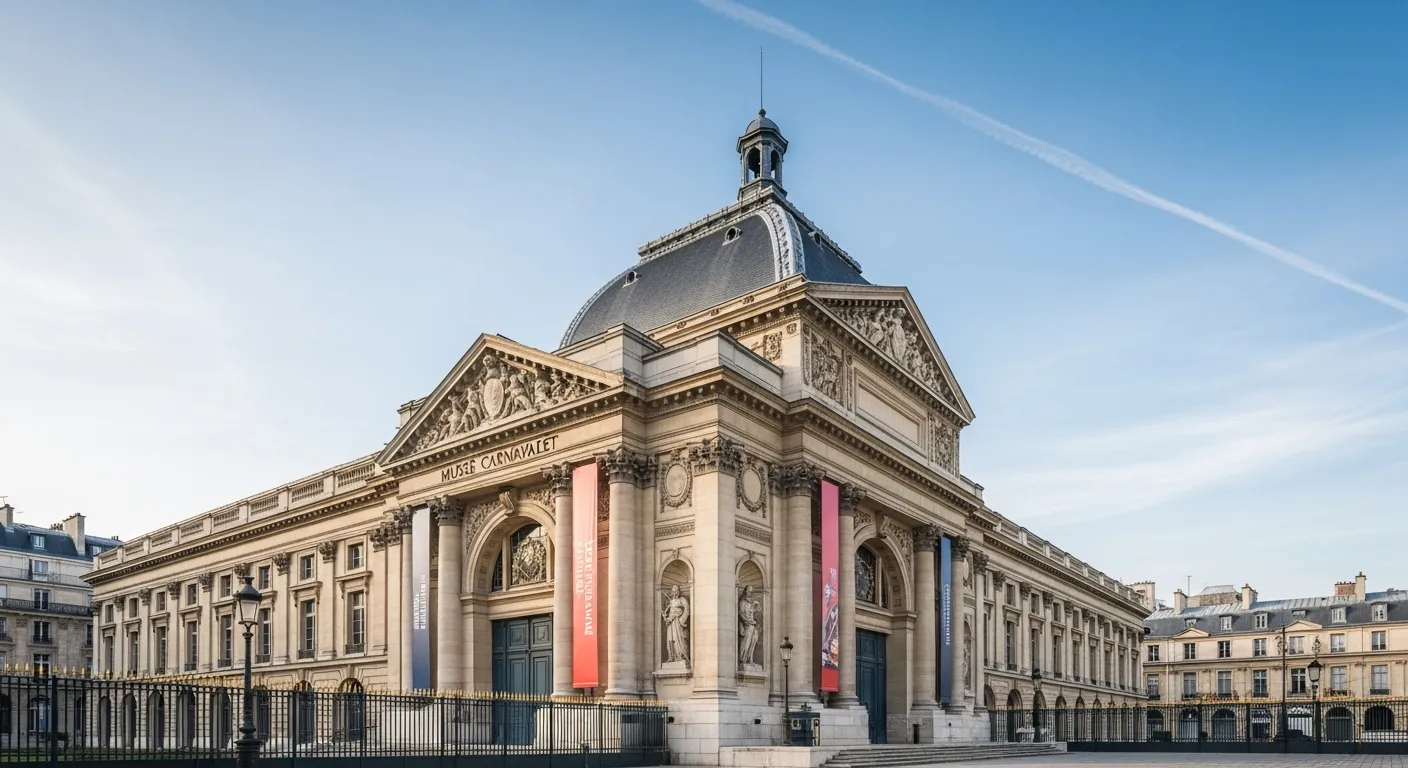
Musée Carnavalet
Good for: History Enthusiasts · Paris Lovers · Free Museum Seekers
1880
Founded
625,000+
Collection Items
3–4 hours
Recommended Visit
Quick answer
Musée Carnavalet in Paris, France — founded by Baron Haussmann in 1880, the Musée Carnavalet occupies the Renaissance Hôtel Carnavalet and the seventeenth-century Hôtel Le Peletier de Saint-Fargeau. Open Tuesday to Sunday: 10:00 AM – 6:00 PM (Closed Mondays). Admission: ✓ Free standard admission. Book timed-entry tickets ahead in peak season. World Museum Guide covers the highlights, getting there, and how long to allow (3–4 hours).
Verified 2026-06-30 against official sources.
About Musée Carnavalet
The Musée Carnavalet is the museum of the history of Paris, occupying two adjoining Marais mansions: the Hôtel Carnavalet (1548) and the Hôtel Le Peletier de Saint-Fargeau (17th century). Founded in 1880, it reopened in 2021 after a major four-year renovation.
The museum traces Paris from prehistoric settlement through Roman Lutetia, medieval Paris, the Revolution, Haussmann's transformation, and the Belle Époque. Rooms recreate period interiors — an eighteenth-century ballroom, a jeweller's shop, Marcel Proust's bedroom — alongside paintings, furniture, and revolutionary relics.
Admission to the permanent collection is free, making it one of the great bargains in Paris. The Marais location places it among the city's finest historic neighbourhoods, near the Place des Vosges and Jewish quarter.
The 2021 reopening added new chronological galleries, improved accessibility, and restored the mansions' painted ceilings and carved staircases to their former glory.
3–4 hours highlights route
A focused route through 4 must-see highlights at Musée Carnavalet without museum fatigue. · 3–4 hours
- 1
The Tennis Court Oath
📍 French Revolution Gallery
David's monumental but unfinished painting of the 1789 oath at the Jeu de Paume, a defining image of the Revolution.
- 2
Marcel Proust's Bedroom
📍 Belle Époque Gallery
Proust's cork-lined bedroom from 102 Boulevard Haussmann, recreated with his furniture, manuscripts, and personal objects.
- 3
Portrait of Madame de Sévigné
📍 Hôtel Carnavalet
Portrait of the celebrated letter-writer who lived in the Hôtel Carnavalet, the museum's namesake mansion.
- 4
Revolutionary Relics
📍 Revolution Gallery
Bastille stones, revolutionary banners, and personal effects of Robespierre and other Revolution figures.
Masterworks & must-see highlights
The works that define Musée Carnavalet — and why they matter.
The Tennis Court Oath
Jacques-Louis David · 1791 (unfinished)
📍 French Revolution Gallery
David's monumental but unfinished painting of the 1789 oath at the Jeu de Paume, a defining image of the Revolution.
Marcel Proust's Bedroom
Period recreation · Belle Époque
📍 Belle Époque Gallery
Proust's cork-lined bedroom from 102 Boulevard Haussmann, recreated with his furniture, manuscripts, and personal objects.
Portrait of Madame de Sévigné
Claude Lefèbvre · 17th century
📍 Hôtel Carnavalet
Portrait of the celebrated letter-writer who lived in the Hôtel Carnavalet, the museum's namesake mansion.
Revolutionary Relics
Various · 1789–1794
📍 Revolution Gallery
Bastille stones, revolutionary banners, and personal effects of Robespierre and other Revolution figures.
Collections & highlights
- • Prehistoric and Roman Paris (Lutetia)
- • Medieval and Renaissance Paris
- • French Revolution artefacts and art
- • Haussmann and nineteenth-century transformation
- • Belle Époque and Art Nouveau interiors
- • Marcel Proust and literary Paris
- • Shop signs and street life of old Paris
- • Portrait of Parisian society through the ages
Frequently asked questions
Is admission really free?
Yes — like all City of Paris museums, the permanent collection is free.
Is the museum in the Marais?
Yes, it is in the heart of the Marais district.
How long should I spend at Musée Carnavalet?
Plan 2–3 hours for the highlights. Add time for temporary exhibitions, the museum shop, and café.
What is Musée Carnavalet best known for?
Founded by Baron Haussmann in 1880, the Musée Carnavalet occupies the Renaissance Hôtel Carnavalet and the seventeenth-century Hôtel Le Peletier de Saint-Fargeau. It reopened in 2021 after a major refurbishment. Key highlights include Marcel Proust's bedroom, Bal du Moulin de la Galette signage, Models of medieval Paris.
How do I get tickets for Musée Carnavalet?
✓ Free standard admission Tickets are usually available on the day, but booking online saves queue time in peak season. Official site: https://www.carnavalet.paris.fr/en
How long should I allow?
Allow at least three hours — the museum covers all of Parisian history across two mansions with dozens of period rooms.
Is it suitable for children?
The period room recreations and Revolution galleries engage older children well. The museum offers family trails and activities.

World Animal Rescue Network
Save slow lorises
Slow lorises are stolen from the wild for the illegal pet trade. Donations fund confiscation, rehabilitation, and release back to the forest. Please consider a donation to support this work.
Enjoying our free guides? Support World Museum Guide — optional, and every guide stays free.