National Museum of Indonesia
Jakarta · Indonesia · Founded 1778
Good for: History Enthusiasts · First-timers · Culture seekers
1778
Founded
140,000+
Objects in Collection
2–3 hours
Recommended Visit
Quick answer
National Museum of Indonesia in Jakarta, Indonesia — founded in 1778 by the Batavian Society of Arts and Sciences, the National Museum of Indonesia is one of the oldest in Southeast Asia. Open Tuesday to Sunday: 8:00 AM – 4:00 PM (Closed Mondays). Admission: Rp15,000 standard adult admission. World Museum Guide covers the highlights, getting there, and how long to allow (2–3 hours).
Verified 2026-06-30 against official sources.
About National Museum of Indonesia
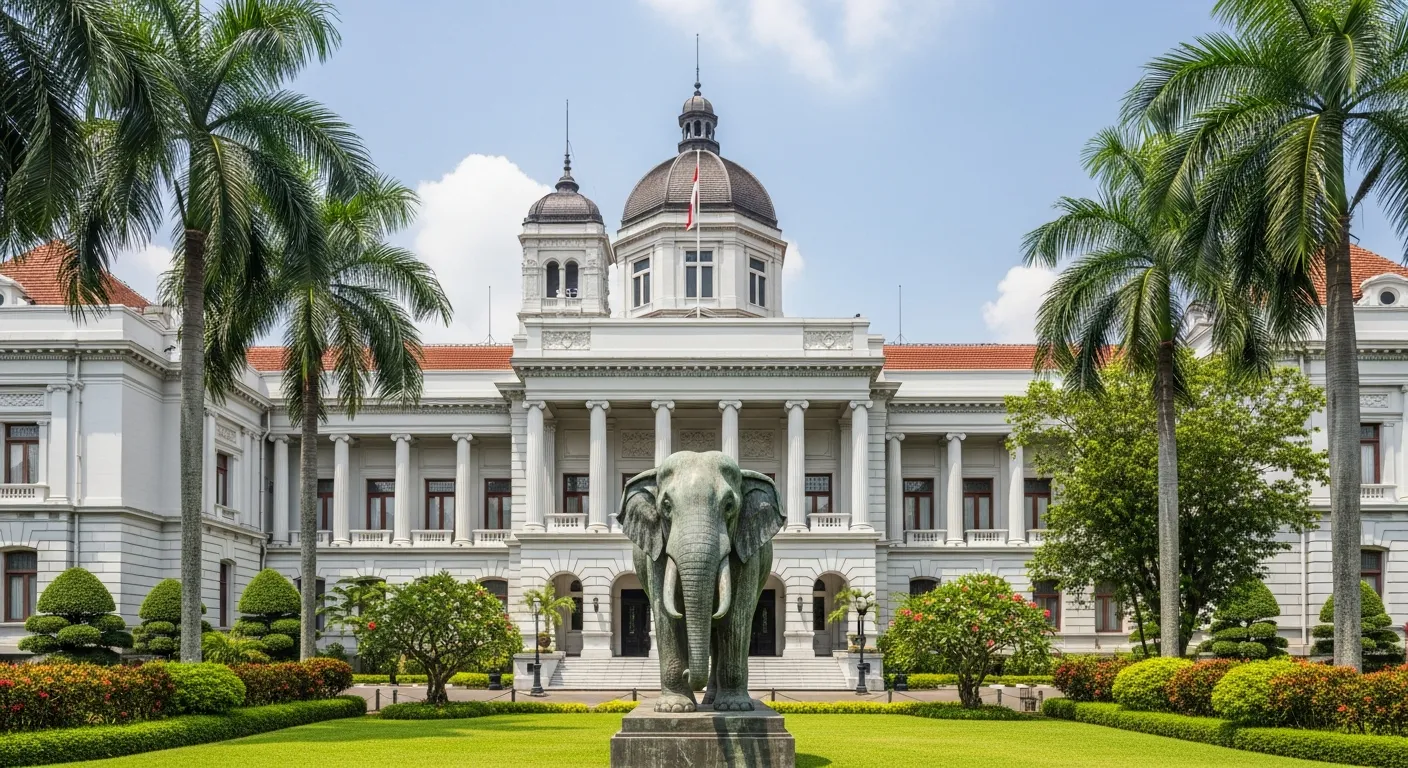
The National Museum of Indonesia (Museum Nasional) in Central Jakarta was founded in 1778 as the Bataviaasch Genootschap van Kunsten en Wetenschappen — one of the oldest museums in Southeast Asia. The elephant statue in front gives it the local name Museum Gajah.
The museum holds over 140,000 objects spanning Indonesian archaeology, ethnography, geography, and history. The Garuda Pancasila — the national emblem designed by Sultan Hamid II — is displayed here alongside Hindu-Buddhist sculpture from Java and Sumatra.
Ethnographic galleries display textiles, weapons, and ritual objects from across the archipelago — Bali, Sumatra, Kalimantan, Sulawesi, and Papua. The new wing added modern display facilities while preserving the colonial-era main building.
Admission is very affordable and the museum is essential for understanding Indonesia before visiting Borobudur or the National Gallery.
2–3 hours highlights route
A focused route through 4 must-see highlights at National Museum of Indonesia without museum fatigue. · 2–3 hours
- 1
Garuda Pancasila
📍 Central hall
Indonesia's national emblem — a Garuda eagle clutching the Pancasila shield — designed by the Sultan of Pontianak and adopted as the coat of arms of the Republic.
- 2
Bhairava Statue
📍 Archaeology gallery
A monumental bronze Bhairava from the Singhasari kingdom of East Java — fierce manifestation of Shiva, among the finest Hindu-Javanese bronzes in the collection.
- 3
Sumba Ikat Textiles
📍 Ethnography gallery
Ceremonial ikat cloths from Sumba with ancestral motifs — part of the museum's exceptional textile collection from across the archipelago.
- 4
Borobudur Reliefs (casts)
📍 Archaeology gallery
Casts and fragments relating to Borobudur — contextualising the museum's Java collections before visiting the temple itself.
Masterworks & must-see highlights
The works that define National Museum of Indonesia — and why they matter.
Garuda Pancasila
Sultan Hamid II · 1950
📍 Central hall
Indonesia's national emblem — a Garuda eagle clutching the Pancasila shield — designed by the Sultan of Pontianak and adopted as the coat of arms of the Republic.
Bhairava Statue
Singhasari period · 13th century
📍 Archaeology gallery
A monumental bronze Bhairava from the Singhasari kingdom of East Java — fierce manifestation of Shiva, among the finest Hindu-Javanese bronzes in the collection.
Sumba Ikat Textiles
Sumba weavers · traditional
📍 Ethnography gallery
Ceremonial ikat cloths from Sumba with ancestral motifs — part of the museum's exceptional textile collection from across the archipelago.
Borobudur Reliefs (casts)
Sailendra dynasty · 9th century
📍 Archaeology gallery
Casts and fragments relating to Borobudur — contextualising the museum's Java collections before visiting the temple itself.
Collections & highlights
- • Garuda Pancasila national emblem
- • Hindu-Buddhist sculpture from Java and Sumatra
- • Ethnographic collections from across Indonesia
- • Textiles — ikat, batik, songket
- • Archaeology — prehistoric to Hindu-Buddhist period
- • Colonial-era main building and modern wing
- • 140,000+ objects in the collection
Frequently asked questions
Why is it called Gedung Gajah?
Because of the bronze elephant statue presented by King Chulalongkorn of Siam (Thailand) in 1871, which still stands at the entrance.
Is it next to the National Monument?
Yes — it sits on the western side of Merdeka Square, opposite Monas.
How long should I spend at National Museum of Indonesia?
Plan 2–3 hours for the highlights. Add time for temporary exhibitions, the museum shop, and café.
What is National Museum of Indonesia best known for?
Founded in 1778 by the Batavian Society of Arts and Sciences, the National Museum of Indonesia is one of the oldest in Southeast Asia. The bronze elephant gifted by King Chulalongkorn of Siam in 1871 gives it its nickname Gedung Gajah, the Elephant Building. Key highlights include Hindu-Buddhist statuary from Central Java, Ethnographic galleries on Indonesian peoples, Treasure Room of royal gold and jewellery.
How do I get tickets for National Museum of Indonesia?
Rp15,000 standard adult admission Tickets are usually available on the day, but booking online saves queue time in peak season. Official site: https://www.museumnasional.or.id/
Why is it called Museum Gajah?
An elephant bronze statue stands in front of the museum — a gift from King Chulalongkorn of Siam in 1871. Locals call it Museum Gajah (Elephant Museum) after this landmark.
Is the Garuda Pancasila the original?
The museum displays the original design and a prominent example of the Garuda Pancasila — Indonesia's national emblem adopted in 1950. Sultan Hamid II of Pontianak designed it.
Can I combine with Monas?
Yes — the National Monument (Monas) is a 10-minute walk away. Both are in the Merdeka Square area and combine well on a Jakarta cultural day.
You might also like
World Animal Rescue Network
Adopt a macaw symbolically
Macaws and other parrots face relentless illegal trade. Symbolic adoption supports rescue, rehabilitation, and release programmes. Please consider a donation to support this work.
Enjoying our free guides? Support World Museum Guide — optional, and every guide stays free.