
National Museum of Scotland
Edinburgh · United Kingdom · Founded 1998
Good for: Families · History Enthusiasts · First-timers
1866
Victorian Building
20 million+
Objects in Collection
2–3 hours
Recommended Visit
Quick answer
National Museum of Scotland in Edinburgh, United Kingdom — the National Museum of Scotland occupies two adjoining buildings in Edinburgh's Old Town: the original Victorian Royal Museum building (1866), with its magnificent glass-roofed Grand Gallery, and the striking modern addition opened in 1998, clad in honey-coloured Clashach sandstone. Open Daily: 10:00 AM – 5:00 PM. Admission: ✓ Free admission to permanent galleries. World Museum Guide covers the highlights, getting there, and how long to allow (2–3 hours).
Verified 2026-06-30 against official sources.
About National Museum of Scotland
The National Museum of Scotland on Chambers Street combines the Victorian Royal Museum building (1866) — with its magnificent glass-roofed Grand Gallery — and the modern sandstone addition opened in 1998. It is one of Scotland's most visited attractions and entirely free.
Dolly the sheep — the world's first mammal cloned from an adult cell — is preserved and displayed in the science and technology galleries. Eleven Lewis Chessmen (12th-century walrus ivory chess pieces) are on permanent display; the majority remain in the British Museum.
Collections span Scottish history, world cultures, science and technology, art and design, and natural history. The Millennium Clock Tower — a kinetic sculpture chiming on the hour — is a beloved Edinburgh spectacle.
The museum sits in the Old Town — 10 minutes from Edinburgh Castle and the Royal Mile.
2–3 hours highlights route
A focused route through 4 must-see highlights at National Museum of Scotland without museum fatigue. · 2–3 hours
- 1
Dolly the Sheep
📍 Science and Technology gallery, Level 1
The world's first mammal cloned from an adult somatic cell — Dolly was born in 1996 and died in 2003.
- 2
Lewis Chessmen
📍 Early People gallery, Level -1
Eleven of the 93 walrus ivory chess pieces discovered on Lewis in 1831 — expressive figures that inspired Harry Potter's wizard chess.
- 3
Grand Gallery
📍 Victorian building, Level 1
A soaring cast-iron and glass atrium — one of the finest Victorian museum interiors in Britain, lined with display cases from floor to ceiling.
- 4
Millennium Clock Tower
📍 Grand Gallery
A 12-metre kinetic sculpture chiming and performing on the hour — figures, lights, and sound marking the passage of time.
Masterworks & must-see highlights
The works that define National Museum of Scotland — and why they matter.
Dolly the Sheep
Roslin Institute · 1996
📍 Science and Technology gallery, Level 1
The world's first mammal cloned from an adult somatic cell — Dolly was born in 1996 and died in 2003. Preserved and displayed as an icon of modern science.
Lewis Chessmen
Norse craftsmen · c. 1200
📍 Early People gallery, Level -1
Eleven of the 93 walrus ivory chess pieces discovered on Lewis in 1831 — expressive figures that inspired Harry Potter's wizard chess. Most pieces are in the British Museum.
Grand Gallery
Francis Fowke · 1866
📍 Victorian building, Level 1
A soaring cast-iron and glass atrium — one of the finest Victorian museum interiors in Britain, lined with display cases from floor to ceiling.
Millennium Clock Tower
Eduardo Paolozzi and others · 1999
📍 Grand Gallery
A 12-metre kinetic sculpture chiming and performing on the hour — figures, lights, and sound marking the passage of time. A favourite with children and adults.
Collections & highlights
- • Dolly the sheep — first cloned mammal
- • Lewis Chessmen — 11 ivory pieces on display
- • Grand Gallery — Victorian glass atrium
- • Millennium Clock Tower kinetic sculpture
- • Scottish history from prehistory to present
- • World cultures and natural history
- • Free admission to permanent galleries
Frequently asked questions
Are the Lewis Chessmen here?
Eleven of the Lewis Chessmen are on permanent display in the museum's Early Medieval Scotland gallery; the majority of the collection is in the British Museum in London.
Is there a café and restaurant?
Yes — the museum has a café in the Grand Gallery and a restaurant on the top floor with views of the Old Town. Reservations are recommended for the restaurant.
How long should I spend at National Museum of Scotland?
Plan 2–3 hours for the highlights. Add time for temporary exhibitions, the museum shop, and café.
What is National Museum of Scotland best known for?
The National Museum of Scotland occupies two adjoining buildings in Edinburgh's Old Town: the original Victorian Royal Museum building (1866), with its magnificent glass-roofed Grand Gallery, and the striking modern addition opened in 1998, clad in honey-coloured Clashach sandstone. The combined complex is one of Scotland's most visited attractions. Key highlights include Dolly the sheep — the world's first cloned mammal, preserved in the museum, Lewis Chessmen — 12th-century walrus ivory chess pieces, Grand Gallery — the iconic Victorian cast-iron and glass atrium.
How do I get tickets for National Museum of Scotland?
✓ Free admission to permanent galleries Tickets are usually available on the day, but booking online saves queue time in peak season. Official site: https://www.nms.ac.uk/national-museum-of-scotland/
Are all the Lewis Chessmen here?
Eleven of the 93 pieces are on permanent display in Edinburgh. The British Museum in London holds the majority. All were found together on Lewis in 1831.
Where is Dolly the sheep?
In the Science and Technology galleries on Level 1 — preserved and displayed with the story of the Roslin Institute cloning breakthrough of 1996.
Is the museum the same as the National Galleries?
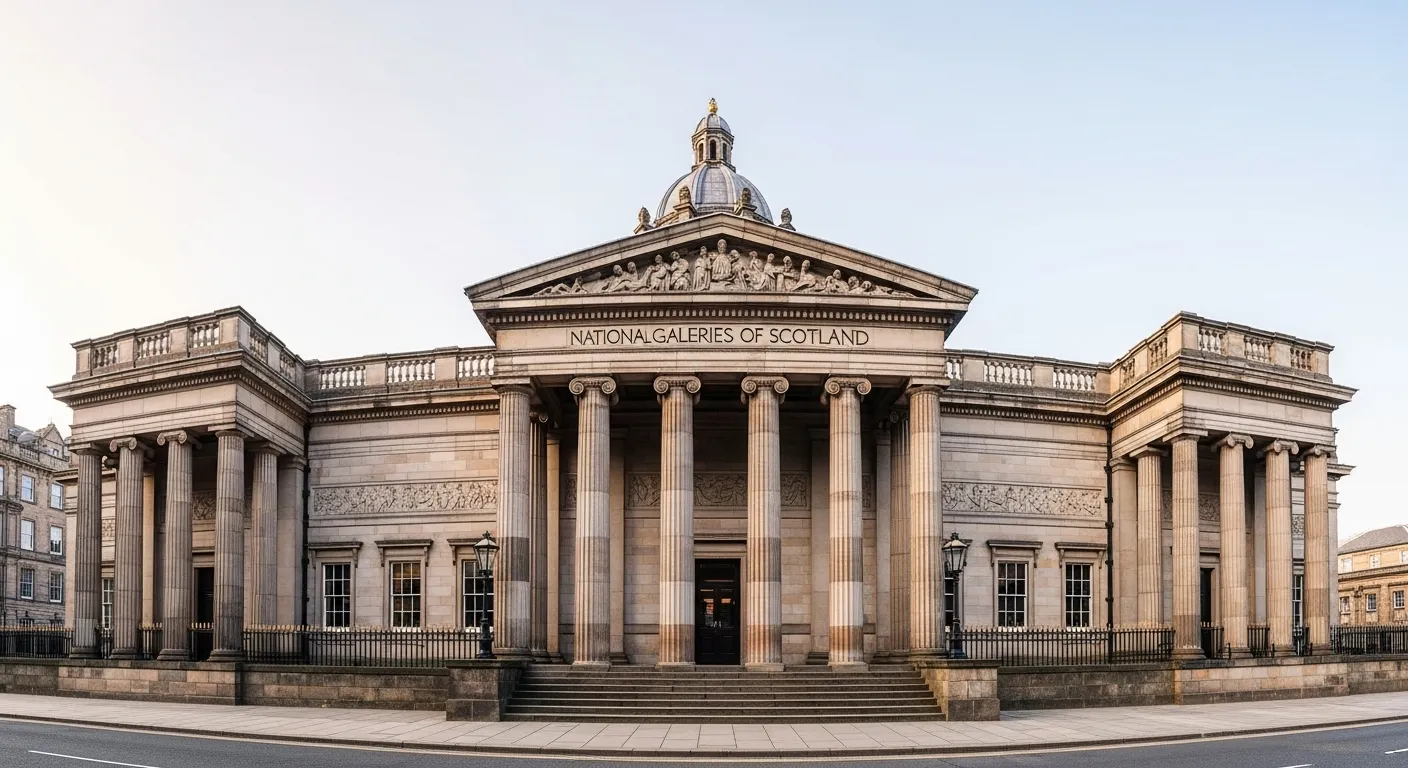
No — the National Museum of Scotland (Chambers Street) covers history, science, and world cultures. The National Galleries on the Mound hold art. Both are free and 10 minutes apart.
You might also like
World Animal Rescue Network
Help save leopards
Leopards are persecuted and poached across their range. Support funds monitoring, veterinary care, and community coexistence projects. Please consider a donation to support this work.
Enjoying our free guides? Support World Museum Guide — optional, and every guide stays free.