Van Gogh in Auvers: The Final Weeks
Until 14 September 2026Seventy works from the artist's last seventy days — wheat fields, portraits of Dr Gachet, and the roots of his legacy.
240 museums across 48 countries
Amsterdam · Netherlands · Founded 1973
Good for: Art Lovers · First-timers · History Enthusiasts
1973
Founded
2.1 million
Annual Visitors
2–3 hours
Recommended Visit
Art
Museum type
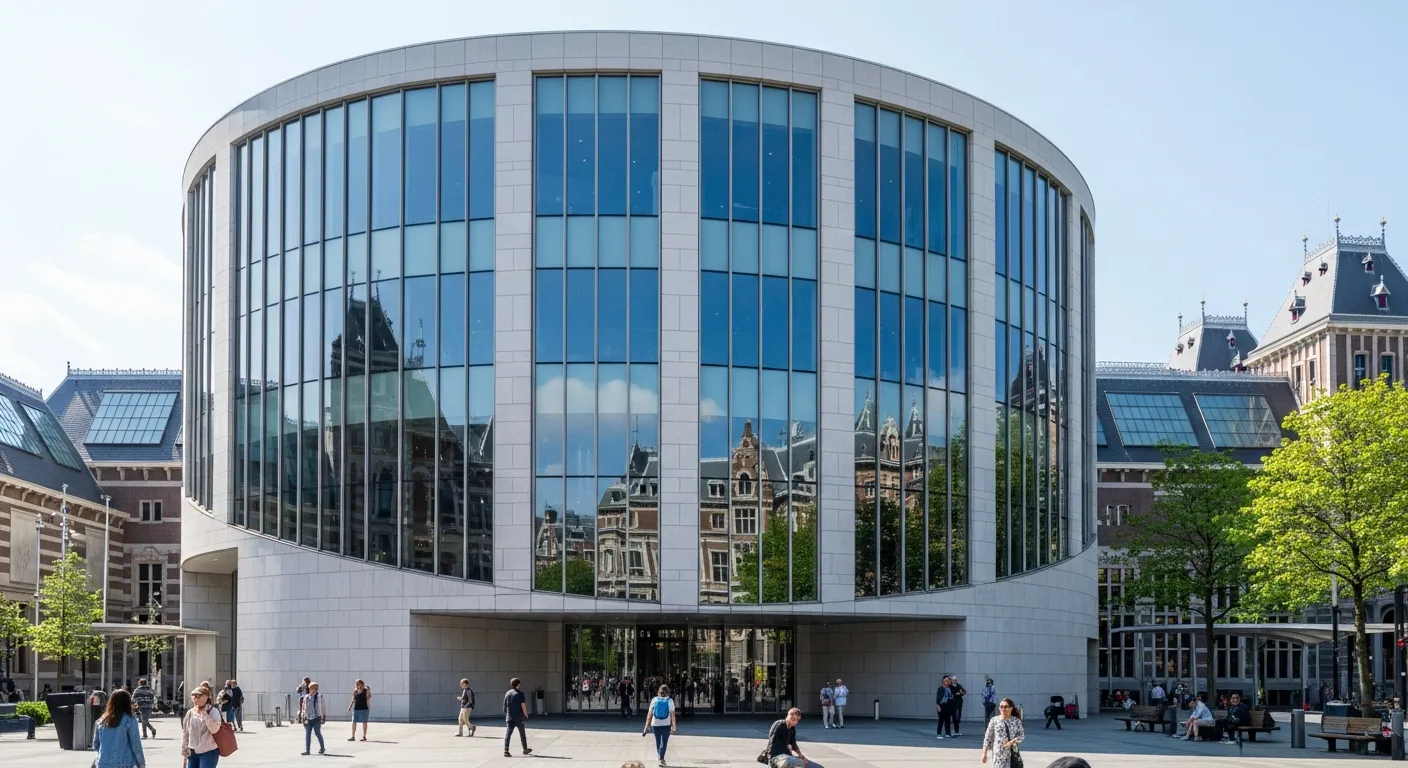
Van Gogh Museum in Amsterdam, Netherlands — the Van Gogh Museum is a Dutch art museum dedicated to the works of Vincent van Gogh and his contemporaries in the Museum Square in Amsterdam South. Open Daily: 9:00 AM – 6:00 PM (hours vary seasonally). Admission: €22 standard admission, online booking required. Book timed-entry tickets ahead in peak season. World Museum Guide covers the highlights, getting there, and how long to allow (2–3 hours).
Verified 2026-06-30 against official sources.
The Van Gogh Museum is a Dutch art museum dedicated to the works of Vincent van Gogh and his contemporaries in the Museum Square in Amsterdam South. It opened on 2 June 1973, and its buildings were designed by Gerrit Rietveld and Kisho Kurokawa.
The museum contains the largest collection of Van Gogh's paintings and drawings in the world. In 2022 the museum had over 1.7 million visitors, making it the most-visited museum in the Netherlands.
The collection includes more than 200 paintings, 500 drawings, and 750 letters by Van Gogh, along with works by his contemporaries including Paul Gauguin, Émile Bernard, and Henri de Toulouse-Lautrec.
The museum traces Van Gogh's artistic development chronologically, from his early dark works in the Netherlands through his transformative time in Paris and his final luminous canvases in Arles, Saint-Rémy, and Auvers-sur-Oise.
Updated June 2026. Confirm dates and tickets on the official Van Gogh Museum website.
Seventy works from the artist's last seventy days — wheat fields, portraits of Dr Gachet, and the roots of his legacy.
The Van Gogh Museum on Museumplein holds the largest collection of Vincent van Gogh works anywhere, including more than two hundred paintings and five hundred drawings. Timed entry tickets sell out weeks ahead in peak season and must be purchased online; walk-up availability is rare. The main entrance queues on Paulus Potterstraat with security screening before the chronologically organized galleries. Museumplein square between Rijksmuseum and Van Gogh hosts street musicians and market stalls on weekends. Timed entry enforces capacity; arrive within your window but not excessively early to avoid outdoor waiting. Sunflower series rotates between Amsterdam and loan venues, so verify which version hangs before visiting. Museumplein location places the Van Gogh Museum beside the Rijksmuseum and Stedelijk within a five-minute walk across the open square. Workshop sessions for adults book separately and include drawing exercises in the education studio downstairs.
Combined Rijksmuseum and Van Gogh same-day visits are standard Amsterdam itineraries, feasible with a lunch break on Museumplein. Photography was reintroduced in select galleries without flash, though policies may change during special exhibitions. The museum closes early compared with Rijksmuseum, so schedule Van Gogh first or mid-afternoon. Workshop sessions for adults book separately and include drawing exercises in the education studio. Van Gogh Letters complete edition published by the museum supports reading before or after the galleries. Museum shop sunflower merchandise is licensed exclusively through this institution's design team. Chronological display follows Vincent from Dutch earth tones through Parisian color experiments to Arles and Saint-Rémy mature brilliance.
Accessibility elevators serve all floors; the permanent collection occupies four levels plus shop and café. Allow ninety minutes to two hours for painting highlights and letters display, longer if reading extensive wall text on technique and mental health history. Museumplein square between Rijksmuseum and Van Gogh hosts street musicians and market stalls on weekends. Timed entry enforces capacity; arrive within your window but not excessively early to avoid outdoor waiting. Sunflower series rotates between Amsterdam and loan venues, so verify which version hangs before visiting. Workshop sessions for adults book separately and include drawing exercises in the education studio. Sunflowers series versions rotate between Amsterdam and international loan venues, so verify which canvas hangs before booking travel. Museum shop sunflower merchandise is licensed exclusively through the institution's in-house design team.
Chronological presentation follows Van Gogh from Dutch dark earth tones through Parisian color experiments to Arles and Saint-Rémy brilliance. Sunflowers, Almond Blossom, and Bedroom appear alongside lesser-known early works like The Potato Eaters demonstrating artistic evolution. Peer paintings by contemporaries Gauguin, Toulouse-Lautrec, and Bernard contextualize Post-Impressionist networks. Van Gogh Letters complete edition published by the museum supports reading before or after the galleries. Museum shop sunflower merchandise is licensed exclusively through this institution's design team. Letters gallery publishes correspondence with brother Theo revealing artistic ambition, poverty, and psychological struggle in the artist's own words. Almond Blossom and Wheatfield with Crows appear in adjacent rooms documenting late Arles and Auvers periods.
The letters gallery publishes correspondence with brother Theo revealing artistic ambition, poverty, and psychological struggle in Van Gogh's own words translated to English. Conservation research explains cadmium yellow degradation and canvas reuse visible under X-ray. Temporary exhibitions rotate focused themes like Japanese prints influencing his compositional choices. Peer paintings by Gauguin, Bernard, and Toulouse-Lautrec contextualize Post-Impressionist networks beyond Van Gogh's solitary popular mythology. Japanese print collection on upper floors explains ukiyo-e influence on Vincent's compositional choices after Paris.
The museum foundation rejects sensationalism around Van Gogh's ear incident, emphasizing medical and social context. Audio guides narrate individual painting technique effectively for non-specialists. Reproduction licensing from this collection shapes global merchandise imagery. Timed entry tickets sell out weeks ahead in summer and must be purchased online; walk-up availability is extremely rare at peak season. Museumplein street musicians and market stalls create festival atmosphere outside during sunny weekend afternoons.
Focused routes for Van Gogh Museum — pick one wing per visit to avoid museum fatigue.
Introduction galleries establish Van Gogh's biography, Netherlands roots, and artistic development before Paris. Multimedia and letters orient visitors before ascending to paintings. Ground floor multimedia introduction orients first-time visitors before ascending to paintings, reducing confusion in the chronological layout.
Paris and Arles periods dominate with high-key color, sunflowers, and bedroom scenes in climate-controlled rooms. This floor draws the heaviest visitor concentration and photography interest. Sunflowers, Bedroom in Arles, and Almond Blossom on the first floor draw the heaviest photography interest in the entire building.
Works on paper, including ink drawings and watercolors, demonstrate draftsmanship equal to painting brilliance. Contemporaries and Japanese print influences appear in adjacent rooms. Third floor works on paper demonstrate draftsmanship equal to painting brilliance with ink drawings from every major period.
A focused route through 4 must-see highlights at Van Gogh Museum without museum fatigue. · 2–3 hours
📍 Level 1
Van Gogh painted three versions of his room in the Yellow House in Arles.
📍 Level 1
Painted to celebrate the birth of his nephew (Theo's son, named Vincent Willem), this joyful celebration of new life with Japanese woodblock-inspired white blossoms against a blue sky is one of Van Gogh's most beloved works.
📍 Level 1
One of around 35 self-portraits Van Gogh made in Paris.
📍 Level 2
Painted in the final weeks before Van Gogh's death, the turbulent sky, forking paths, and rising crows have long been interpreted as portents of his end.
The works that define Van Gogh Museum — and why they matter.
Vincent van Gogh · 1888
📍 Level 1
Van Gogh painted three versions of his room in the Yellow House in Arles. He intended the bold, flat colours — especially the vivid orange-yellow floor — to "suggest rest or sleep in general."
Vincent van Gogh · 1890
📍 Level 1
Painted to celebrate the birth of his nephew (Theo's son, named Vincent Willem), this joyful celebration of new life with Japanese woodblock-inspired white blossoms against a blue sky is one of Van Gogh's most beloved works.
Vincent van Gogh · 1887
📍 Level 1
One of around 35 self-portraits Van Gogh made in Paris. The divisionist technique — individual points of colour placed side by side — shows his close study of Seurat and Signac.
Vincent van Gogh · 1890
📍 Level 2
Painted in the final weeks before Van Gogh's death, the turbulent sky, forking paths, and rising crows have long been interpreted as portents of his end. Whether or not this is true, it remains one of the most emotionally charged landscapes in Western art.
Yes — all Van Gogh Museum tickets must be booked online in advance at vangoghmuseum.nl. There is no on-the-door ticket sales. Timed-entry slots are required and sell out quickly, especially during spring and summer. Weekend morning slots often sell out days ahead. The museum recommends booking at least 4 weeks in advance for peak periods. Tickets cost €22 for adults.
No — The Starry Night (1889) is at the Museum of Modern Art (MoMA) in New York City, where it has been since 1941. The Van Gogh Museum in Amsterdam holds the world's largest Van Gogh collection, including Sunflowers (1888), The Bedroom (1888), Almond Blossom (1890), and the Self-Portrait with Grey Felt Hat (1887) — all major works, but The Starry Night is not among them.
Almond Blossom (1890) is widely considered the museum's most beloved painting. Van Gogh painted it in the asylum at Saint-Rémy to celebrate the birth of his nephew (also named Vincent). The Japanese-influenced composition of white and pink blossoms against a vivid blue sky has become one of his most reproduced images. Other highlights include Sunflowers (1888), The Bedroom at Arles (1888), The Potato Eaters (1885) — his first major composition — and the Self-Portrait with Grey Felt Hat (1887).
The museum presents Van Gogh's work chronologically across four floors of the main Rietveld Building, tracing his development from his early dark Dutch works (The Potato Eaters period) through Paris, Arles, Saint-Rémy, and his final weeks in Auvers-sur-Oise. Each gallery is contextualised with letters — the museum holds 750 of Van Gogh's letters, mostly to his brother Theo — and works by contemporaries who influenced him, including Gauguin, Toulouse-Lautrec, and Hiroshige.
The main Rietveld Building has four floors of permanent galleries. A focused visit covering the highlights — Sunflowers, Almond Blossom, The Bedroom, The Potato Eaters, and the self-portraits — takes 1.5–2 hours. A thorough visit through all floors and any temporary exhibition (held in the adjacent Kurokawa wing) takes 2.5–3 hours. The museum is on Museumplein alongside the Rijksmuseum (5-minute walk) and the Stedelijk Museum.
Plan 2–3 hours for the highlights. Add time for temporary exhibitions, the museum shop, and café.
World Animal Rescue Network
Orangutans lose forest habitat every year across Borneo and Sumatra. Your gift funds rescue, rehabilitation, and protection through vetted frontline partners. Please consider a donation to support this work.
Enjoying our free guides? Support World Museum Guide — optional, and every guide stays free.