The Third of May 1808
Francisco de Goya · 1814
Oil on canvas
Quick answer
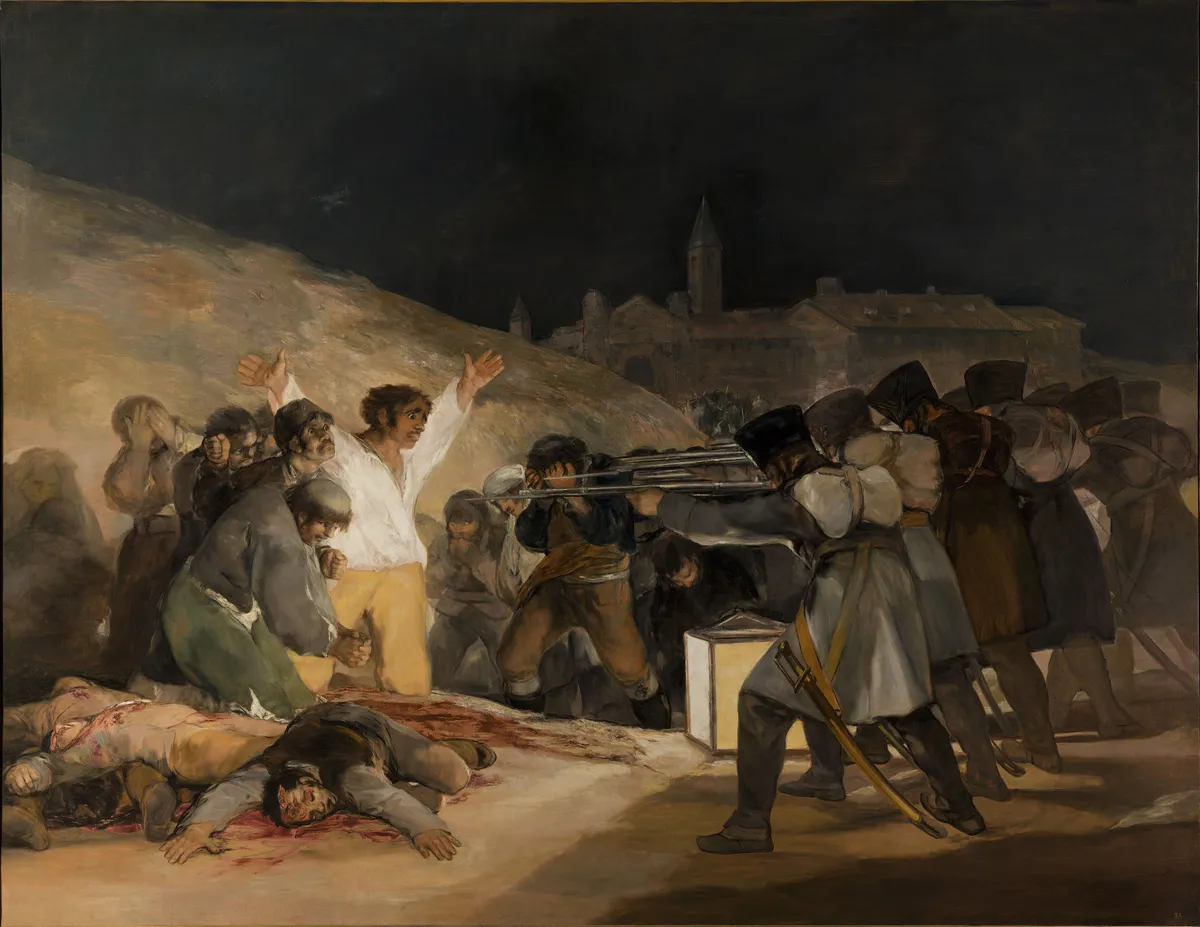
The Third of May 1808 (1814) by Francisco de Goya is in Museo del Prado, Madrid. The Third of May 1808 is an oil painting by Spanish artist Francisco de Goya, painted in 1814 to commemorate the Spanish resistance to Napoleon's occupation. It depicts the execution of Madrid civilians by French troops on the night of 3–4 May 1808, the day after the Dos de Mayo uprising. A central figure in a white shirt, arms thrown wide open, faces a line of anonymous soldiers. The painting is in the Museo del Prado in Madrid and is considered the first great anti-war painting of Western art. World Museum Guide explains what you're looking at and how to see it.
Frequently asked questions
What does The Third of May 1808 depict?
The painting depicts the execution of Madrid civilians by French imperial troops on the night of 3–4 May 1808. The day before (2 May), Madrid's citizens had risen up against the French occupying forces in the Dos de Mayo Uprising. Napoleon's troops responded with mass arrests and summary executions. Goya depicted a specific group of men being shot by lantern light on the slopes of Príncipe Pío hill outside the city.
Who is the man in the white shirt?
The central figure is anonymous — he is not a historical individual who has been identified. Goya deliberately made him unidentified and ordinary — a civilian, not a soldier or hero. His white shirt and outstretched arms recall Christ on the cross, and his expression — a mixture of terror and defiance — has been compared to Christ at Gethsemane. He is meant to represent all victims of political violence.
Why is The Third of May 1808 considered revolutionary?
Before Goya, Western paintings of violence and war depicted soldiers, battles, and heroic acts. The Third of May 1808 was the first major Western painting to depict the execution of civilians as its central subject — and to show them as victims, not as part of a heroic narrative. This shift from martial glory to human suffering established the moral framework for all subsequent anti-war imagery, including Picasso's Guernica and modern war photography.
Where is The Third of May 1808?
The painting is in Room 064 of the Museo del Prado in Madrid, Spain, where it is displayed alongside its companion piece, The Second of May 1808. Both entered the Prado's collection shortly after they were painted.
When was Goya commissioned to paint it?
Goya petitioned the Spanish government himself in February 1814 for permission and funds to paint a large-scale commemorative work. He proposed two paintings depicting the events of 2–3 May 1808 to mark the restoration of King Ferdinand VII after Napoleon's defeat. The commission was approved and both paintings were completed within months.