Goya's Black Paintings: Context and Influence
Until 15 September 2026The fourteen Black Paintings removed from the Quinta del Sordo, with x-radiography and comparative works by contemporaries.
240 museums across 48 countries
Good for: Art Lovers · History Enthusiasts · First-timers
1819
Founded
3.2 million
Annual Visitors
2–4 hours
Recommended Visit
Art
Museum type
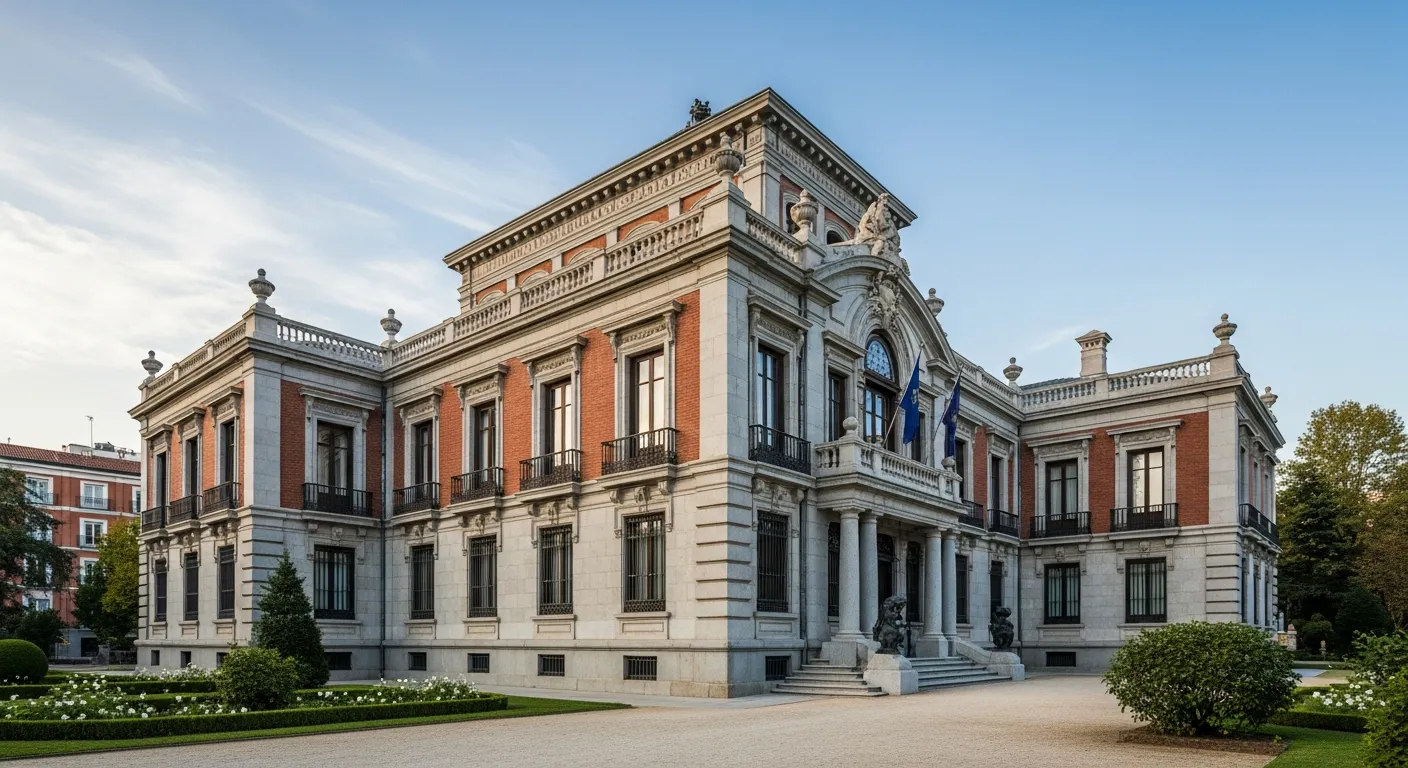
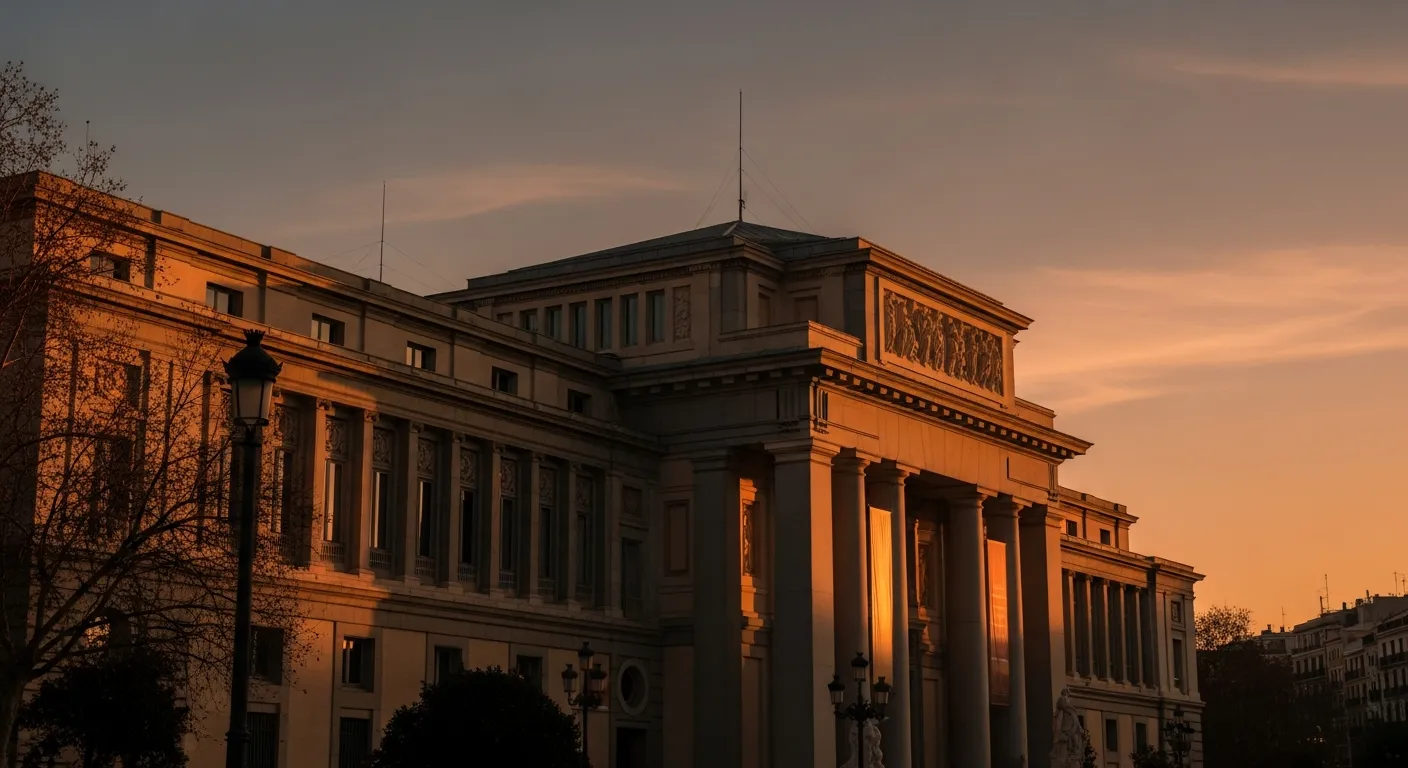
Museo del Prado in Madrid, Spain — the Prado Museum is the main Spanish national art museum, located in central Madrid. Open Monday to Saturday: 10:00 AM – 8:00 PM; Sundays: 10:00 AM – 7:00 PM. Admission: €15 standard admission. Book timed-entry tickets ahead in peak season. World Museum Guide covers the highlights, getting there, and how long to allow (2–4 hours).
Verified 2026-06-30 against official sources.
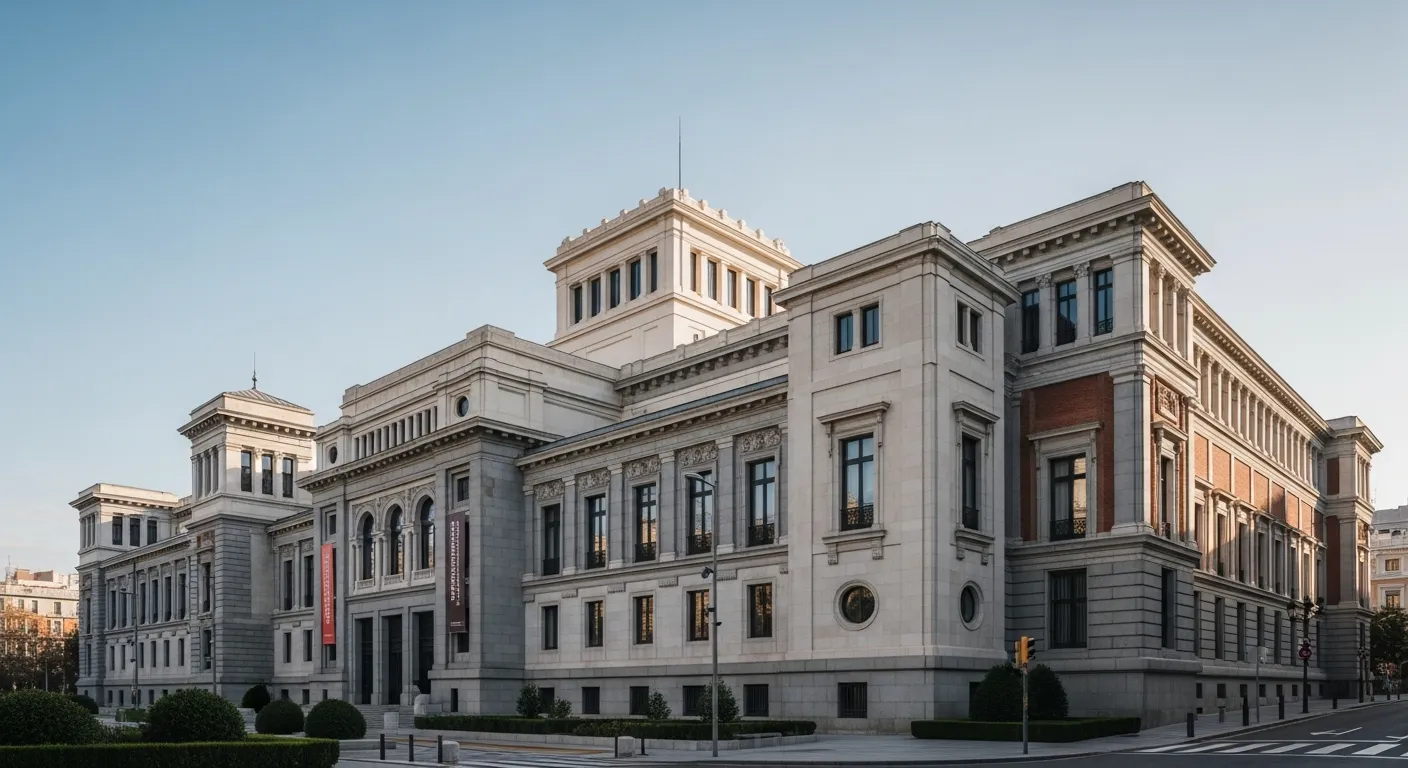
The Prado Museum is the main Spanish national art museum, located in central Madrid. It is widely considered to house one of the world's finest collections of European art, dating from the 12th century to the early 20th century.
Based on the former Spanish Royal Collection, it is the single best collection of Spanish art. Founded as a museum of paintings and sculpture in 1819, it also contains important collections of other types of works.
The numerous works by Francisco Goya, the single most extensively represented artist, as well as by Hieronymus Bosch, El Greco, Peter Paul Rubens, Titian, and Diego Velázquez, are some of the highlights of the collection.
Velázquez and his keen eye and sensibility were also responsible for bringing much of the museum's fine collection of Italian masters to Spain, now the largest outside Italy.
Updated June 2026. Confirm dates and tickets on the official Museo del Prado website.
The fourteen Black Paintings removed from the Quinta del Sordo, with x-radiography and comparative works by contemporaries.
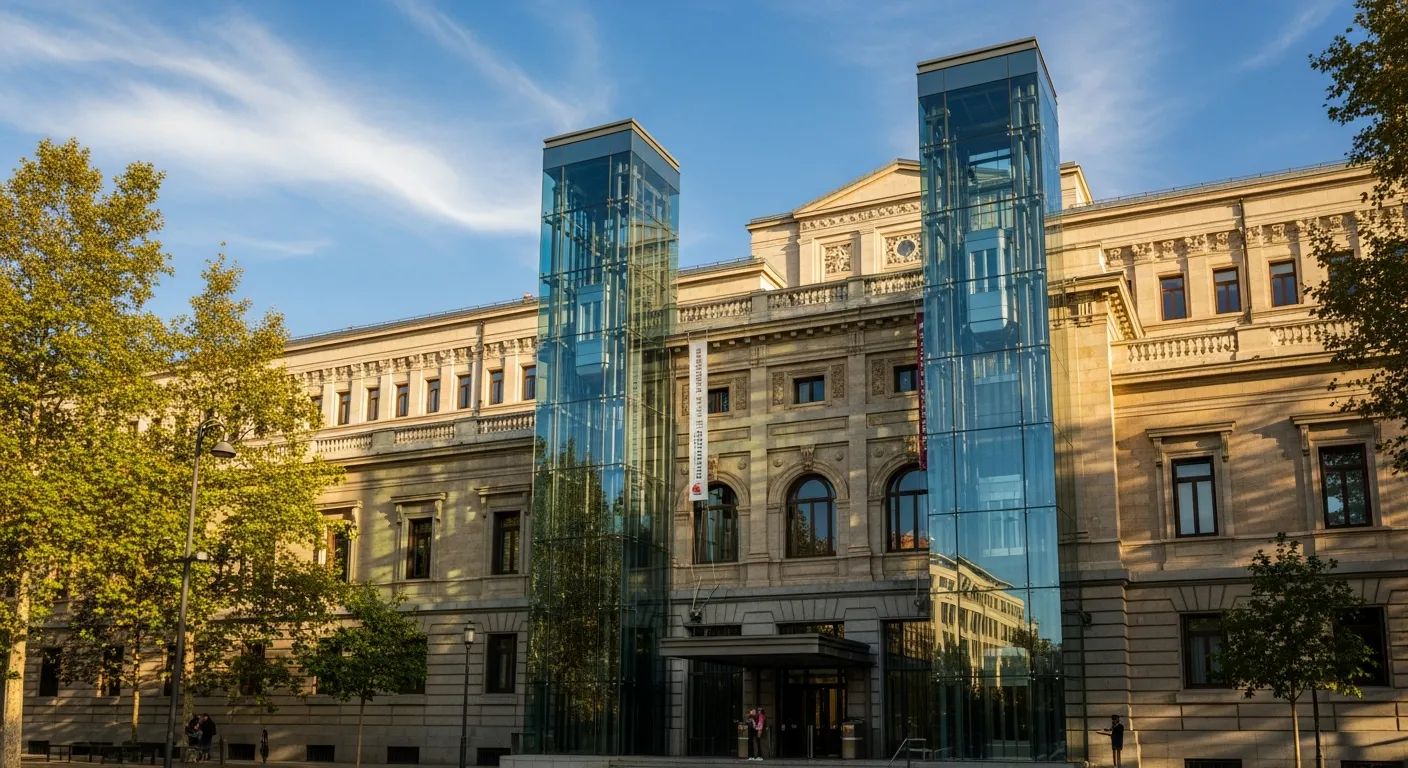
The Museo del Prado on Madrid's Paseo del Arte houses the Spanish royal collection, among the finest assemblies of European painting anywhere. General admission covers the permanent collection; free access windows during final evening hours draw local crowds. The Jerónimos entrance extension improved queue management, but Goya and Velázquez rooms remain congested midday. Paseo del Prado tree-lined boulevard connects the Prado to Reina Sofia within a fifteen-minute walk. Free admission during final evening hours benefits Madrid residents but increases density near Goya rooms. The Prado's botanical garden behind the building offers shade between morning and afternoon gallery sessions. Velázquez entrance facade faces the Neptune Fountain, a common meeting point for tour groups. Paseo del Prado location connects the Prado to Reina Sofia and Thyssen-Bornemisza within a fifteen-minute walk along Madrid's museum triangle.
The museum's relatively compact footprint compared with the Louvre or Met makes a thorough visit possible in one long day. Combined tickets with Reina Sofía and Thyssen-Bornemisza museums offer savings for Golden Triangle itineraries. Photography without flash is permitted in most galleries following recent policy updates. Goya Black Paintings transferred from house walls retain original dimensions that domestic rooms cannot replicate. Online collection zoom exceeds what the naked eye resolves from security distances in crowded salons. Paseo del Prado tree-lined boulevard connects the Prado to Reina Sofia within a fifteen-minute walk. Free admission during final evening hours benefits Madrid residents but increases density near Goya rooms. Velázquez Las Meninas occupies a dedicated salon where viewers study mirror play, brushwork, and court hierarchy for extended periods daily.
Air conditioning and seating appear in newer galleries but historic rooms offer limited rest. The Prado café in the Villanueva building provides Spanish lunch options. Allow three to four hours for Spanish masters and Bosch, with optional extensions for Italian and Flemish wings. The Prado's botanical garden behind the building offers shade between morning and afternoon gallery sessions. Velázquez entrance facade faces the Neptune Fountain, a common meeting point for tour groups. Goya Black Paintings transferred from house walls retain original dimensions that domestic rooms cannot replicate. Online collection zoom exceeds what the naked eye resolves from security distances in crowded salons. Goya Black Paintings transferred from the Quinta del Sordo house retain the dark palette and intimate scale of their original domestic setting.
Velázquez Las Meninas anchors Spanish Golden Age painting and occupies a dedicated salon where viewers study its mirror play and brushwork for extended periods. Goya's Black Paintings, transferred from the Quinta del Sordo house, deliver haunting late-period intensity in adjacent rooms. Hieronymus Bosch Garden of Earthly Delights triptych draws continuous international pilgrimage.
Titian, Rubens, and Dürer appear through Habsburg diplomatic acquisitions, contextualizing Spanish art within European courts. El Greco's elongated figures bridge Byzantine tradition and Counter-Reformation Madrid. Nineteenth-century Spanish painting extends toward Sorolla, whose dedicated museum nearby complements Prado holdings. Jerónimos entrance extension improved queue management, but Goya and Velázquez rooms remain congested during free final evening admission hours.
Sculpture and decorative arts occupy the nearby Palacio de Villanueva basement and Salón de Reinos. Conservation labs recently restored Fra Angelico Annunciation panels to luminous effect. The Prado's online collection allows virtual zoom beyond in-person viewing distances. Botanical garden behind the Villanueva building provides shaded rest between morning and afternoon gallery sessions during warm months.
Free evening hours at the Prado reduce cost but increase density — arrive thirty minutes before free entry begins and queue at the Jerónimos entrance. The Villanueva Building central hall with Velázquez Las Meninas anchors any route; build outward to Goya Black Paintings in the lower floor.
Reina Sofía and Thyssen-Bornemisza sit within fifteen minutes on foot — the Art Walk combined ticket saves money if visiting all three across two days. Retiro Park behind the museum offers shade and rowboats after intensive gallery time.
Focused routes for Museo del Prado — pick one wing per visit to avoid museum fatigue.
Velázquez, El Greco, Murillo, and Zurbarán define Spain's Golden Age in sequential galleries on the main floor. Las Meninas requires patience for unobstructed viewing but rewards extended study. Las Meninas anchors the Spanish Golden Age wing and remains the most analyzed painting in Western art history syllabi worldwide.
Bosch, Bruegel, and Rubens represent Habsburg taste for northern schools alongside Titian's Venetian color. The Bosch Garden of Earthly Delights requires close approach to read its surreal detail. Bosch triptych outer panels include Garden of Earthly Delights hell scene with detail that rewards magnifying glass study in person.
Goya spans royal portraiture, tapestry cartoons, war disasters, and the Black Paintings in a arc from enlightenment to darkness. The Third of May 1808 delivers anti-war imagery of enduring power. Goya Third of May 1808 delivers anti-war imagery of enduring power in a gallery adjacent to the Black Paintings cycle.
A focused route through 5 must-see highlights at Museo del Prado without museum fatigue. · 2–4 hours
📍 Room 012
Considered one of the most complex and debated paintings in Western art.
📍 Room 067
One of Goya's harrowing "Black Paintings" painted directly onto the walls of his house.
📍 Room 056A
A triptych of staggering complexity, depicting Paradise, earthly pleasures, and Hell in fantastical, grotesque detail.
📍 Room 064
Goya's unflinching account of French soldiers executing Madrid civilians following the Peninsular War uprising.
📍 Room 056A
A sprawling vision of death's universality — an army of skeletons overwhelming humanity across a burning landscape.
The works that define Museo del Prado — and why they matter.
Diego Velázquez · 1656
📍 Room 012
Considered one of the most complex and debated paintings in Western art. It depicts a scene in the royal palace with the young Infanta Margarita surrounded by her ladies-in-waiting, while the artist himself stands at a large canvas.
Francisco Goya · 1819–1823
📍 Room 067
One of Goya's harrowing "Black Paintings" painted directly onto the walls of his house. The frenzied titan consuming a writhing human body is now one of the most disturbing images in Western art history.
Hieronymus Bosch · c. 1490–1510
📍 Room 056A
A triptych of staggering complexity, depicting Paradise, earthly pleasures, and Hell in fantastical, grotesque detail. The Prado holds the finest collection of Bosch works outside his native Netherlands.
Francisco Goya · 1814
📍 Room 064
Goya's unflinching account of French soldiers executing Madrid civilians following the Peninsular War uprising. A founding work of modern anti-war art and a key influence on Manet's Execution of Maximilian and Picasso's Guernica.
Pieter Bruegel the Elder · c. 1562
📍 Room 056A
A sprawling vision of death's universality — an army of skeletons overwhelming humanity across a burning landscape. A masterpiece of Flemish art and one of the most extraordinary paintings of the northern Renaissance.
Yes — the Prado offers free entry Monday to Saturday from 6:00 PM to 8:00 PM, and Sunday from 5:00 PM to 7:00 PM. These free hours are very popular and the museum is busy during them; arrive early. Full-price tickets (€15) are recommended to secure daytime entry and avoid queues.
Las Meninas (1656) by Diego Velázquez is a monumental oil painting showing Infanta Margarita Teresa surrounded by her ladies-in-waiting (meninas), courtiers, a dog, and Velázquez himself at his easel. The painting is celebrated for its extraordinary complexity — it depicts the act of painting itself, using mirrors and viewpoints to include the reflection of the king and queen. Art historians including Foucault and Picasso have analysed it as one of the most sophisticated investigations of representation in Western art. It hangs in Room 12 of the Prado.
Diego Velázquez is the most extensively represented artist, with Las Meninas and dozens of other royal portraits. Francisco Goya is represented by an enormous collection including The Third of May 1808, Saturn Devouring His Son (Black Paintings), and hundreds of drawings. Other key artists include Hieronymus Bosch (The Garden of Earthly Delights), Titian, El Greco, Peter Paul Rubens, and Rogier van der Weyden.
The Prado is a focused museum — unlike encyclopedic institutions like the Louvre or the Met, it covers a specific period (12th to early 20th century, primarily Spanish and Flemish painting). A highlights visit covering Velázquez, Goya, Bosch, and Titian takes 2–3 hours. A comprehensive visit takes 4–5 hours.
Plan 2–4 hours for the highlights. Add time for temporary exhibitions, the museum shop, and café.
The Prado Museum is the main Spanish national art museum, located in central Madrid. It is widely considered to house one of the world's finest collections of European art, dating from the 12th century to the early 20th century. Key highlights include Las Meninas by Diego Velázquez, The Garden of Earthly Delights by Hieronymus Bosch, The Third of May 1808 by Francisco Goya.
World Animal Rescue Network
Sea turtles need safe nesting beaches and hatchling protection from pollution and illegal trade. Donations fund patrols, rescue, and release. Please consider a donation to support this work.
Enjoying our free guides? Support World Museum Guide — optional, and every guide stays free.