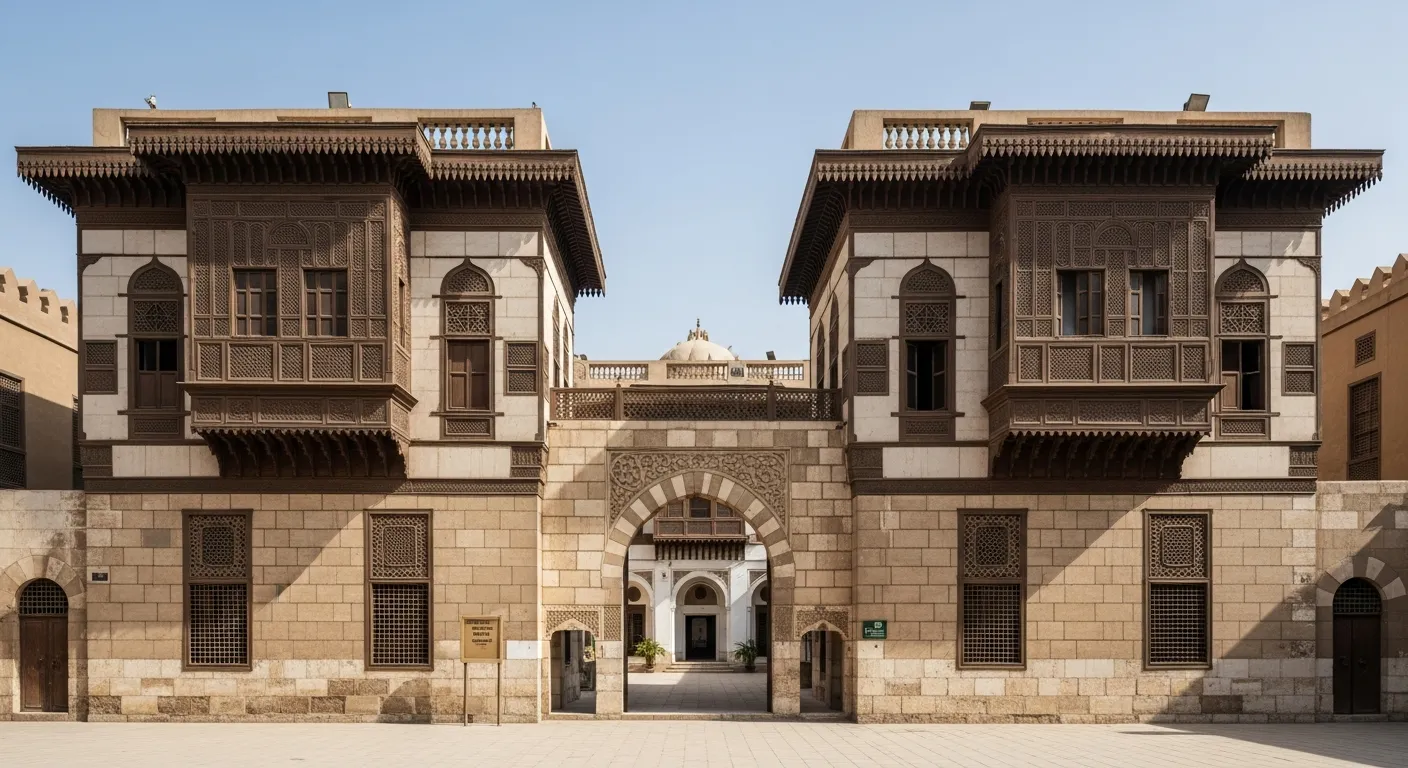
Gayer-Anderson Museum
Good for: Architecture Enthusiasts · History Enthusiasts · Art Lovers
1942
Bequeathed to Egypt
2
Joined Ottoman Houses
1–1.5 hours
Recommended Visit
Quick answer
Gayer-Anderson Museum in Cairo, Egypt — major Robert Grenville Gayer-Anderson lived in the joined seventeenth-century houses adjacent to the Ibn Tulun Mosque from 1935 to 1942. Open Daily: 9:00 AM – 5:00 PM. Admission: EGP 100 standard admission. World Museum Guide covers the highlights, getting there, and how long to allow (1–1.5 hours).
Verified 2026-06-30 against official sources.
About Gayer-Anderson Museum
Major Robert Grenville Gayer-Anderson lived in the joined seventeenth-century houses adjacent to the Ibn Tulun Mosque from 1935 to 1942. He bequeathed them and his eclectic collection to Egypt on his departure, and the museum opened in 1944.
The two houses — Bayt al-Kritliyya and Bayt Amna bint Salim — are among the finest surviving examples of Ottoman-era domestic architecture in Cairo, with mashrabiya screens, painted ceilings, and a rooftop terrace with views over the mosque.
Gayer-Anderson filled the rooms with Pharaonic antiquities, Islamic crafts, Persian furniture, and English colonial pieces, creating one of the most atmospheric house museums in the Middle East.
The museum is directly adjacent to the Ibn Tulun Mosque — Cairo's oldest surviving mosque — and the two are almost always visited together.
1–1.5 hours highlights route
A focused route through 4 must-see highlights at Gayer-Anderson Museum without museum fatigue. · 1–1.5 hours
- 1
Persian Room
📍 Upper floor, Bayt al-Kritliyya
A room decorated with Persian painted niches, mirrored inlays, and a ceiling of geometric star patterns — Gayer-Anderson's most exotic interior.
- 2
Mashrabiya Windows of Bayt al-Kritliyya
📍 Courtyard facade
Elaborately carved wooden lattice screens filtering light into the inner courtyard — among the finest mashrabiya in Cairo.
- 3
Pharaonic Cat Statue
📍 Ground floor collection room
A bronze cat sacred to Bastet, part of Gayer-Anderson's personal antiquities collection displayed in the house he once lived in.
- 4
Roof Terrace Reception Hall
📍 Rooftop
An open-air reception hall on the roof with views over the Ibn Tulun minaret — used by Gayer-Anderson for entertaining.
Masterworks & must-see highlights
The works that define Gayer-Anderson Museum — and why they matter.
Persian Room
17th-century interior · restored
📍 Upper floor, Bayt al-Kritliyya
A room decorated with Persian painted niches, mirrored inlays, and a ceiling of geometric star patterns — Gayer-Anderson's most exotic interior.
Mashrabiya Windows of Bayt al-Kritliyya
Ottoman craftsmen · 17th century
📍 Courtyard facade
Elaborately carved wooden lattice screens filtering light into the inner courtyard — among the finest mashrabiya in Cairo.
Pharaonic Cat Statue
Late Period · c. 664–332 BCE
📍 Ground floor collection room
A bronze cat sacred to Bastet, part of Gayer-Anderson's personal antiquities collection displayed in the house he once lived in.
Roof Terrace Reception Hall
Ottoman domestic architecture · 17th century
📍 Rooftop
An open-air reception hall on the roof with views over the Ibn Tulun minaret — used by Gayer-Anderson for entertaining.
Collections & highlights
- • Mashrabiya windows of the Bayt al-Kritliyya
- • Persian Room with painted niches
- • Roof terrace and reception hall
- • Adjacent Ibn Tulun Mosque
- • Gayer-Anderson's eclectic antiquities collection
Frequently asked questions
Is the Ibn Tulun Mosque next door?
Yes — visitors usually combine the two.
Is the museum air-conditioned?
No — but the thick stone walls and shaded courtyards keep it cool.
How long should I spend at Gayer-Anderson Museum?
Plan 2–3 hours for the highlights. Add time for temporary exhibitions, the museum shop, and café.
What is Gayer-Anderson Museum best known for?
Major Robert Grenville Gayer-Anderson lived in the joined seventeenth-century houses adjacent to the Ibn Tulun Mosque from 1935 to 1942. He bequeathed them and his collection to Egypt on his departure. Key highlights include Mashrabiya windows of the Bayt al-Kritliyya, Persian Room with painted niches, Roof terrace and reception hall.
How do I get tickets for Gayer-Anderson Museum?
EGP 100 standard admission Tickets are usually available on the day, but booking online saves queue time in peak season. Official site: https://egymonuments.gov.eg/museums/gayer-anderson-museum/
Who was Gayer-Anderson?
Major Robert Grenville Gayer-Anderson was a British army doctor and Orientalist who lived in the house from 1935 to 1942 and amassed the collection displayed throughout the rooms.
World Animal Rescue Network
Stop parrot trafficking
Trafficked parrots are among the world's most illegally traded birds. Your gift supports seizure response, rehabilitation, and release programmes. Please consider a donation to support this work.
Enjoying our free guides? Support World Museum Guide — optional, and every guide stays free.