Istanbul Archaeological Museums
Quick answer
Istanbul Archaeological Museums in Istanbul, Turkey — one of the world's great archaeological complexes — three museums near Topkapi Palace with the Alexander Sarcophagus, ancient Mesopotamian tablets, and over a million artefacts from the Ottoman Empire. Open daily, 9:00 AM – 7:00 PM (hours vary seasonally). Admission: From €15 standard admission (Museum Pass Istanbul available). Allow 2–3 hours.
Visitor information last reviewed 30 June 2026. Check the official museum site for current details.
Istanbul Archaeological Museums at a glance: hours, tickets and time needed
| Opening hours | Daily: 9:00 AM – 7:00 PM (hours vary seasonally) |
|---|---|
| Admission | From €15 standard admission (Museum Pass Istanbul available) |
| Free or reduced entry | Museum Pass Istanbul covers entry · Under 8 free |
| Booking | Tickets usually available on the day |
| Time needed | 2–3 hours |
| Best time to visit | Weekday mornings at 9 AM opening — the sarcophagi gallery is empty before tour groups arrive. |
| Getting there | Tram: T1 Kabataş–Bağcılar line to Gülhane or Sultanahmet — 5-minute walk uphill through Topkapi First Courtyard |
| Address | Osman Hamdi Bey Yokuşu Sk, 34122 Fatih, Istanbul, Turkey |
| Official website | muze.gov.tr |
Checked 2026-06-30 against the official website. Prices and hours change — confirm before you travel.
What is Istanbul Archaeological Museums known for?
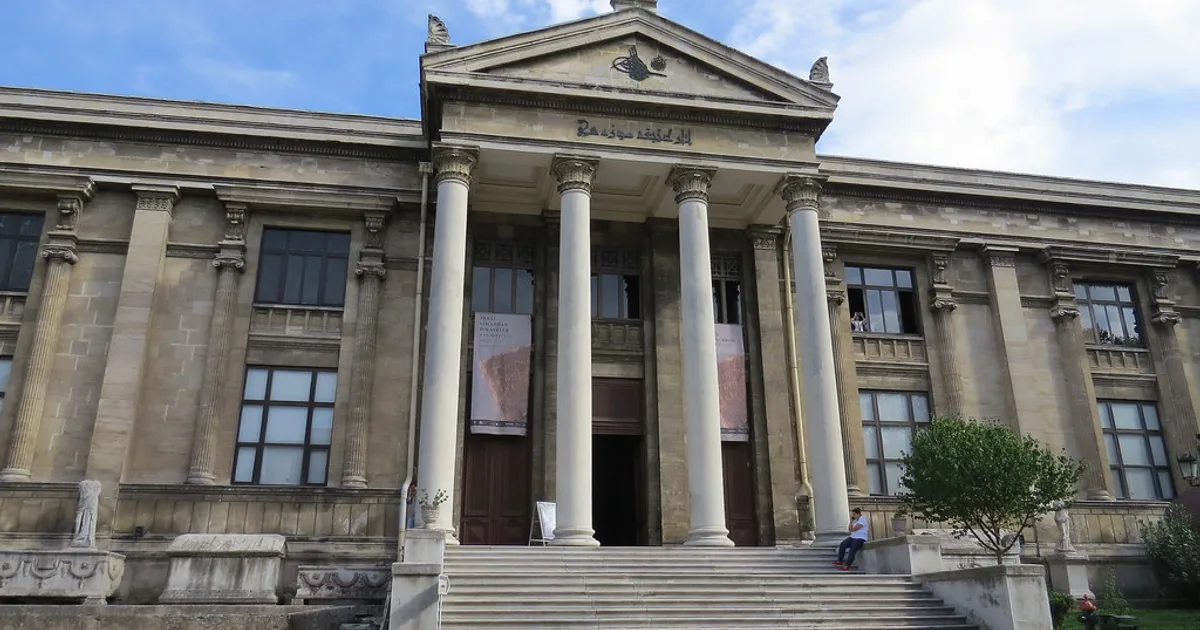
The Istanbul Archaeological Museums form one of the world's great archaeological complexes — three separate museums near Topkapi Palace's First Courtyard in Sultanahmet. Founded by Ottoman painter and archaeologist Osman Hamdi Bey in 1891, the main building was the first purpose-built museum structure in the Ottoman Empire.
The Istanbul Archaeological Museum holds over one million artefacts from the Ottoman Empire's vast territories. The Alexander Sarcophagus — a 4th-century BCE Sidonian marble sarcophagus carved with scenes of Alexander the Great hunting lions — is the collection's most celebrated object, displayed alongside the equally magnificent Tabnit and Lycian sarcophagi.
The Museum of the Ancient Orient houses Mesopotamian cuneiform tablets, including fragments of the Epic of Gilgamesh, Hittite and Assyrian reliefs, and the Kadesh Treaty — the world's oldest known peace treaty. The Tiled Kiosk, the oldest Ottoman civilian building in Istanbul (1472), displays Seljuk and Ottoman ceramic arts.
The complex sits on the historic peninsula within walking distance of Topkapi Palace, Hagia Sophia, and the Blue Mosque — making it an essential stop on any Istanbul itinerary. The Museum Pass Istanbul covers entry and is worthwhile if visiting multiple sites.
Best for: History Enthusiasts · Art Lovers
How long do you need at Istanbul Archaeological Museums?
Allow 2–3 hours. A focused route through 4 must-see highlights at Istanbul Archaeological Museums without museum fatigue. Follow the stops in order:
- 1
Alexander Sarcophagus
📍 Main Building, Sarcophagi Gallery
A Pentelic marble sarcophagus carved with vivid scenes of Alexander the Great hunting lions and in battle — painted in antiquity with traces of pigment still visible.
- 2
Kadesh Treaty
📍 Museum of the Ancient Orient
The world's oldest known surviving peace treaty — a cuneiform tablet recording the agreement between the Hittite king Hattusili III and Egyptian pharaoh Ramesses II after the Battle of Kadesh.
- 3
Lycian Sarcophagus
📍 Main Building, Sarcophagi Gallery
An elaborately carved marble sarcophagus depicting a Lycian siege scene with warriors, horses, and a city wall.
- 4
Epic of Gilgamesh Tablet
📍 Museum of the Ancient Orient
Cuneiform tablet fragments from the Epic of Gilgamesh — the oldest known work of literature.
What are the must-see works at Istanbul Archaeological Museums?
4 highlights that define the collection: Alexander Sarcophagus, Kadesh Treaty, Lycian Sarcophagus and more.
Alexander Sarcophagus
Sidonian · 4th century BCE
📍 Main Building, Sarcophagi Gallery
A Pentelic marble sarcophagus carved with vivid scenes of Alexander the Great hunting lions and in battle — painted in antiquity with traces of pigment still visible. Despite its name, it likely held a Sidonian king, not Alexander himself.
Kadesh Treaty
Hittite-Egyptian · c. 1259 BCE
📍 Museum of the Ancient Orient
The world's oldest known surviving peace treaty — a cuneiform tablet recording the agreement between the Hittite king Hattusili III and Egyptian pharaoh Ramesses II after the Battle of Kadesh. A founding document of international diplomacy.
Lycian Sarcophagus
Lycian · 4th century BCE
📍 Main Building, Sarcophagi Gallery
An elaborately carved marble sarcophagus depicting a Lycian siege scene with warriors, horses, and a city wall. The dynamic composition and fine detail rank it among the supreme achievements of ancient stone carving.
Epic of Gilgamesh Tablet
Mesopotamian · c. 1300 BCE
📍 Museum of the Ancient Orient
Cuneiform tablet fragments from the Epic of Gilgamesh — the oldest known work of literature. The Istanbul collection holds some of the most important surviving pieces of this foundational text.
Collections and highlights
- • Alexander Sarcophagus and Sidonian royal tombs
- • Mesopotamian cuneiform — Gilgamesh and Kadesh Treaty
- • Hittite and Assyrian reliefs and sculpture
- • Greek and Roman antiquities from Anatolia
- • Byzantine art and Orthodox icons
- • Ottoman ceramics in the Tiled Kiosk (1472)
- • Egyptian collection — mummies and funerary art
- • Troy excavation finds — Schliemann and Dörpfeld
Tips for visiting Istanbul Archaeological Museums
- 1.
Best time to visit
Weekday mornings at 9 AM opening — the sarcophagi gallery is empty before tour groups arrive. Winter months (November–March) are quietest overall.
- 2.
Crowds & busy periods
Summer and Ramadan bring heavy Sultanahmet traffic, but the archaeological museums see fewer visitors than Topkapi or Hagia Sophia. The sarcophagi room can feel crowded with tour groups mid-morning.
- 3.
Tickets & booking
Museum Pass Istanbul (€85, valid 5 days) covers entry and is worthwhile for 3+ sites. Single entry from €15. Under-8 free.
- 4.
Food & cafés nearby
Sultanahmet has countless restaurants and cafés — Deraliye Ottoman Cuisine is 5 minutes away. Museum has a basic café.
- 5.
Accessibility
Main building has stairs to upper galleries. Museum of the Ancient Orient is partially accessible. Tiled Kiosk requires steps.
How do you get to Istanbul Archaeological Museums?
- tram T1 Kabataş–Bağcılar line to Gülhane or Sultanahmet — 5-minute walk uphill through Topkapi First Courtyard
- metro M1 to Sultanahmet — 10-minute walk through the historic peninsula
- walk 5 minutes from Topkapi Palace First Courtyard; 10 minutes from Hagia Sophia via the park
Address: Osman Hamdi Bey Yokuşu Sk, 34122 Fatih, Istanbul, Turkey
Istanbul Archaeological Museums: frequently asked questions
What is the Alexander Sarcophagus?
A 4th-century BCE Sidonian sarcophagus carved with scenes of Alexander the Great hunting — displayed in the Istanbul Archaeological Museum. Despite its name, it likely held a Sidonian king, not Alexander himself.
Are Istanbul Archaeological Museums near Topkapi?
Yes — a 5-minute walk from Topkapi Palace's First Courtyard in Sultanahmet. Combine with Topkapi and Hagia Sophia in one day in the historic peninsula.
How long should I spend at Istanbul Archaeological Museums?
Plan 2–3 hours for the highlights of Istanbul Archaeological Museums. Our 4-stop route — Alexander Sarcophagus, Kadesh Treaty, Lycian Sarcophagus and more — is designed to fit that time. Add extra time for temporary exhibitions, the shop and the café.
What is Istanbul Archaeological Museums best known for?
One of the world's great archaeological complexes — three museums near Topkapi Palace with the Alexander Sarcophagus, ancient Mesopotamian tablets, and over a million artefacts from the Ottoman Empire. Key highlights include Alexander Sarcophagus and Sidonian royal tombs, Mesopotamian cuneiform — Gilgamesh and Kadesh Treaty, Hittite and Assyrian reliefs and sculpture.
How do I get tickets for Istanbul Archaeological Museums?
Admission: From €15 standard admission (Museum Pass Istanbul available). Tickets are usually available on the day, but booking online saves queue time in peak season. Official site: https://muze.gov.tr/muze-detay?sectionId=IAR01&distId=IAR
How many museums are in the complex?
Three: the Istanbul Archaeological Museum (main building with sarcophagi and classical antiquities), the Museum of the Ancient Orient (Mesopotamian, Hittite, and Egyptian), and the Tiled Kiosk (Ottoman ceramics in Istanbul's oldest Ottoman building). One ticket covers all three. Allow 2–3 hours total.
Is the Alexander Sarcophagus the real thing?
Yes — it is the original 4th-century BCE marble sarcophagus discovered at Sidon (modern Lebanon) by Ottoman archaeologist Osman Hamdi Bey in 1887. It has never left Istanbul. Traces of the original paint are still visible on the carved figures.
Can I combine with Topkapi Palace in one day?
Yes — the archaeological museums are a 5-minute walk from Topkapi's First Courtyard. A typical day: Hagia Sophia (1 hour), Topkapi Palace (2–3 hours), Archaeological Museums (2 hours). The Museum Pass Istanbul covers all three and saves significant money.
Is Istanbul Archaeological Museums open on Mondays?
Yes — Istanbul Archaeological Museums is open every day of the week, including Mondays and Sundays: 9:00 AM – 7:00 PM (hours vary seasonally). Check the official website for holiday hours.
What are Istanbul Archaeological Museums's opening hours?
Istanbul Archaeological Museums is open daily, 9:00 AM – 7:00 PM (hours vary seasonally). Hours can change for holidays and events, so check the official website before you go.
Is Istanbul Archaeological Museums free to visit?
No — standard admission is From €15 standard admission (Museum Pass Istanbul available). Exceptions: Museum Pass Istanbul covers entry; Under 8 free.
