National Archaeological Museum
Quick answer
National Archaeological Museum in Athens, Greece — the largest archaeological museum in Greece — Mycenaean gold, the Antikythera mechanism, the Artemision Bronze, and the world's finest collection of ancient Greek art under one roof. Open Tuesday to Sunday: 8:00 AM – 8:00 PM; closed Mondays. Admission: €12 standard admission (November–March €6). Allow 2–3 hours.
Visitor information last reviewed 30 June 2026. Check the official museum site for current details.
National Archaeological Museum at a glance: hours, tickets and time needed
| Opening hours | Tuesday to Sunday: 8:00 AM – 8:00 PM |
|---|---|
| Closed | Mondays |
| Admission | €12 standard admission (November–March €6) |
| Free or reduced entry | First Sunday of month free (November–March) · Under 18 EU free |
| Booking | Tickets usually available on the day |
| Time needed | 2–3 hours |
| Best time to visit | Tuesday to Friday at 8 AM opening — the Mycenaean gold and sculpture galleries are nearly empty for the first hour. |
| Getting there | Metro: M1 (Green Line) to Victoria — 10-minute walk south on 28is Oktovriou (Patission Street) |
| Address | 28is Oktovriou 44, Athens 106 82, Greece |
| Official website | namuseum.gr |
Checked 2026-06-30 against the official website. Prices and hours change — confirm before you travel.
What is National Archaeological Museum known for?
The National Archaeological Museum of Athens is the largest archaeological museum in Greece and one of the greatest collections of ancient art in the world. Founded in 1829 to house artefacts from excavations across the Greek mainland and islands, it moved to its present neoclassical building on Patission Street in 1889.
The museum's holdings span from prehistory to late antiquity — over 11,000 exhibits across five floors. The Mycenaean gold collection from the shaft graves at Mycenae and Vapheio is among the most dazzling displays of Bronze Age treasure anywhere. The Antikythera mechanism, an ancient Greek analogue computer recovered from a shipwreck, remains one of archaeology's most astonishing discoveries.
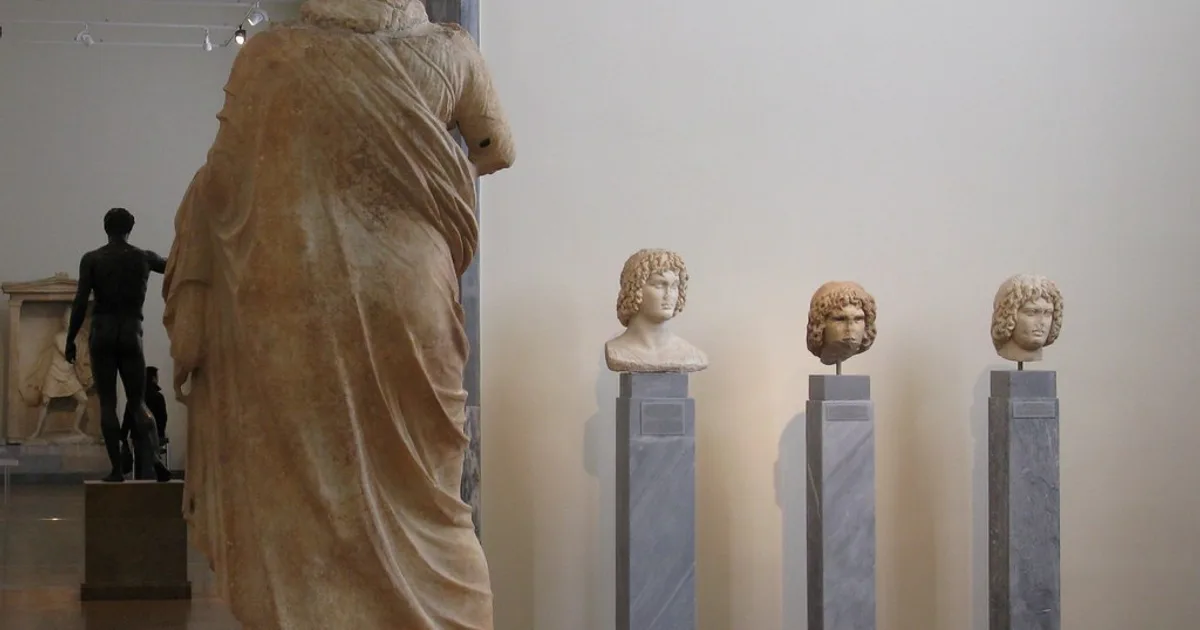
Sculpture galleries trace the evolution of Greek art from the rigid kouroi of the Archaic period through the naturalism of Classical Athens to the dramatic Hellenistic baroque. The Artemision Bronze — a larger-than-life Zeus or Poseidon caught mid-throw — and the Jockey of Artemision are among the supreme masterpieces of ancient metalwork.
Located in the Exarchia district north of the city centre, the museum is less visited than the Acropolis Museum but equally essential for understanding ancient Greece. Combined with the Acropolis Museum and a walk through the Agora, it completes the archaeological picture of classical Athens.
Best for: History Enthusiasts · Art Lovers
How long do you need at National Archaeological Museum?
Allow 2–3 hours. A focused route through 4 must-see highlights at National Archaeological Museum without museum fatigue. Follow the stops in order:
- 1
Antikythera Mechanism
📍 Room 38, Bronze Collection
An ancient Greek analogue computer recovered from a Roman shipwreck off Antikythera — a system of bronze gears used to predict astronomical positions and eclipses.
- 2
Artemision Bronze
📍 Room 28, Sculpture Collection
A larger-than-life bronze of Zeus (or Poseidon) caught hurling a thunderbolt or trident — recovered from a shipwreck off Cape Artemision.
- 3
Mask of Agamemnon
📍 Room 4, Mycenaean Collection
A gold funeral mask from Grave Circle A at Mycenae, discovered by Heinrich Schliemann in 1876.
- 4
Jockey of Artemision
📍 Room 28, Sculpture Collection
A bronze statue of a boy riding a galloping horse, recovered from the same shipwreck as the Artemision Bronze.
What are the must-see works at National Archaeological Museum?
4 highlights that define the collection: Antikythera Mechanism, Artemision Bronze, Mask of Agamemnon and more.
Antikythera Mechanism
Ancient Greek · c. 100 BCE
📍 Room 38, Bronze Collection
An ancient Greek analogue computer recovered from a Roman shipwreck off Antikythera — a system of bronze gears used to predict astronomical positions and eclipses. Over 2,000 years old, it is the world's oldest known complex scientific instrument.
Artemision Bronze
Classical Greek · c. 460 BCE
📍 Room 28, Sculpture Collection
A larger-than-life bronze of Zeus (or Poseidon) caught hurling a thunderbolt or trident — recovered from a shipwreck off Cape Artemision. One of the finest surviving Greek bronzes and a defining image of the Severe Style.
Mask of Agamemnon
Mycenaean · c. 1550 BCE
📍 Room 4, Mycenaean Collection
A gold funeral mask from Grave Circle A at Mycenae, discovered by Heinrich Schliemann in 1876. Though predating the Homeric Agamemnon by centuries, Schliemann's romantic attribution gave the mask its enduring name.
Jockey of Artemision
Hellenistic · c. 140 BCE
📍 Room 28, Sculpture Collection
A bronze statue of a boy riding a galloping horse, recovered from the same shipwreck as the Artemision Bronze. The figure's intense expression and the horse's dynamic movement exemplify Hellenistic sculpture at its most dramatic.
Collections and highlights
- • Mycenaean gold — Mask of Agamemnon and Vapheio cups
- • Sculpture — kouroi, classical marbles, and Hellenistic bronzes
- • Antikythera Mechanism and shipwreck finds
- • Prehistoric collection — Cycladic figurines and Neolithic pottery
- • Egyptian collection — mummies and funerary art
- • Wall paintings from Thera (Santorini) — Akrotiri frescoes
- • Pottery — Geometric, black-figure, and red-figure vases
- • Roman period — portraits and copyist sculpture
Tips for visiting National Archaeological Museum
- 1.
Best time to visit
Tuesday to Friday at 8 AM opening — the Mycenaean gold and sculpture galleries are nearly empty for the first hour. Avoid Monday when the museum is closed.
- 2.
Crowds & busy periods
Summer afternoons bring tour groups to the Mask of Agamemnon and Antikythera Mechanism. The upper floors (Egyptian, Cypriot) are consistently quiet.
- 3.
Tickets & booking
Buy at the door or online at namuseum.gr. €12 standard (€6 November–March). Combined ticket with other Greek state museums available. EU under-25 free.
- 4.
Food & cafés nearby
Exarchia neighbourhood has excellent cheap eateries — Yiantes and Ama Lachei are 5 minutes away. Museum café is basic.
- 5.
Accessibility
Ground floor and main galleries accessible. Some upper galleries require stairs. Wheelchair available at reception.
How do you get to National Archaeological Museum?
- metro M1 (Green Line) to Victoria — 10-minute walk south on 28is Oktovriou (Patission Street)
- metro M1 to Omonia — 15-minute walk north on Patission Street
- bus Multiple lines stop on Patission Street directly outside the museum entrance
Address: 28is Oktovriou 44, Athens 106 82, Greece
National Archaeological Museum: frequently asked questions
What is the Antikythera mechanism?
An ancient Greek analogue computer recovered from a shipwreck off Antikythera — used to predict astronomical positions and eclipses. It is displayed at the National Archaeological Museum and is over 2,000 years old.
National Archaeological Museum vs Acropolis Museum?
The National Archaeological Museum covers all of ancient Greece across millennia. The Acropolis Museum focuses specifically on the Acropolis site. Both are essential in Athens — allow a full day if visiting both.
How long should I spend at National Archaeological Museum?
Plan 2–3 hours for the highlights of National Archaeological Museum. Our 4-stop route — Antikythera Mechanism, Artemision Bronze, Mask of Agamemnon and more — is designed to fit that time. Add extra time for temporary exhibitions, the shop and the café.
What is National Archaeological Museum best known for?
The largest archaeological museum in Greece — Mycenaean gold, the Antikythera mechanism, the Artemision Bronze, and the world's finest collection of ancient Greek art under one roof. Key highlights include Mycenaean gold — Mask of Agamemnon and Vapheio cups, Sculpture — kouroi, classical marbles, and Hellenistic bronzes, Antikythera Mechanism and shipwreck finds.
How do I get tickets for National Archaeological Museum?
Admission: €12 standard admission (November–March €6). Tickets are usually available on the day, but booking online saves queue time in peak season. Official site: https://www.namuseum.gr/en/
National Archaeological Museum or Acropolis Museum — which first?
Visit the Acropolis Museum first if you are climbing the Acropolis the same day — it contextualises the Parthenon sculptures. The National Archaeological Museum covers all of Greece across millennia and rewards a separate half-day visit. Both are essential; the National Museum is broader, the Acropolis Museum is deeper on one site.
Is the Antikythera Mechanism always on display?
Yes — the mechanism and its reconstructions are permanently displayed in the Bronze Collection (Room 38). The original fragments are small and displayed in a case with detailed explanatory panels and working modern reconstructions that demonstrate the gear functions.
How do I get to the museum from the Acropolis?
Take the M2 (Red Line) from Acropoli to Syntagma, transfer to M1 (Green Line) to Victoria, then walk 10 minutes south. Total journey about 30 minutes. A taxi costs €8–10. Do not try to walk — it is 3 km through busy streets.
Is National Archaeological Museum open on Mondays?
No — National Archaeological Museum is closed every Monday. It is open Tuesday to Sunday: 8:00 AM – 8:00 PM. Plan a different museum for that day, and check the official website for holiday changes.
What are National Archaeological Museum's opening hours?
National Archaeological Museum is open Tuesday to Sunday: 8:00 AM – 8:00 PM, and closed Mondays. Hours can change for holidays and events, so check the official website before you go.
Is National Archaeological Museum free to visit?
Not for everyone. Standard admission: €12 standard admission (November–March €6). Free or reduced entry: First Sunday of month free (November–March); Under 18 EU free.