Repin and the Wanderers
Until 30 September 2026Realist masterpieces from the Peredvizhniki movement, including Repin's Barge Haulers and Ivan the Terrible.
240 museums across 48 countries
Saint Petersburg · Russia · Founded 1895
Good for: Art Lovers · History Enthusiasts · Rainy-day visits
1895
Founded
400,000+
Works of Art
2–3 hours
Recommended Visit
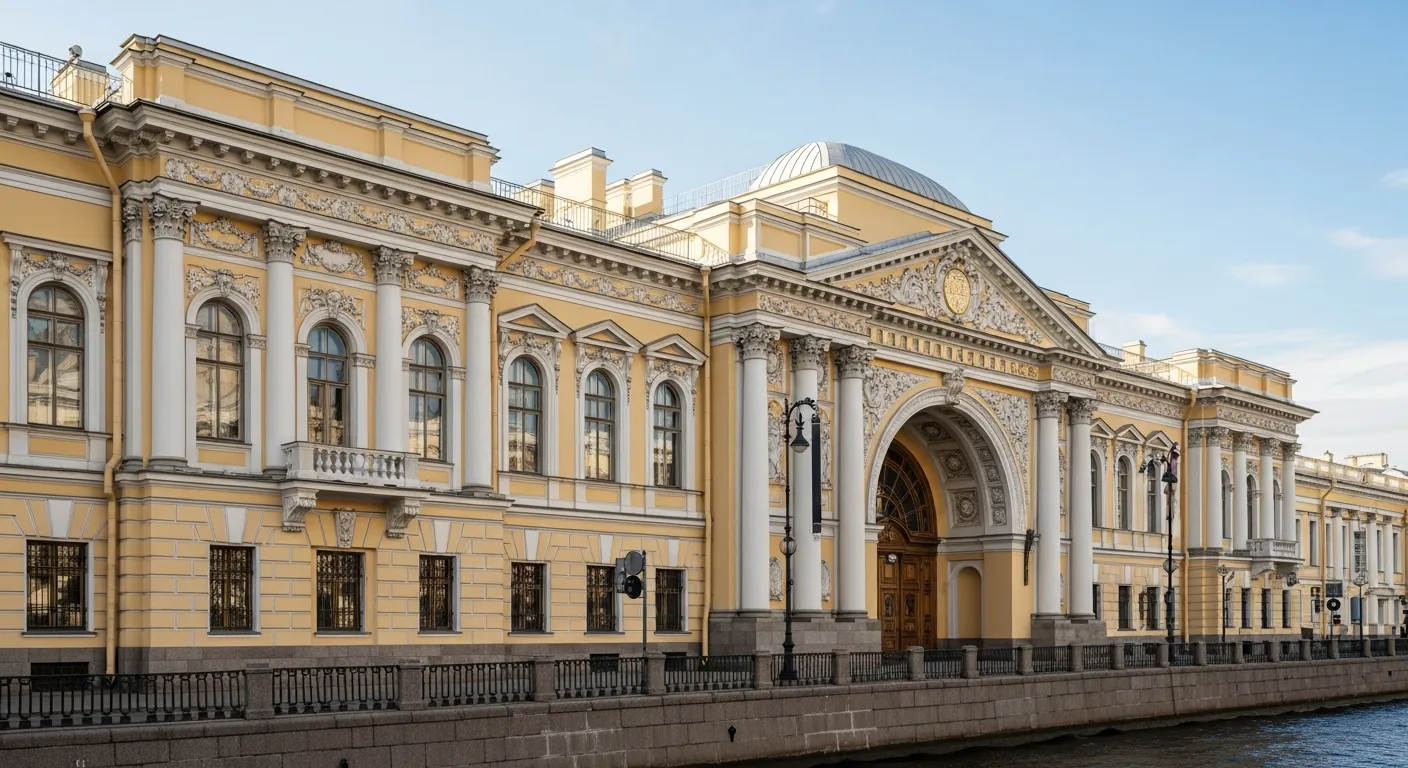
State Russian Museum in Saint Petersburg, Russia — founded by Emperor Nicholas II in 1895 as the Russian Museum of Emperor Alexander III, the State Russian Museum opened in 1898 in Carlo Rossi's Mikhailovsky Palace on Inzhenernaya Street. Open Wednesday, Friday to Sunday: 10:00 AM – 6:00 PM; Monday: 10:00 AM – 8:00 PM; Thursday: 1:00 PM – 9:00 PM (Closed Tuesdays). Admission: 500 RUB standard admission. World Museum Guide covers the highlights, getting there, and how long to allow (2–3 hours).
Verified 2026-06-30 against official sources.
Founded by Emperor Nicholas II in 1895 as the Russian Museum of Emperor Alexander III, the State Russian Museum opened in 1898 in Carlo Rossi's Mikhailovsky Palace on Inzhenernaya Street.
It holds the world's largest collection of Russian fine art — from medieval icons through the Itinerants, the avant-garde, and Soviet-era painting across five palaces and the Summer Garden.
Unlike the Hermitage's international scope, the Russian Museum is exclusively devoted to Russian art, making it essential for understanding the nation's artistic identity.
The Mikhailovsky Palace main building covers Russian art from the tenth century to the early twentieth, including masterpieces by Repin, Surikov, and Kandinsky.
Updated June 2026. Confirm dates and tickets on the official State Russian Museum website.
Realist masterpieces from the Peredvizhniki movement, including Repin's Barge Haulers and Ivan the Terrible.
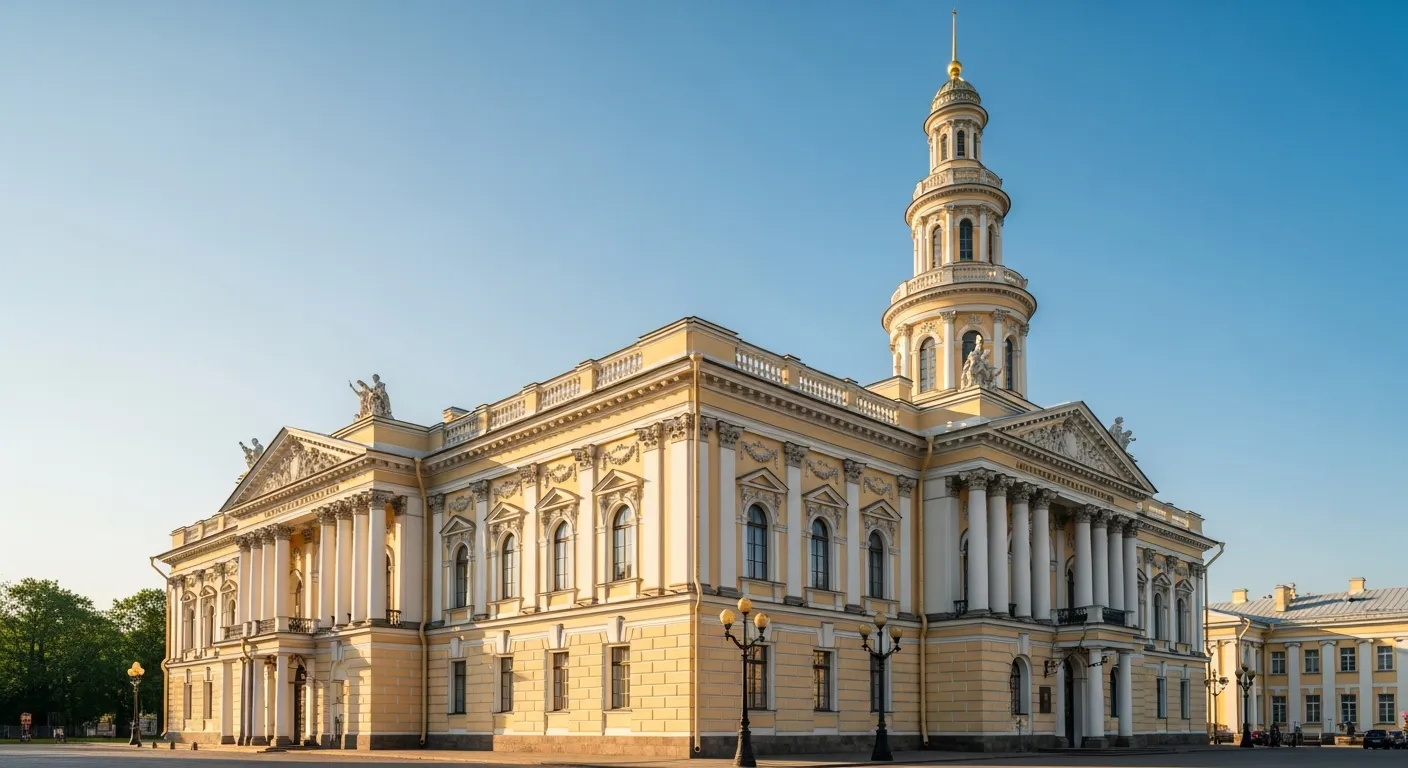
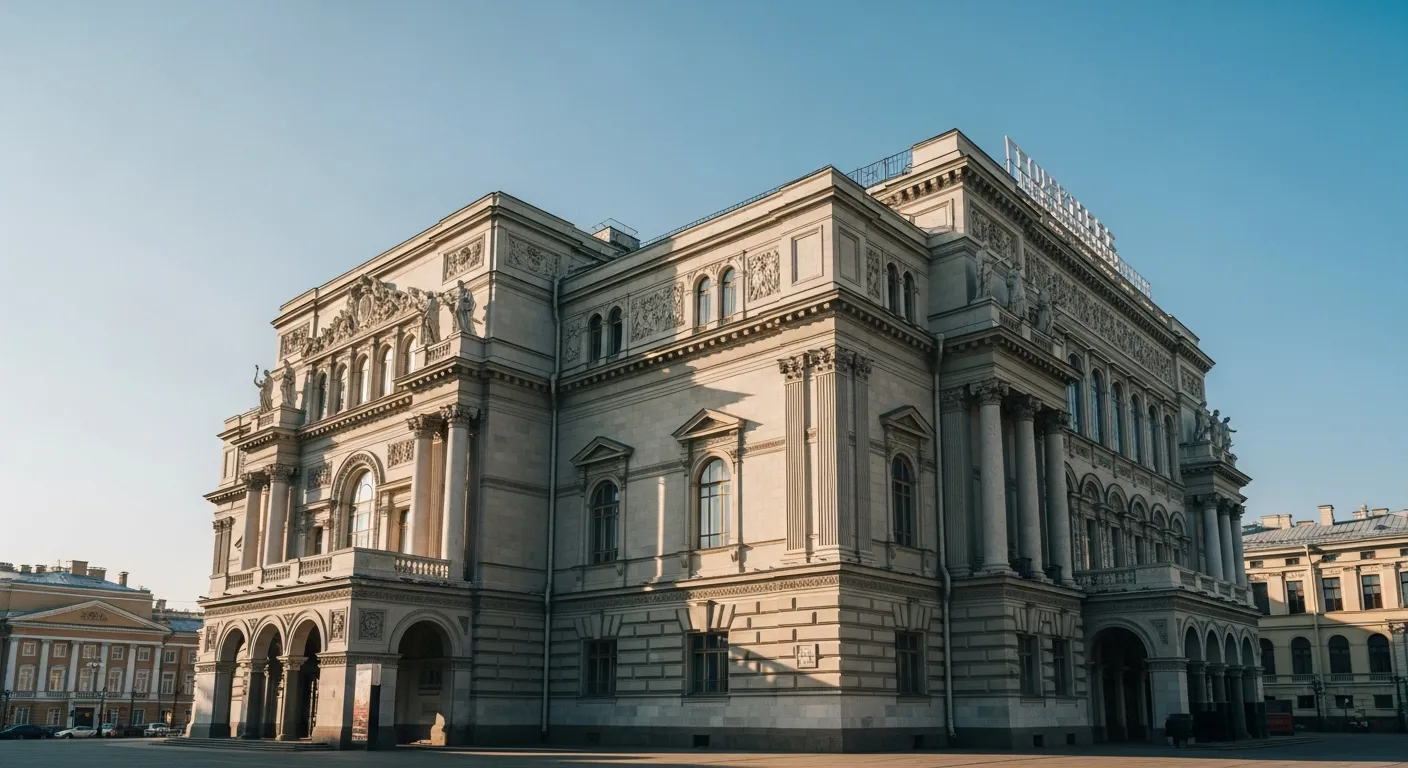
The State Russian Museum in St Petersburg holds the world's largest collection of Russian fine art, distinct from the Hermitage's international scope. Its main complex centers on the Mikhailovsky Palace on Arts Square, with the Benois Wing, Stroganov Palace, and Marble Palace extending the footprint across the city center. Combined tickets or separate entries vary by building, so confirm which palaces your pass includes. Arts Square location places the museum between the Mikhailovsky Theatre and Russian Museum gardens with summer flower displays. Ticket counters inside Mikhailovsky Palace can queue at opening; online purchase reduces wait during White Nights peak. Stroganov Palace on the Neva requires separate entry but holds decorative arts worth combining on a two-day pass. Arts Square setting places the museum beside the Mikhailovsky Theatre and Field of Mars, ideal for combining performing arts with painting in one evening.
Foreign visitors often pair the Russian Museum with the Hermitage on adjacent days, but this institution deserves a dedicated morning for native masters from icon painting through avant-garde. English labels appear in major galleries, though Russian dominates wall text in secondary rooms. Winter visits benefit from indoor warmth and smaller tourist crowds compared with summer White Nights season. Icon painting rooms maintain dim lighting to protect gilded surfaces, requiring a moment for eyes to adjust. Soviet-era rehangs integrated avant-garde works previously banned, visible in the Benois Wing narrative labels. Audio guides in English explain Wanderers movement politics that pure visual appreciation might otherwise miss. Mikhailovsky Palace interiors retain stucco and parquet decoration that frames Russian masterpieces in authentic Imperial-era salon proportions.
Photography policies differ by wing; the Benois Wing generally permits non-flash images while special exhibitions may not. The museum shop offers reproductions of Repin and Kandinsky works difficult to find elsewhere. Allow three hours for Mikhailovsky Palace highlights, plus additional time if adding the Benois Wing twentieth-century galleries. Arts Square location places the museum between the Mikhailovsky Theatre and Russian Museum gardens with summer flower displays. Ticket counters inside Mikhailovsky Palace can queue at opening; online purchase reduces wait during White Nights peak. Stroganov Palace on the Neva requires separate entry but holds decorative arts worth combining on a two-day pass. The Wanderers movement galleries explain how realist painters broke from Academy conventions to depict peasant life and social criticism openly.
Russian art history unfolds chronologically from medieval icons through Imperial Academy painting, Wanderers' realism, and revolutionary avant-garde. Andrei Rublev's spiritual iconography and Karl Bryullov's monumental The Last Day of Pompeii represent opposing poles of nineteenth-century taste. Ilya Repin's Barge Haulers on the Volga and Ivan Kramskoy portraits document social realism with documentary intensity. Icon painting rooms maintain dim lighting to protect gilded surfaces, requiring a moment for eyes to adjust. Soviet-era rehangs integrated avant-garde works previously banned, visible in the Benois Wing narrative labels. Audio guides in English explain Wanderers movement politics that pure visual appreciation might otherwise miss. Icon painting rooms maintain low light levels to protect gilded surfaces, requiring a moment for eyes to adjust before details emerge.
The Benois Wing concentrates twentieth-century experimentation: Malevich's Black Square context, Kandinsky's abstractions, and Chagall's folk-inspired fantasies appear alongside Constructivist design and Socialist Realism. Temporary exhibitions frequently borrow from regional museums, surfacing artists rarely shown abroad. The collection's depth supports scholarly reassessment of Russian modernism beyond familiar names. Benois Wing Constructivist posters and agitprop design demonstrate how avant-garde artists initially embraced revolutionary ideology before Stalinist reversals.
Imperial palace architecture frames the art, with Mikhailovsky Palace interiors restored to Romanov-era grandeur. Garden courtyards between wings offer brief outdoor respite. The museum's role preserving art through Soviet confiscations and wartime evacuations adds historical weight to seemingly decorative objects. Wartime evacuation stories documented in gallery labels explain how collections survived the Siege of Leningrad hidden in distant storage facilities.
The Russian Museum differs from the Hermitage by focusing exclusively on Russian art rather than global collections assembled by empresses and diplomats. That specialisation makes it essential for understanding icons, Realist peredvizhniki, and avant-garde experiments that the Hermitage displays only in smaller selections. Mikhailovsky Palace itself is a work of art — neoclassical interiors frame the collection with imperial grandeur.
Combine a visit with a walk through the Summer Garden adjacent to the palace, or continue to the Church of the Savior on Spilled Blood for the contrast between folk-inspired exterior mosaics and academic painting inside the museum. Winter visits benefit from shorter queues but require warm clothing for the unheated palace corridors in some wings.
Audio guides in English cover major movements from icon painting through Socialist Realism. Temporary exhibitions in the Benois Wing often reunite works dispersed after 1917 revolution sales, making return visits worthwhile even for collectors who know the permanent hang well.
Malevich Black Square and Kandinsky early abstractions in the avant-garde galleries anchor the twentieth-century narrative — rooms that contextualise why Russian modernism diverged from Paris and Berlin before Stalinist realism enforced new constraints on artistic expression.
Repin Barge Haulers on the Volga and Surikov Boyarynya Morozova in the Realist galleries draw crowds comparable to Impressionist rooms in Paris — arrive before noon for unobstructed viewing of these large-format canvases.
Icon gallery on the upper floor presents gold-ground Byzantine-influenced panels in dim light — the spiritual heart of the collection that predates Western-style oil painting by centuries and rewards quiet contemplation away from bus tour groups.
Marble Palace branch across the Field of Mars displays temporary exhibitions and nineteenth-century sculpture in a separate ticketed venue ten minutes by foot — combine tickets if Russian sculpture beyond the main palace collection interests you.
Focused routes for State Russian Museum — pick one wing per visit to avoid museum fatigue.
The palace galleries progress from medieval icons through nineteenth-century masterpieces in chronological sequence. Repin, Surikov, and Vasnetsov dominate the realist rooms that define Russian art abroad. Repin's Barge Haulers on the Volga anchors the realist gallery and remains the single most reproduced image of nineteenth-century Russian social commentary.
Modern and contemporary Russian art occupies the Benois Wing, from Symbolism through Soviet-era official art and underground currents. Avant-garde rooms require careful reading of labels to understand Stalin-era reversals. Malevich Suprematist compositions in the Benois Wing require label reading to understand the artist's theoretical writings beyond pure visual abstraction.
The Marble Palace hosts rotating exhibitions and permanent displays of foreign art collected by Russian nobility. Its neoclassical interiors on the Neva embankment offer a quieter supplement to the main campus. Marble Palace on the Neva embankment hosts rotating exhibitions and offers river views toward Peter and Paul Fortress across the water.
A focused route through 4 must-see highlights at State Russian Museum without museum fatigue. · 2–3 hours
📍 Mikhailovsky Palace, Room 18
A monumental canvas depicting the destruction of Pompeii — the work that established Russian painting on the European stage.
📍 Mikhailovsky Palace, Itinerants gallery
Eleven exhausted men hauling a barge against the current — Repin's masterpiece of social realism and the defining work of the Peredvizhniki (Itinerants) movement.
📍 Benois Wing, avant-garde gallery
Malevich's Suprematist icon — a black square on white ground that declared the zero point of painting.
📍 Mikhailovsky Palace
Survivors clinging to debris as a massive wave approaches at dawn — Aivazovsky's most famous seascape, painted with his characteristic luminous treatment of light on water.
The works that define State Russian Museum — and why they matter.
Karl Bryullov · 1833
📍 Mikhailovsky Palace, Room 18
A monumental canvas depicting the destruction of Pompeii — the work that established Russian painting on the European stage. Dramatic lighting and classical composition.
Ilya Repin · 1870–1873
📍 Mikhailovsky Palace, Itinerants gallery
Eleven exhausted men hauling a barge against the current — Repin's masterpiece of social realism and the defining work of the Peredvizhniki (Itinerants) movement.
Kazimir Malevich · 1932 (replica of 1915 original)
📍 Benois Wing, avant-garde gallery
Malevich's Suprematist icon — a black square on white ground that declared the zero point of painting. The Russian Museum holds key avant-garde works.
Ivan Aivazovsky · 1850
📍 Mikhailovsky Palace
Survivors clinging to debris as a massive wave approaches at dawn — Aivazovsky's most famous seascape, painted with his characteristic luminous treatment of light on water.
Yes, the Russian Museum is an independent institution.
Five — the Mikhailovsky, Stroganov, Marble, and Engineer's palaces, plus the Summer Garden.
Plan 2–3 hours for the highlights. Add time for temporary exhibitions, the museum shop, and café.
Founded by Emperor Nicholas II in 1895 as the 'Russian Museum of Emperor Alexander III', the museum opened to the public in 1898 in Carlo Rossi's Mikhailovsky Palace. Key highlights include The Last Day of Pompeii by Karl Bryullov, Barge Haulers on the Volga by Repin, Black Square by Malevich.
500 RUB standard admission Tickets are usually available on the day, but booking online saves queue time in peak season. Official site: https://en.rusmuseum.ru/
Yes — the Russian Museum covers exclusively Russian art, which the Hermitage treats as part of its broader international collection. Essential for understanding Russian art history.
World Animal Rescue Network
Andean bears — South America's only bear — face habitat loss and conflict with farmers. Gifts support research, rescue, and community education. Please consider a donation to support this work.
Enjoying our free guides? Support World Museum Guide — optional, and every guide stays free.