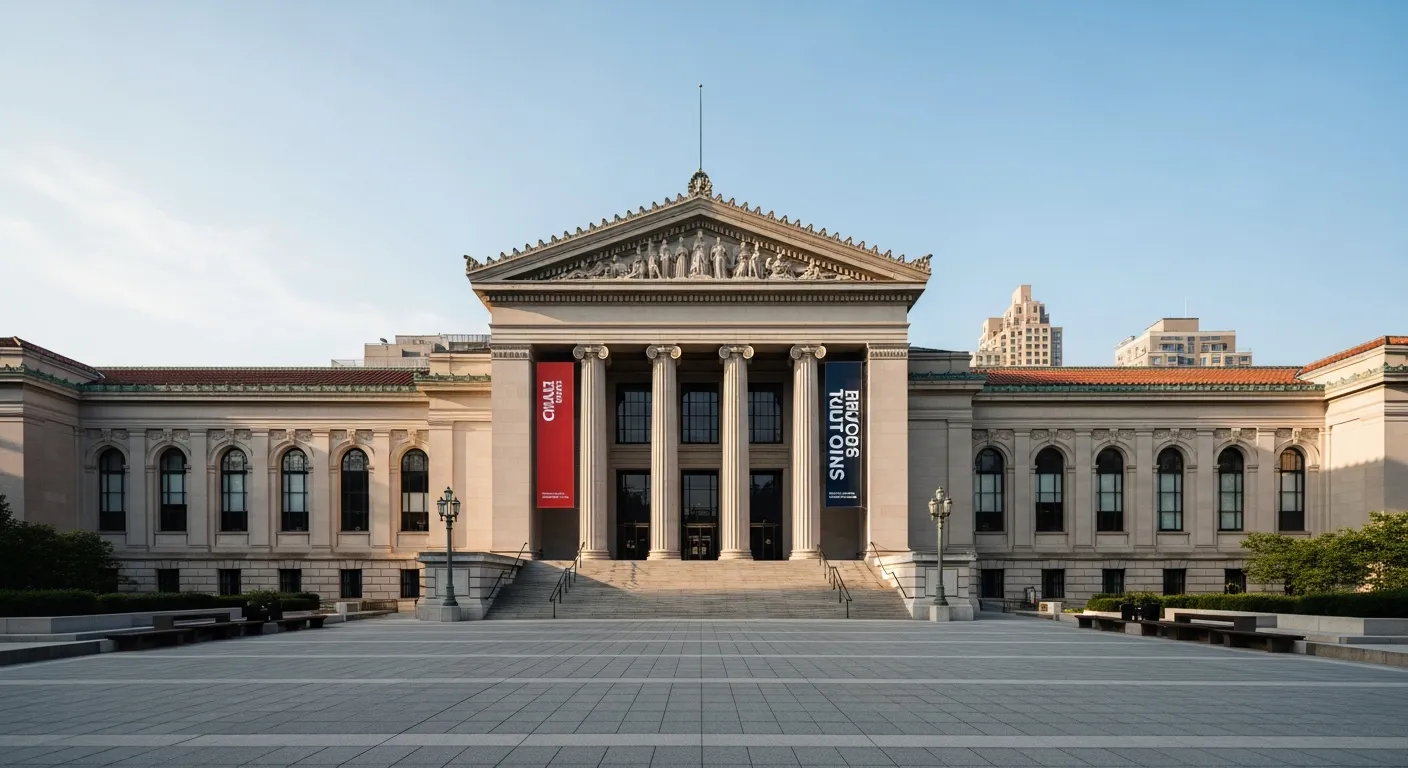
Invisible Worlds: The Microbiome
Until 1 March 2027Immersive dome experience and interactive galleries on the human microbiome — included with general admission.
240 museums across 48 countries
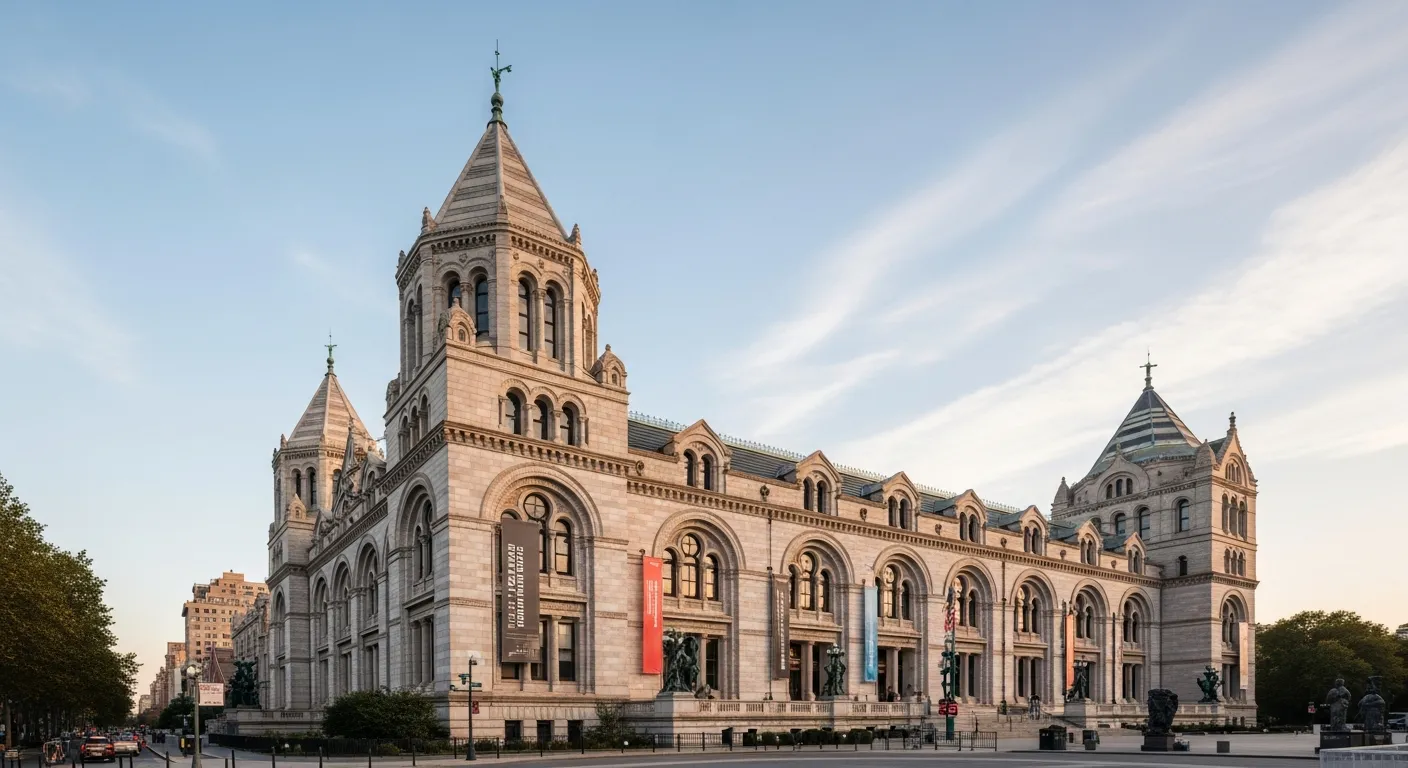
New York City · United States · Founded 1869
Good for: Families · History Enthusiasts · First-timers
34 million
Specimens & Artifacts
5 million
Annual Visitors
3–4 hours
Recommended Visit
American Museum of Natural History in New York City, United States — the American Museum of Natural History (AMNH) on Central Park West is one of the world's preeminent scientific and cultural institutions, founded in 1869 and now encompassing 25 interconnected buildings across four city blocks. Open Daily: 10:00 AM – 5:30 PM. Admission: $28 suggested admission for NY residents; $33 for others. World Museum Guide covers the highlights, getting there, and how long to allow (3–4 hours).
Verified 2026-06-30 against official sources.
The American Museum of Natural History (AMNH) on Central Park West is one of the world's preeminent scientific and cultural institutions, founded in 1869 and now encompassing 25 interconnected buildings across four city blocks. Its collections exceed 34 million specimens and cultural artifacts — among the largest holdings of any natural history museum on Earth.
The museum's public face is iconic: the Theodore Roosevelt Memorial Hall with its Barosaurus rearing to protect its young, the 94-foot blue whale model suspended in the Milstein Hall of Ocean Life, and the fossil halls where a Tyrannosaurus rex skeleton faces a Barosaurus in combat. The Rose Center for Earth and Space, housed in a 95-foot glass sphere, contains the Hayden Planetarium directed by Neil deGrasse Tyson.
In 2023, the Richard Gilder Center for Science, Education, and Innovation opened — a Studio Gang-designed limestone building with a dramatic five-story atrium carved like a canyon, housing insect displays, a butterfly vivarium, and state-of-the-art research visible to the public through glass walls.
Pay-what-you-wish admission for New York, New Jersey, and Connecticut residents preserves accessibility in a city where most major museums charge $30+. The AMNH draws approximately 5 million visitors annually — making it one of the most visited museums in the world.
Updated June 2026. Confirm dates and tickets on the official American Museum of Natural History website.
Immersive dome experience and interactive galleries on the human microbiome — included with general admission.
The American Museum of Natural History spans four city blocks on the Upper West Side facing Central Park West, instantly recognizable from film appearances including Night at the Museum. Suggested admission pricing allows New York, New Jersey, and Connecticut residents to pay less, while out-of-state visitors face fixed general admission plus planetarium surcharges. The Roosevelt Rotunda's barosaurus and allosaurus rearing skeletons create an unforgettable entry moment. Theodore Roosevelt Memorial Hall honors the conservation president with bronze statue at Central Park West entrance. Planetarium shows narrated by Neil deGrasse Tyson require separate timed tickets beyond general admission. Central Park West subway station mosaics preview dinosaur themes before you reach street level. Theodore Roosevelt Memorial Hall at Central Park West entrance honors the conservation president with bronze equestrian statue and expedition narrative panels.
Timed tickets including planetarium shows should be booked online during school breaks when lines stretch around the block. The museum connects via subway at 81st Street–Museum of Natural History station decorated with mosaic creatures. Allow four hours for dinosaurs, space, and a cultural hall, or two hours for a child-focused dinosaur-and-blue-whale route. Discovery Room for children requires timed entry and hands-on specimen examination under educator supervision. Research library on upper floors serves scientists by appointment but public lectures occur monthly. Night at the Museum film locations marked on maps delight children familiar with the movie franchise. Rose Center Hayden Sphere hosts Dark Universe and other planetarium shows requiring separate timed tickets beyond general museum admission price.
Renovations periodically close galleries; check closures before visiting especially for Native American halls undergoing reinterpretation. Coat check handles winter gear and shopping bags. Membership includes planetarium access and supports research expeditions worldwide. Theodore Roosevelt Memorial Hall honors the conservation president with bronze statue at Central Park West entrance. Planetarium shows narrated by Neil deGrasse Tyson require separate timed tickets beyond general admission. Central Park West subway station mosaics preview dinosaur themes before you reach street level. Discovery Room for children requires timed entry and hands-on specimen examination under educator supervision. Research library on upper floors serves scientists by appointment but public lectures occur monthly. Eighty-first Street subway station mosaics preview dinosaur and marine themes before visitors emerge directly beside the museum campus.
Forty-five permanent exhibition halls divide into fossil halls, biodiversity, human origins, and cultural anthropology spanning global civilizations. The Rose Center for Earth and Space, housed in the Hayden Sphere, presents astrophysics through immersive digital shows requiring separate timed tickets. Fossil halls display real T. rex and Apatosaurus mounts assembled from field discoveries. Night at the Museum film locations marked on maps delight children familiar with the movie franchise. Discovery Room for children requires timed entry and provides hands-on specimen examination under educator supervision during school year sessions.
Northwest Coast totem poles and Pacific Island canoes fill cultural halls now being updated with indigenous community consultation. The Bernard and Anne Spitzer Hall of Human Origins presents hominin reconstructions and genomic evidence together. Temporary exhibitions rotate through the LeFrak Theater gallery with additional fees.
Research departments behind public halls employ scientists publishing on paleontology, anthropology, and astrophysics. Night at the Museum sleepover programs sell out months ahead for families. The museum shop's gemstone and fossil replicas remain popular educational souvenirs. Suggested admission pricing allows New York tri-state residents to pay less, while out-of-state visitors face fixed general admission rates.
Pay-what-you-wish admission applies only at the counter with NY/NJ/CT ID — online tickets are fixed price. Planetarium shows require separate timed tickets booked when purchasing general admission to avoid disappointment.
Rose Center Hayden Sphere and Big Bang theater anchor the west side of the campus; Old Mammal Halls on the east retain dioramas Theodore Roosevelt era visitors would recognise. Central Park West entrance queues are shorter than Columbus Avenue on weekend mornings.
Focused routes for American Museum of Natural History — pick one wing per visit to avoid museum fatigue.
Allison and Kenneth Warren Hall of Fossil Mammals and adjacent dinosaur halls present Mesozoic and Cenozoic giants on open platforms. T. rex and Apatosaurus mounts dominate the fourth floor fossil route. Barosaurus and Allosaurus rearing skeletons in Roosevelt Rotunda create an iconic New York photo opportunity visible immediately upon entry.
The Hayden Planetarium sphere hosts Dark Universe and other space shows narrated by astrophysicists. Cosmic Pathway wraps the sphere with a spiraling timeline from Big Bang to present. Hayden Planetarium sphere designed by James Stewart Polshek appears to float inside the glass cube of the Rose Center atrium.
Human Origins and cultural halls present anthropology from African diaspora to Asian peoples, with dioramas and artefacts explaining global diversity. Northwest Coast great canoes impress with carved scale. Spitzer Hall of Human Origins integrates genomic science with hominin reconstructions explaining six million years of evolutionary change.
A focused route through 4 must-see highlights at American Museum of Natural History without museum fatigue. · 3–4 hours
📍 Hall of Saurischian Dinosaurs, 4th Floor
One of the most complete T.
📍 Milstein Hall of Ocean Life, 1st Floor
A 94-foot-long, 21,000-pound fiberglass model of a female blue whale suspended from the ceiling — the largest animal ever to live on Earth, recreated at life size.
📍 Arthur Ross Hall of Meteorites, 1st Floor
A 15.5-ton iron meteorite — the largest ever found in the United States and the sixth-largest in the world.
📍 Akeley Hall, 2nd Floor
28 habitat dioramas of African mammals created by taxidermist-sculptor Carl Akeley — who invented modern taxidermy techniques while collecting specimens in the Congo.
The works that define American Museum of Natural History — and why they matter.
Tyrannosaurus rex · c. 68 million years ago
📍 Hall of Saurischian Dinosaurs, 4th Floor
One of the most complete T. rex skeletons ever found, discovered in Montana in 1908 by Barnum Brown. Mounted in a dynamic fighting pose facing a Barosaurus — one of the most dramatic fossil displays in any museum.
AMNH model · 1969 (updated 2003)
📍 Milstein Hall of Ocean Life, 1st Floor
A 94-foot-long, 21,000-pound fiberglass model of a female blue whale suspended from the ceiling — the largest animal ever to live on Earth, recreated at life size. The hall's centerpiece since 1969.
Iron meteorite · c. 4.5 billion years old
📍 Arthur Ross Hall of Meteorites, 1st Floor
A 15.5-ton iron meteorite — the largest ever found in the United States and the sixth-largest in the world. Sacred to the Clackamas people of Oregon; a subject of ongoing repatriation discussions.
Carl Akeley and team · 1936
📍 Akeley Hall, 2nd Floor
28 habitat dioramas of African mammals created by taxidermist-sculptor Carl Akeley — who invented modern taxidermy techniques while collecting specimens in the Congo. The gorilla diorama is among the most celebrated in the world.
Yes — New York State residents and tri-state students enjoy pay-what-you-wish admission.
The planetarium show requires a separate ticket included in 'general admission plus one'.
Plan 2–3 hours for the highlights. Add time for temporary exhibitions, the museum shop, and café.
Founded in 1869, the museum spans more than 33 million specimens and artefacts across 25 interconnected buildings, recently expanded by Studio Gang's Richard Gilder Center. Key highlights include Fossil halls — dinosaurs, mammals, and human origins, Milstein Hall of Ocean Life — blue whale, Rose Center and Hayden Planetarium.
$28 suggested admission for NY residents; $33 for others Tickets are usually available on the day, but booking online saves queue time in peak season. Official site: https://www.amnh.org/
The Gilder Center opened in May 2023 — a $465 million Studio Gang-designed building connecting previously separate parts of the museum. Its central atrium is sculpted from Milford pink granite to resemble a canyon, with bridges crossing at multiple levels. Highlights include the Susan and Peter J. Solomon Family Insectarium, the Davis Family Butterfly Vivarium (live butterflies), and visible collections storage where thousands of specimens are displayed in glass cases.
The 2006 film Night at the Museum starring Ben Stiller was inspired by AMNH but filmed primarily on a soundstage — not inside the actual museum. However, the real AMNH embraces the connection: the Roosevelt Rotunda dioramas, the T. rex, and the blue whale all appear in the film's spirit. The museum hosts occasional Night at the Museum sleepover events for children — check amnh.org for dates.
New York, New Jersey, and Connecticut residents can pay any amount at the ticket counter with proof of residency — including $1. However, online tickets sold through the AMNH website are fixed-price ($28 for NY residents, $33 for others) and do not offer pay-what-you-wish. To get PWYW pricing, you must visit the ticket counter in person with ID. Special exhibitions and planetarium shows always require full-price add-on tickets.
World Animal Rescue Network
Trafficked parrots are among the world's most illegally traded birds. Your gift supports seizure response, rehabilitation, and release programmes. Please consider a donation to support this work.
Enjoying our free guides? Support World Museum Guide — optional, and every guide stays free.