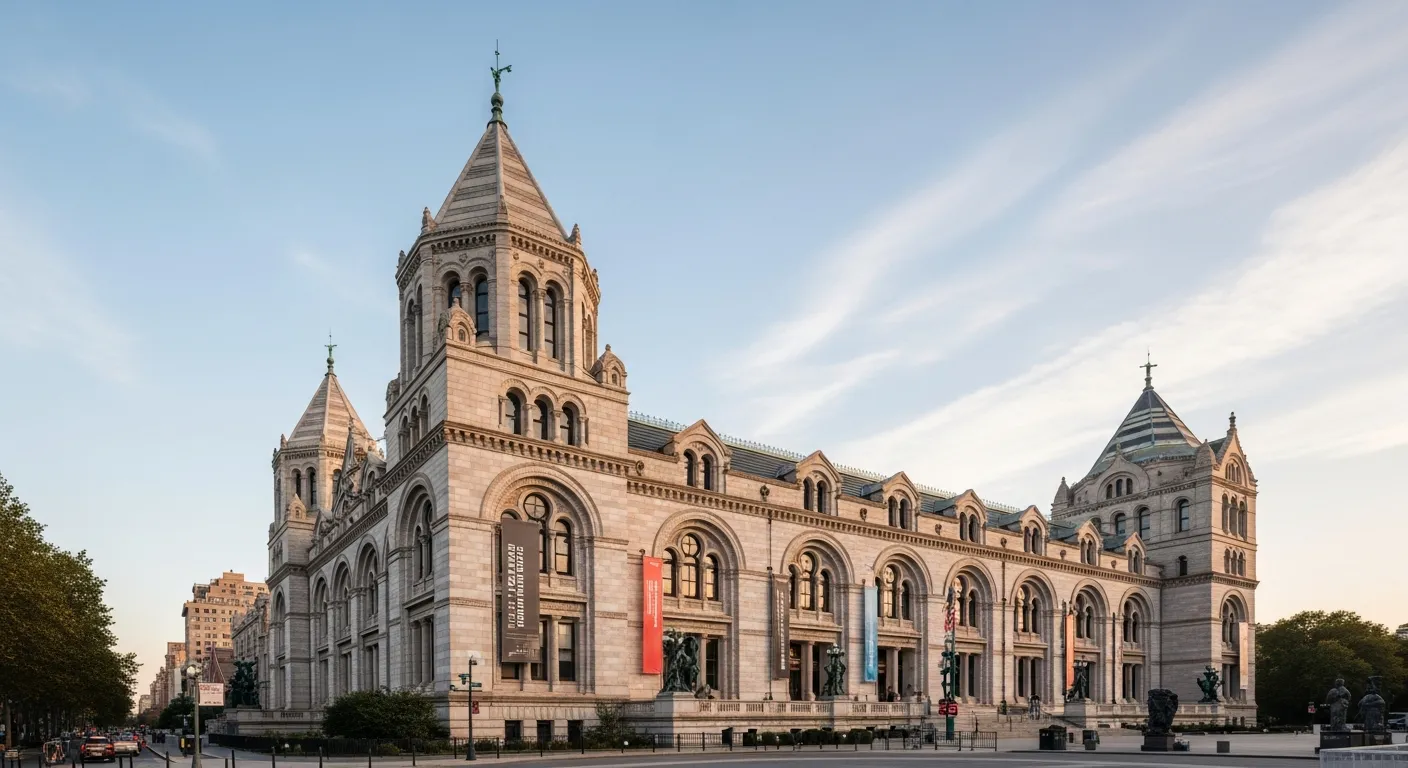
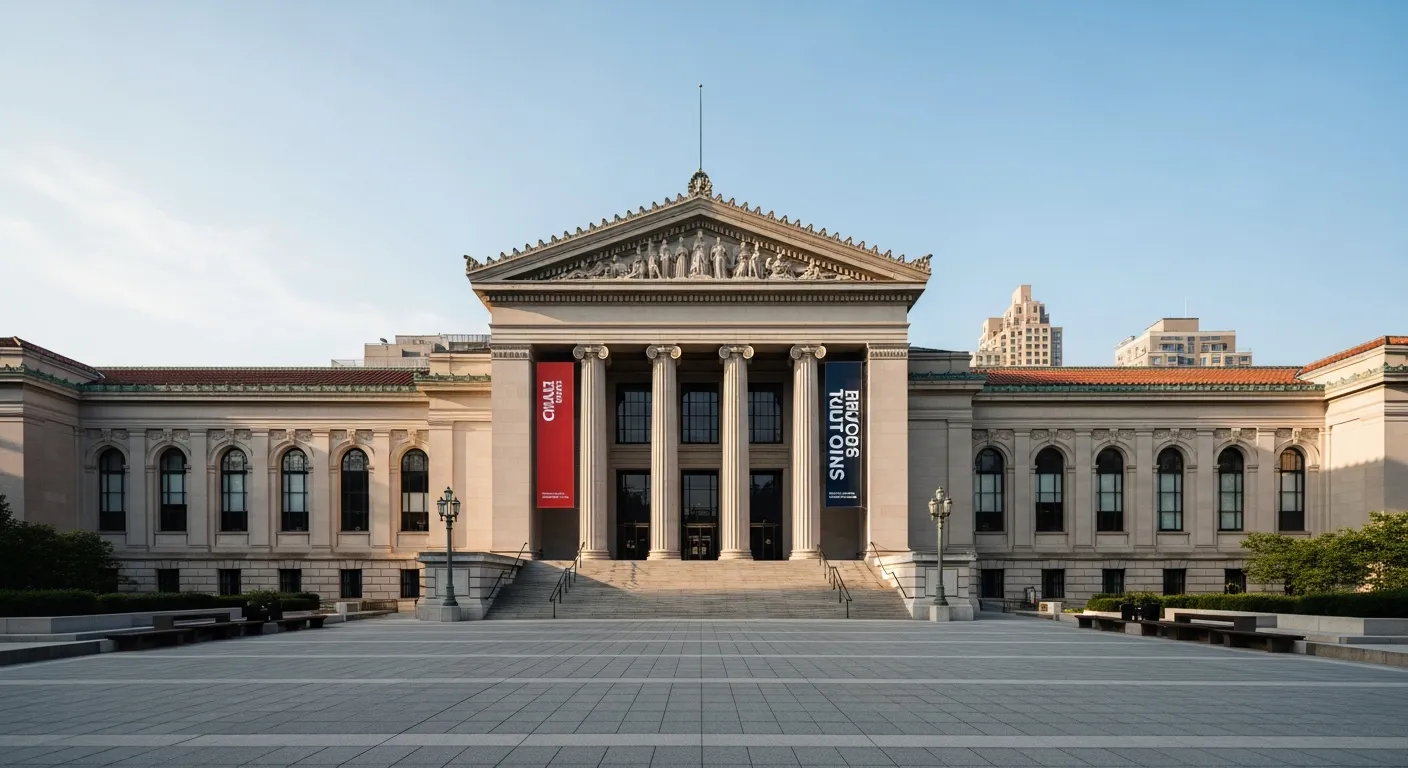
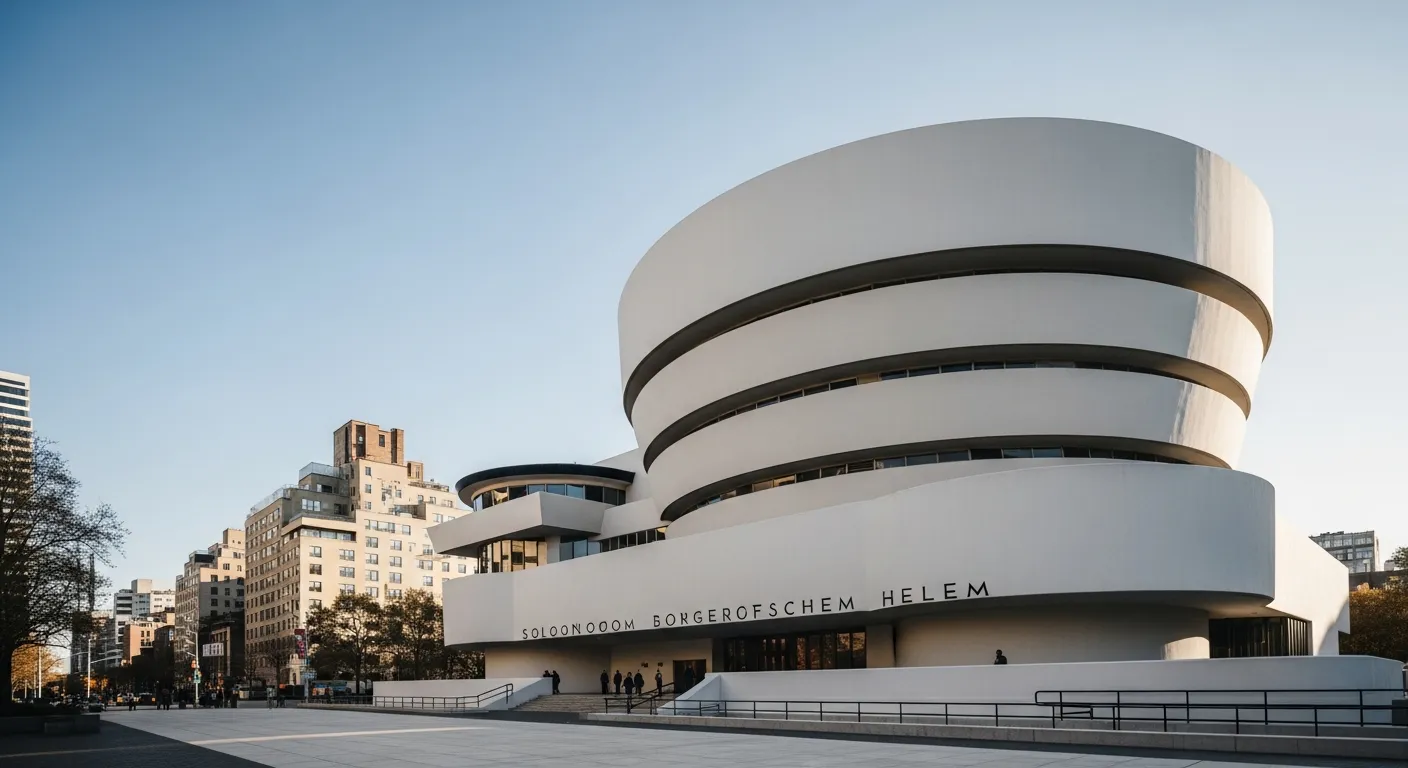
Frank Lloyd Wright and the Modern Museum
Until 20 September 2026Architectural drawings, models, and photographs exploring Wright's influence on museum design worldwide.
240 museums across 48 countries
New York City · United States · Founded 1929
Good for: Art Lovers · Contemporary Art · First-timers
1929
Founded
3.5 million
Annual Visitors
2–4 hours
Recommended Visit
Modern
Museum type
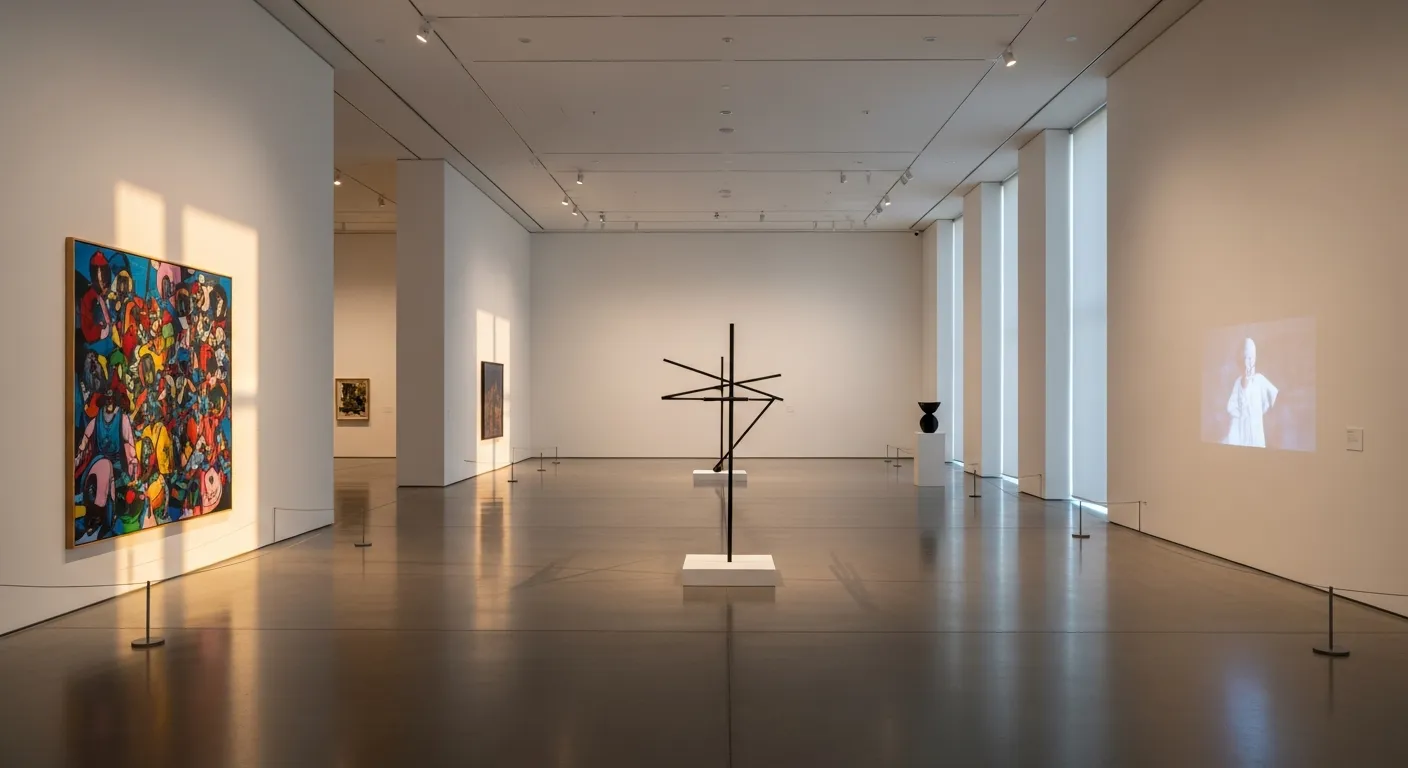
Museum of Modern Art (MoMA) in New York City, United States — the Museum of Modern Art (MoMA) is an art museum located in Midtown Manhattan, New York City, on 53rd Street between Fifth and Sixth Avenues. Open Sunday to Friday: 10:30 AM – 5:30 PM; Saturdays: 10:30 AM – 7:00 PM. Admission: $25 standard admission. Book timed-entry tickets ahead in peak season. World Museum Guide covers the highlights, getting there, and how long to allow (2–4 hours).
Verified 2026-06-30 against official sources.
The Museum of Modern Art (MoMA) is an art museum located in Midtown Manhattan, New York City, on 53rd Street between Fifth and Sixth Avenues. It plays a major role in developing and collecting modern art, and is often identified as one of the largest and most influential museums of modern art in the world.
MoMA's collection offers an overview of modern and contemporary art, including works of architecture and design, drawing, painting, sculpture, photography, prints, illustrated books and artist's books, film, and electronic media.
The museum was founded in 1929 by Abby Aldrich Rockefeller and two of her friends, Lillie P. Bliss and Mary Quinn Sullivan. Since its inception, it has sought to challenge traditional and conservative museum practices.
Its comprehensive collection includes some of the most recognizable works of modern art, continually expanding to reflect the dynamic nature of contemporary artistic expression.
Updated June 2026. Confirm dates and tickets on the official Museum of Modern Art (MoMA) website.
Architectural drawings, models, and photographs exploring Wright's influence on museum design worldwide.
MoMA's biennial survey of emerging photographers working on identity, landscape, and digital image culture.
The Museum of Modern Art on West 53rd Street reopened in 2019 after expansion merging the original 1939 building with a Jean Nouvel tower, increasing gallery space by thirty percent. Timed tickets recommended for weekends; member entry uses separate queue. The Sculpture Garden visible from street level offers ticketed entry or member access as tranquil outdoor respite. West 53rd Street location between Fifth and Sixth Avenues places MoMA near Rockefeller Center and Radio City. Sculpture Garden visible from street level offers green respite but requires ticket or membership for entry. MoMA Design Store across the street sells design objects independently of museum admission requirements. Jean Nouvel tower expansion in 2019 increased gallery space thirty percent while preserving the original 1939 Goodwin and Stone facade on 53rd Street. MoMA Design Store across West 53rd Street sells design objects independently of museum admission tickets.
MoMA's dense collection rewards floor-by-floor planning rather than wandering. Fifth floor Painting and Sculpture 1880s–1940s holds Van Gogh Starry Night and Picasso Demoiselles d'Avignon within two rooms. Free Friday evenings from 5:30 to 8:30 draw long queues but reduce daytime crowds for paid visitors. Film screenings in basement theaters require separate tickets for retrospectives and new releases. Free Friday evenings from 5:30 PM draw long lines wrapping around the block in all weather. MoMA PS1 in Queens extends contemporary programming with separate admission except for members. Abby Aldrich Rockefeller Sculpture Garden seasonal installations appear between skyscraper walls mid-block.
Photography without flash permitted in most collection galleries. Stroller access via elevators makes family visits feasible despite modern art conceptual challenges for children. Allow two hours for fifth and fourth floors, three if adding film, design, and contemporary galleries. West 53rd Street location between Fifth and Sixth Avenues places MoMA near Rockefeller Center and Radio City. Sculpture Garden visible from street level offers green respite but requires ticket or membership for entry. MoMA Design Store across the street sells design objects independently of museum admission requirements. Film screenings in basement theaters require separate tickets for retrospectives and new releases. Fourth floor mid-century galleries present Rothko chapel-like rooms, Pollock drip canvases, and Warhol celebrity portraits at monumental scale. MoMA PS1 in Queens extends contemporary programming with separate admission except for member reciprocal access.
MoMA's founding mission to collect contemporary art now encompasses works barely dry, alongside canonical Impressionist and Post-Impressionist stepping stones to abstraction. Starry Night, Les Demoiselles, and Warhol Campbell's Soup Cans appear in textbooks because MoMA acquired and displayed them early. Design collection includes helicopters, fonts, and furniture treating functional objects as aesthetic achievements. Free Friday evenings from 5:30 PM draw long lines wrapping around the block in all weather. MoMA PS1 in Queens extends contemporary programming with separate admission except for members. Sculpture Garden visible from street level requires ticket or membership for entry but offers tranquil outdoor respite between gallery floors. Design collection includes fonts, chairs, and helicopters treated as aesthetic achievements alongside fine art.
Film department maintains four hundred thousand still and motion picture holdings screened in basement theaters. Photography galleries rotate prints from Steichen, Arbus, and contemporary practitioners. Recent rehangs integrate women artists and global south figures previously underrepresented in canonical narrative. Film department screens retrospectives in basement theaters requiring separate tickets beyond general collection admission on upper floors.
The Abby Aldrich Rockefeller Sculpture Garden hosts seasonal installations between skyscraper walls. MoMA PS1 in Queens extends contemporary programming with separate admission except member reciprocal access. Store design objects replicate collection furniture at premium prices. Free Friday evenings from 5:30 PM draw lines wrapping around the block, so arrive early or purchase timed tickets another day. Member early entry on select mornings reduces congestion near Starry Night before public opening hours.
MoMA's 2019 expansion added gallery space for performance, film, and contemporary works — allow time beyond the fifth-floor painting classics. UNIQLO Free Friday nights from 5:30 PM require online reservation released one week ahead and fill within minutes.
Sculpture Garden accessible without full museum ticket during summer lunch hours on select days — verify current policy. Design Store in lobby stocks MoMA-approved products; bookshop fifth floor carries exhibition catalogs unavailable elsewhere.
Focused routes for Museum of Modern Art (MoMA) — pick one wing per visit to avoid museum fatigue.
Nineteenth-century avant-garde through Surrealism occupies the top collection floor with Starry Night, Demoiselles, and Matisse Dance in adjacent galleries. Start here when fresh for crowd navigation around iconic works. Starry Night and Les Demoiselles d'Avignon on the fifth floor are the two most requested works in the entire MoMA collection.
Post-war abstraction, Pop Art, and Minimalism define the fourth floor with Rothko chapel-like rooms and Warhol celebrity portraits. Jackson Pollock drip paintings demonstrate scale impossible in reproduction. Warhol Gold Marilyn Monroe and Campbell Soup Cans on the fourth floor define Pop Art for generations of museum visitors worldwide.
Rotating contemporary installations and recent acquisitions occupy lower galleries reflecting global pluralism since 1970. Media, performance documentation, and interactive works challenge traditional painting focus upstairs. Second floor contemporary galleries rotate global installations challenging the painting-and-sculpture focus that dominates upper floors since 2019 rehang.
A focused route through 5 must-see highlights at Museum of Modern Art (MoMA) without museum fatigue. · 2–4 hours
📍 Gallery 503, Fifth Floor
Painted in the Saint-Paul-de-Mausole asylum at Saint-Rémy-de-Provence, this swirling nocturnal landscape with an impossibly luminous sky is the most visited work in the MoMA collection.
📍 Gallery 501
A radically new way of seeing — five nude figures rendered with fractured geometry and African mask-like faces.
📍 Gallery 710
32 canvases depicting all varieties of Campbell's condensed soup — a deadpan celebration of American consumer culture and mass production.
📍 Gallery 507
Mondrian's final completed painting, made after his arrival in New York, bursts with jazz rhythms — a grid of yellow and primary colour segments inspired by Manhattan's streets and the boogie-woogie music he loved.
📍 Gallery 409, Fourth Floor
MoMA holds three large panels from Monet's monumental Nymphéas series, painted in the artist's garden at Giverny.
The works that define Museum of Modern Art (MoMA) — and why they matter.
Vincent van Gogh · 1889
📍 Gallery 503, Fifth Floor
Painted in the Saint-Paul-de-Mausole asylum at Saint-Rémy-de-Provence, this swirling nocturnal landscape with an impossibly luminous sky is the most visited work in the MoMA collection.
Pablo Picasso · 1907
📍 Gallery 501
A radically new way of seeing — five nude figures rendered with fractured geometry and African mask-like faces. When Picasso unveiled it in his studio, Braque said it looked like an invitation to drink petrol. It launched Cubism.
Andy Warhol · 1962
📍 Gallery 710
32 canvases depicting all varieties of Campbell's condensed soup — a deadpan celebration of American consumer culture and mass production. It announced Pop Art as the dominant new movement of the 1960s.
Piet Mondrian · 1942–1943
📍 Gallery 507
Mondrian's final completed painting, made after his arrival in New York, bursts with jazz rhythms — a grid of yellow and primary colour segments inspired by Manhattan's streets and the boogie-woogie music he loved.
Claude Monet · 1914–1926
📍 Gallery 409, Fourth Floor
MoMA holds three large panels from Monet's monumental Nymphéas series, painted in the artist's garden at Giverny. Together they wrap around the viewer, creating an immersive field of reflected light and colour.
The Starry Night (1889) by Vincent van Gogh is displayed on the fifth floor of MoMA, in the galleries dedicated to Painting and Sculpture (1880s–1940s). It is typically in Gallery 503 or the adjacent rooms — the exact location can shift during gallery reinstallations, so check the MoMA app or museum map on arrival.
The Starry Night (1889) by van Gogh; Les Demoiselles d'Avignon (1907) by Picasso — a defining work of Cubism; The Persistence of Memory (1931) by Dalí; Campbell's Soup Cans (1962) by Andy Warhol; Water Lilies (1914–26) by Claude Monet — displayed in the second-floor garden hall; and Jasper Johns' Flag (1954–55).
MoMA is free for all visitors on the first Friday evening of each month (5:30 PM–9:00 PM), sponsored by Uniqlo. NYC residents aged 16 and under are always free. Members enter free at all times. Otherwise, standard adult admission applies ($25).
MoMA PS1 is MoMA's contemporary arts centre in Long Island City, Queens — across the East River from Manhattan. It operates in a converted public school building and focuses exclusively on contemporary and experimental art, often featuring installation, performance, and emerging artists. It is affiliated with MoMA but requires a separate ticket. In summer, it hosts the Warm Up outdoor music series.
MoMA's main building has six floors of galleries. A focused visit to the painting and sculpture highlights (floors 5 and 4) takes 1.5–2 hours. A thorough visit through all media — architecture, design, drawings, prints, photography, and film — takes a full day. The museum also has a strong film programme with daily screenings included in admission.
Plan 2–4 hours for the highlights. Add time for temporary exhibitions, the museum shop, and café.
World Animal Rescue Network
Working horses and mules need farrier care, wound treatment, and humane working conditions. Donations fund field veterinary teams. Please consider a donation to support this work.
Enjoying our free guides? Support World Museum Guide — optional, and every guide stays free.