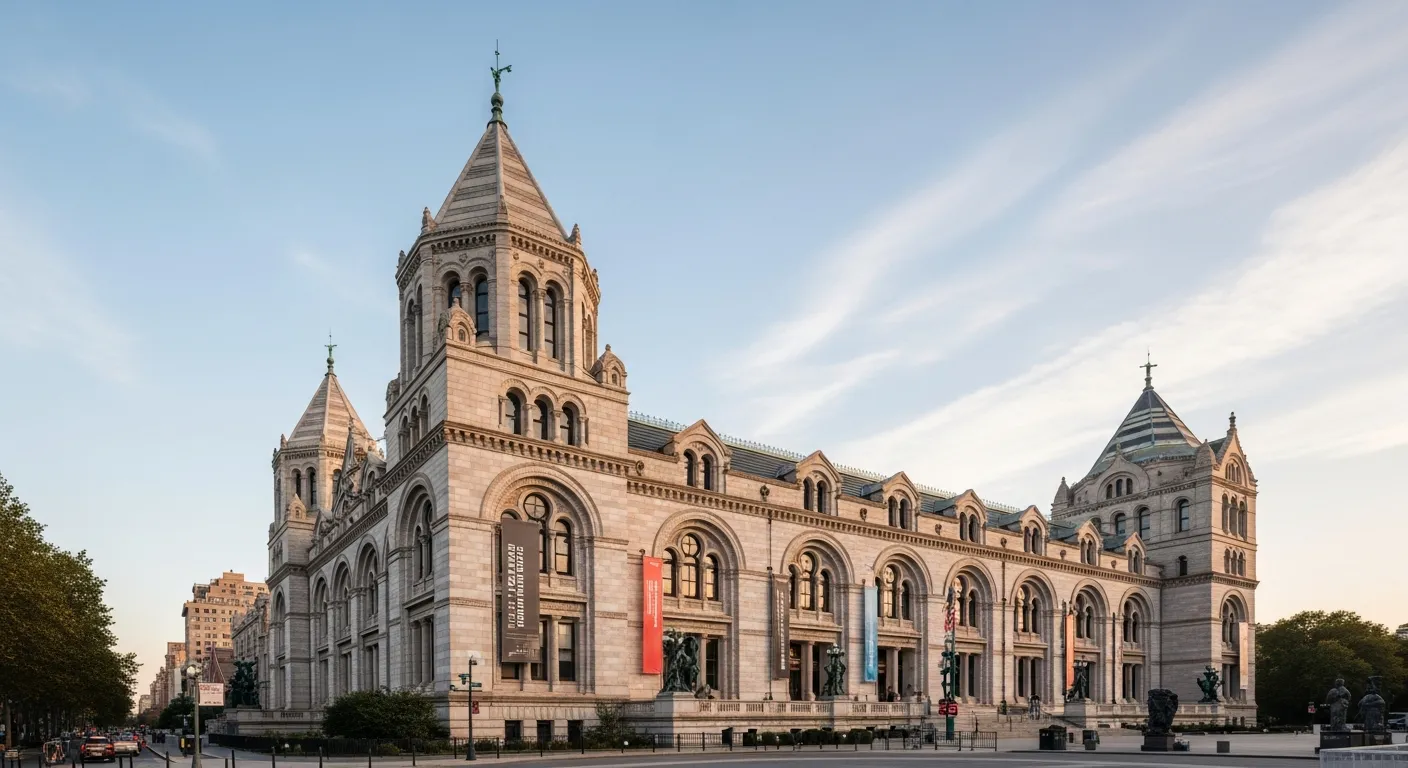
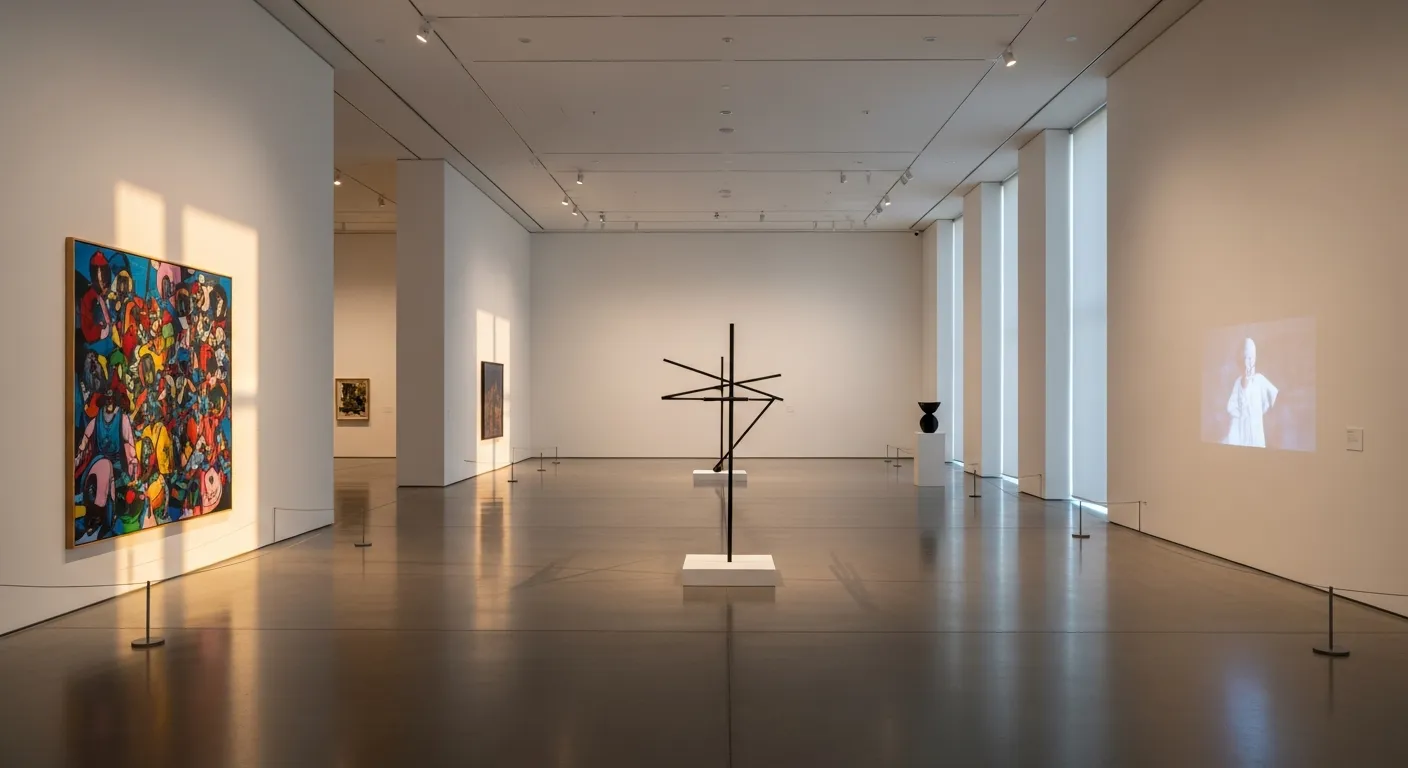
Kandinsky: Around the Circle
Until 31 August 2026A chronological ascent through the Guggenheim rotunda — from early landscapes to the Bauhaus abstract works.
240 museums across 48 countries
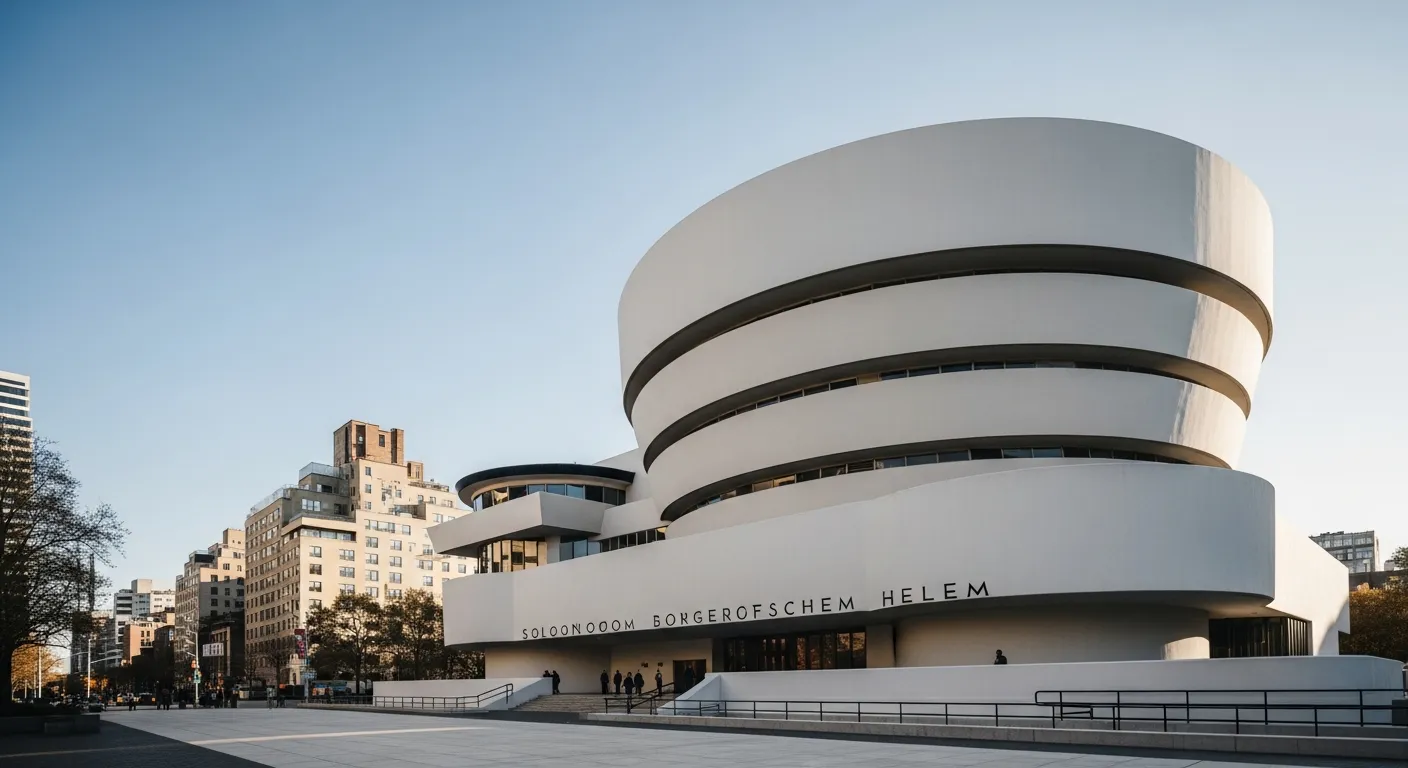
New York City · United States · Founded 1939
Good for: Art Lovers · First-timers · Photographers
1939
Founded
1959
Wright Building Opened
1.5–2 hours
Recommended Visit
Solomon R. Guggenheim Museum in New York City, United States — founded in 1939 as the Museum of Non-Objective Painting, the Guggenheim moved into Frank Lloyd Wright's revolutionary spiral building on its Fifth Avenue site in 1959. Open Sunday to Friday: 11:00 AM – 6:00 PM (Saturdays until 8:00 PM). Admission: $30 standard admission. World Museum Guide covers the highlights, getting there, and how long to allow (1.5–2 hours).
Verified 2026-06-30 against official sources.
Founded in 1939 as the Museum of Non-Objective Painting, the Guggenheim moved into Frank Lloyd Wright's revolutionary spiral building on Fifth Avenue in 1959.
Wright's design — a continuous ramp spiralling around a central atrium — was controversial when built but is now recognised as one of the most important architectural achievements of the twentieth century.
The collection focuses on modern and contemporary art from Impressionism through Kandinsky, Picasso, and Calder to contemporary installations in the rotunda.
Most visitors take the elevator to the top and walk down the spiral ramp, viewing art on the outward-facing walls as they descend.
Updated June 2026. Confirm dates and tickets on the official Solomon R. Guggenheim Museum website.
A chronological ascent through the Guggenheim rotunda — from early landscapes to the Bauhaus abstract works.
The Solomon R. Guggenheim Museum on Fifth Avenue ranks among Frank Lloyd Wright's most executed commissions, its white spiral ramp opened in 1959 after fifteen years of design revision. Pay-what-you-wish hours on select Saturday evenings draw local crowds; standard admission applies otherwise. The spiral ramp is one continuous gallery without separate wing navigation, so visitors ascend or descend past bays sequentially. Fifth Avenue location between 88th and 89th Streets places the museum on Upper East Side Museum Mile. Frank Lloyd Wright's spiral ramp has no steps but continuous incline may challenge visitors with mobility limitations. Thannhauser Collection bequest transformed the museum's Impressionist holdings in 1960s acquisition history. Frank Lloyd Wright spiral ramp opened in 1959 after fifteen years of design revision and remains his most executed public commission in New York.
Central skylight illuminates the rotunda naturally, though summer heat can warm upper levels. Coats and large bags must be checked before entering the ramp. Allow ninety minutes to two hours for permanent collection plus current temporary exhibition on upper ramps. Small lobby means ticket lines extend onto sidewalk during blockbuster exhibition openings. Pay-what-you-wish Saturday evenings from 5 to 8 PM draw local art students and budget travelers. Guggenheim Bilbao and Venice collections are separate institutions not included in New York admission. Fifth Avenue location between 88th and 89th Streets places the museum on Upper East Side Museum Mile. Frank Lloyd Wright's spiral ramp has no steps but continuous incline may challenge visitors with mobility limitations. Continuous ramp without steps ascends past alternating outward and inward wall bays displaying collection chronologically from Impressionism upward.
The museum's narrow entrance doors and small lobby reflect Wright's original 1940s proportions despite modern visitor volume. Audio guides explain ramp sightlines and Kandinsky placement rationale. Combination tickets with other Guggenheim network museums do not apply at New York location. Thannhauser Collection bequest transformed the museum's Impressionist holdings in 1960s acquisition history. Small lobby means ticket lines extend onto sidewalk during blockbuster exhibition openings. Pay-what-you-wish Saturday evenings from 5 to 8 PM draw local art students and budget travelers. Guggenheim Bilbao and Venice collections are separate institutions not included in New York admission. Thannhauser bequest transformed Impressionist holdings with Picasso, Gauguin, and Manet anchoring lower ramp levels before abstraction dominates higher floors.
The Thannhauser Collection gifts Impressionist and Post-Impressionist works including Picasso, Gauguin, and Manet anchoring lower ramp levels before abstraction ascends. Kandinsky holdings represent the largest US collection of the artist's work, displayed chronologically upward matching Guggenheim's historical focus on non-objective art. Temporary exhibitions occupy the top ramp and require inclusion in general ticket during rotation. Central skylight illuminates the rotunda naturally, though summer heat can warm upper levels during afternoon visiting hours.
Sculpture in the rotunda floor including works by Calder and Bourgeois interacts with ramp sightlines as Wright intended. Photography without flash permitted in permanent collection bays unless temporary exhibition restricts. The museum's global branches in Bilbao, Venice, and Abu Dhabi extend brand but New York retains foundational Kandinsky and Thannhauser bequests. Small lobby and narrow entrance doors reflect Wright's 1940s proportions despite modern visitor volume queuing onto Fifth Avenue sidewalk.
Educational programs for children adapt spiral space for guided looking activities. Wright's original design omitted adequate café space; the Wright restaurant on ground level requires reservation for full meals. Restrooms exist at rotunda base and upper landing only. Pay-what-you-wish Saturday evenings from 5 to 8 PM draw local art students and budget travelers to the permanent collection ramp.
Frank Lloyd Wright's spiral ramp dictates a one-way flow — start at the bottom and ascend through the permanent collection before temporary exhibitions on upper ramps. Saturday pay-what-you-wish evenings draw long lines arriving before 5 PM; buy timed tickets online other days.
Kandinsky and early modern holdings anchor the core collection alongside Impressionist works that complement Met visits the same trip. Central Park across East 89th Street offers post-museum walking recovery with Conservatory Water and Bethesda Terrace twenty minutes south on foot.
Photography without flash permitted in permanent galleries. The small rotunda floor atrium hosts site-specific commissions that change annually — check current installation before visiting if a particular artist draws you.
Thannhauser Collection on ramp levels presents Picasso, Degas, and Manet in intimate sequence without the Met's crowds. Allow ninety minutes for permanent collection alone; temporary exhibitions on upper ramps add forty-five minutes minimum depending on artist popularity.
Wright's spiral geometry means some paintings hang at steep angles — step back on the outer ramp for optimal viewing distance on large canvases. Coat check in basement accepts bags that would otherwise slow security at the narrow entrance rotunda.
Free gallery tours depart daily at 2 PM from rotunda floor — no reservation required and excellent for understanding how Wright's architecture shapes the viewing experience of modern art on a continuous ramp.
The Guggenheim's founding mission centred on non-objective art — Kandinsky's Composition series and colour studies occupy ramp bays where Wright's spiral geometry mirrors the artist's spiritual approach to abstraction. Compare lower ramp Impressionist Thannhauser gifts with upper ramp pure abstraction to understand the museum's intellectual arc in a single continuous walk.
Calder mobile in the rotunda rotates slowly with air currents from the skylight — photograph from the ramp at multiple heights for dramatic compositions. Temporary exhibitions on the top ramp often require the full ticket price even if you only want permanent collection — verify whether a reduced ramp-only ticket applies during major retrospectives.
Met Museum and Frick Collection sit within walking distance on Fifth Avenue — schedule Guggenheim before Met if preferring spiral ascent while legs are fresh, or after Met as a lighter ninety-minute coda to a heavy European painting morning.
Focused routes for Solomon R. Guggenheim Museum — pick one wing per visit to avoid museum fatigue.
The continuous spiral presents collection chronologically from Impressionist lower bays through Kandinsky abstractions mid-ramp to contemporary upper levels. Bays alternate outward and inward wall placement creating rhythmic viewing. Kandinsky Improvisation and Composition series on the ramp represent the largest United States concentration of the artist's abstract work.
Justin Thannhauser's bequest concentrates Impressionist and early modern masterpieces on lower ramp levels before abstraction dominates higher floors. Gauguin and Cézanne appear alongside Picasso student-period canvases. Thannhauser Picasso Le Moulin de la Galette and Gauguin Tahitian portraits anchor lower ramp Impressionist and Post-Impressionist highlights.
Upper spiral bays host rotating contemporary installations and special exhibitions extending the museum's modern mandate. Views down the rotunda well reveal ramp geometry and visitor movement patterns. Upper ramp contemporary installations use rotunda sightlines Wright designed intentionally, making architecture part of the viewing experience.
A focused route through 4 must-see highlights at Solomon R. Guggenheim Museum without museum fatigue. · 1.5–2 hours
📍 Ramp, upper levels
Kandinsky's geometric masterwork of circles, lines, and colour — the Guggenheim's founding collection was built around his work and that of the non-objective painters.
📍 Ramp, middle levels
A vivid Expressionist painting of a leaping yellow cow — Marc's symbol of joy and innocence before the First World War transformed European art.
📍 Rotunda, suspended mobile
A monumental mobile of painted sheet metal and wire — Calder's kinetic sculpture floating in Wright's spiral atrium, the two masters in dialogue.
📍 Ramp, lower levels
A luminous Impressionist landscape from Pissarro's series of the Hermitage hill — part of the Thannhauser Collection donated to the museum.
The works that define Solomon R. Guggenheim Museum — and why they matter.
Wassily Kandinsky · 1923
📍 Ramp, upper levels
Kandinsky's geometric masterwork of circles, lines, and colour — the Guggenheim's founding collection was built around his work and that of the non-objective painters.
Franz Marc · 1911
📍 Ramp, middle levels
A vivid Expressionist painting of a leaping yellow cow — Marc's symbol of joy and innocence before the First World War transformed European art.
Alexander Calder · 1939
📍 Rotunda, suspended mobile
A monumental mobile of painted sheet metal and wire — Calder's kinetic sculpture floating in Wright's spiral atrium, the two masters in dialogue.
Camille Pissarro · 1881
📍 Ramp, lower levels
A luminous Impressionist landscape from Pissarro's series of the Hermitage hill — part of the Thannhauser Collection donated to the museum.
Most visitors take the elevator up and walk down the spiral ramp.
Personal photography is generally permitted in the rotunda.
Plan 2–3 hours for the highlights. Add time for temporary exhibitions, the museum shop, and café.
Founded in 1939 as the Museum of Non-Objective Painting, the Guggenheim moved into Frank Lloyd Wright's revolutionary spiral building on its Fifth Avenue site in 1959. Key highlights include Frank Lloyd Wright spiral rotunda, Composition 8 by Kandinsky, Yellow Cow by Franz Marc.
$30 standard admission Tickets are usually available on the day, but booking online saves queue time in peak season. Official site: https://www.guggenheim.org/
Wright's building is itself the star — many visitors come as much for the architecture as the collection. The ramp, skylight, and central atrium are unforgettable.
World Animal Rescue Network
Elephants face poaching and habitat loss daily. Symbolic adoption supports rescue and protection programmes through frontline partners. Please consider a donation to support this work.
Enjoying our free guides? Support World Museum Guide — optional, and every guide stays free.