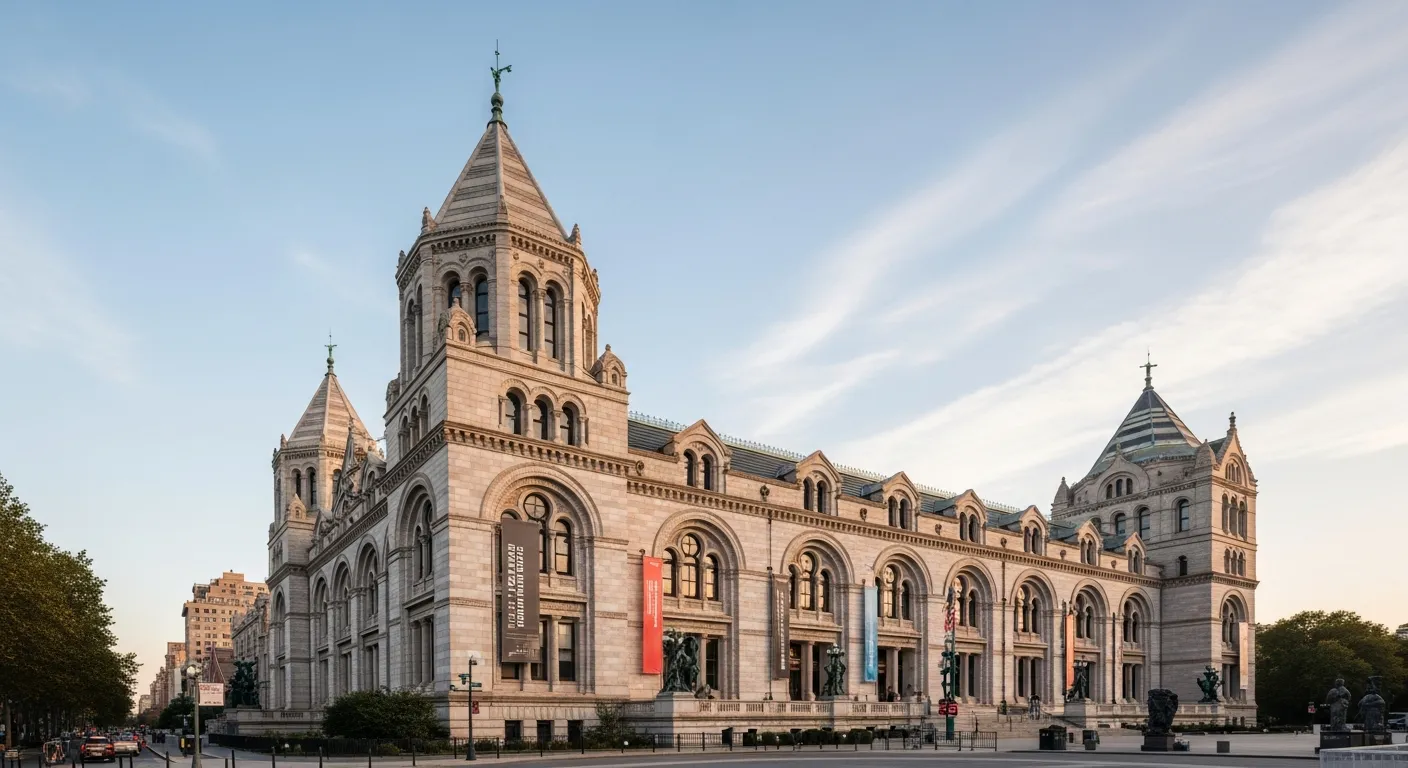
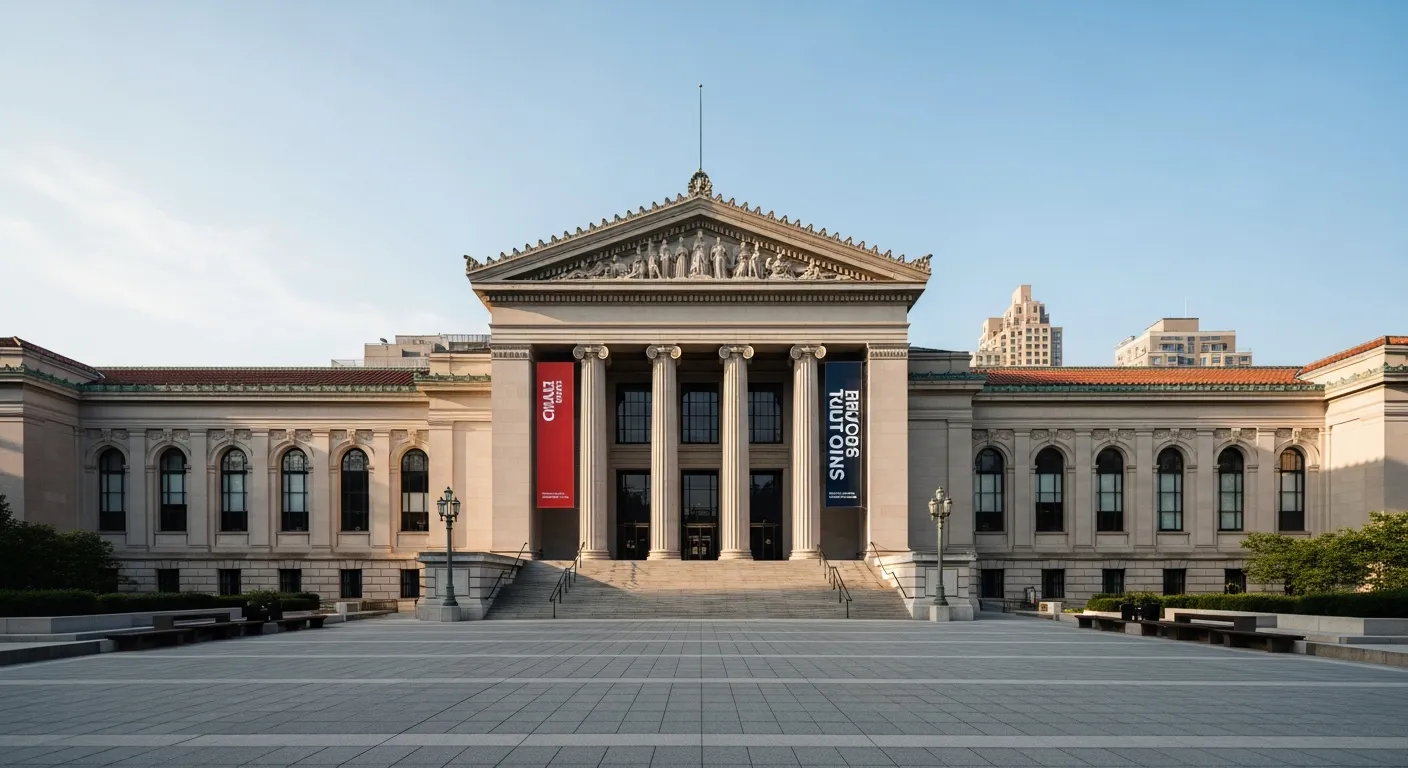
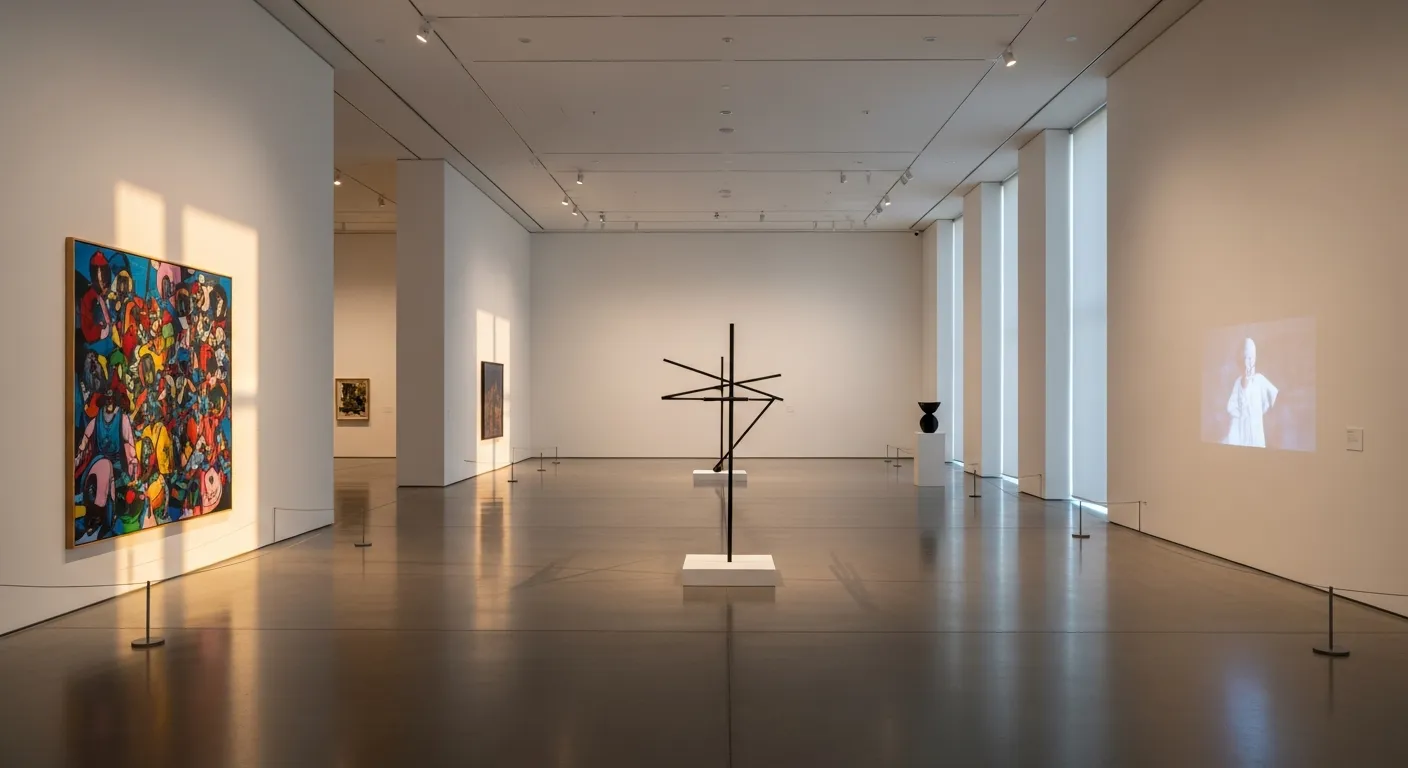
The Metropolitan Museum of Art
New York City · United States · Founded 1870
Quick answer
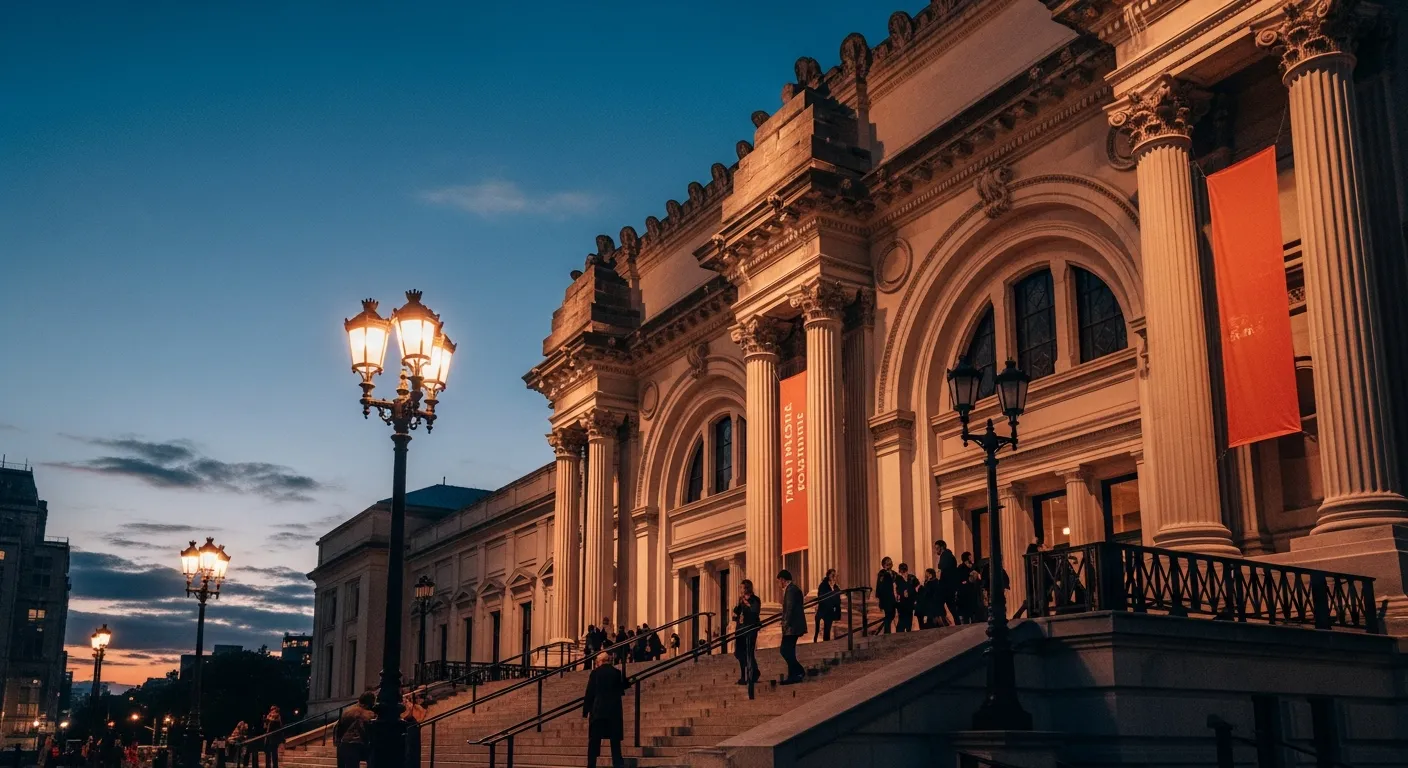
The Metropolitan Museum of Art of New York City, colloquially 'the Met', is the largest art museum in the Americas. Open Sunday to Tuesday, Thursday: 10:00 AM – 5:00 PM; Friday and Saturday: 10:00 AM – 9:00 PM; closed Wednesdays. Admission: $30 for adults; pay-what-you-wish for NY State residents and NY, NJ & CT students. Allow 3–5 hours.
Visitor information last reviewed 25 September 2026. Check the official museum site for current details.
The Metropolitan Museum of Art at a glance: hours, tickets and time needed
| Opening hours | Sunday to Tuesday, Thursday: 10:00 AM – 5:00 PM; Friday and Saturday: 10:00 AM – 9:00 PM |
|---|---|
| Closed | Wednesdays, Thanksgiving, December 25, January 1 and the first Monday in May |
| Admission | $30 for adults; pay-what-you-wish for NY State residents and NY, NJ & CT students |
| Free or reduced entry | Pay-what-you-wish for NY State residents and NY, NJ & CT students (NJ/CT students in person with ID) · Children 12 and under free |
| Booking | Tickets usually available on the day |
| Time needed | 3–5 hours |
| Best time to visit | Friday and Saturday evenings (open until 9 PM) are significantly less crowded than afternoon peak times. |
| Getting there | Metro: Subway 4/5/6 to 86th Street station, then 3-block walk across Central Park |
| Address | 1000 Fifth Avenue, New York, NY 10028, USA |
| Closures | Cantor Roof Garden, Modern and Contemporary galleries, and Ancient West Asia & Ancient Cyprus galleries are closed for renovation. |
| Official website | metmuseum.org |
Checked 2026-09-25 against the official website. Prices and hours change — confirm before you travel.
What is the Metropolitan Museum of Art known for?
The Metropolitan Museum of Art of New York City, colloquially 'the Met', is the largest art museum in the Americas. Its permanent collection contains over two million works, divided among 17 curatorial departments.
The main building at 1000 Fifth Avenue, along the Museum Mile on the eastern edge of Central Park, is by area one of the world's largest art museums. A much smaller second location, The Cloisters at Fort Tryon Park in Upper Manhattan, contains an extensive collection of art, architecture, and artifacts from medieval Europe.
The Metropolitan Museum of Art was founded in 1870 with its mission to bring art and art education to the American people. The museum's permanent collection consists of works of art from classical antiquity and ancient Egypt, paintings, and sculptures from nearly all the European masters, and an extensive collection of American and modern art.
The Met maintains extensive holdings of African, Asian, Oceanian, Byzantine, and Islamic art. The museum is home to encyclopedic collections of musical instruments, costumes, and accessories, as well as antique weapons and armor from around the world.
Best for: Art Lovers · History Enthusiasts · Families · First-timers
What's on at the Metropolitan Museum of Art: current exhibitions
Updated September 2026. Confirm dates and tickets on the official Metropolitan Museum of Art website.
Costume Art
Until 10 January 2027The Costume Institute pairs garments with artworks from across The Met's collection to explore the dressed body, opening the new galleries next to the Great Hall.
Tickets: Included with museum admission ($30 adults; NY State residents pay what they wish)
Orientalism: Between Fact and Fantasy
Until 28 February 2027The Met's first exhibition centred on Orientalism: about 180 objects tracing 19th-century European encounters with Islamic art.
Tickets: Included with museum admission
Krasner and Pollock: Past Continuous
Opens soon · 4 October 2026 – 31 January 2027Over 120 works tracing the parallel careers of Lee Krasner and Jackson Pollock — the first major New York show of either artist in over 20 years.
Tickets: Included with museum admission
Navigating the Met on Fifth Avenue
The Metropolitan Museum of Art spans more than two million square feet facing Central Park, making it one of the world's largest single-site art museums. The main entrance at Fifth Avenue and 82nd Street leads to the Great Hall, from which visitors branch toward Egyptian, European, or American wings. Pay-what-you-wish admission for New York State residents contrasts with fixed out-of-state pricing, so check current policy before visiting. The Met Breuer formerly hosted modern shows but the Fifth Avenue building remains the primary visitor destination for tourists. Gallery numbers painted above doorways follow a roughly chronological sequence within each department wing. The Met Fifth Avenue facade along Central Park stretches four city blocks, making it easy to underestimate interior gallery distances before entering.
The Met's three recommended routes — Museum Highlights, Art History 101, and Family — appear on the website and app, but many visitors prefer wing-based planning. The American Wing courtyard and Temple of Dendur in the Sackler Wing serve as recognizable landmarks for regrouping. Friday and Saturday evening hours extend visiting time for working professionals and reduce daytime congestion slightly. The Charles Engelhard Court in the American Wing provides a bright meeting point with café service nearby. Roof garden seasonal installations require separate timed tickets in summer but offer unmatched Central Park skyline views. Medieval art at the Cloisters includes the Unicorn Tapestries, worth the northern Manhattan trip for dedicated medievalists. Gallery numbers follow departmental prefixes that appear on the map legend, essential for locating specific objects listed in the online collection database.
The Met Cloisters in Fort Tryon Park is included with same-day admission but requires a separate subway trip; do not confuse the two locations. Strollers are permitted, though narrow medieval galleries can be challenging. A first visit deserves at least four hours; attempting the entire collection in one day is physically impractical. The Met Store on ground floor sells reproductions and scholarly publications that ship internationally for continued study. The Met Breuer formerly hosted modern shows but the Fifth Avenue building remains the primary visitor destination for tourists. Gallery numbers painted above doorways follow a roughly chronological sequence within each department wing. The Met Cloisters in Fort Tryon Park specializes in medieval art and requires a separate subway trip but accepts same-day admission tickets.
Five Thousand Years of Global Art
The Met's encyclopedic scope means Egyptian temples, Islamic carpets, European Old Masters, and contemporary installations coexist under one roof. European Paintings holds more than 2,500 works from the thirteenth through early twentieth century, including Vermeer, Rembrandt, and Velázquez masterpieces. The American Wing combines decorative arts, period rooms, and the iconic Washington Crossing the Delaware. The Charles Engelhard Court in the American Wing provides a bright meeting point with café service nearby. Roof garden seasonal installations require separate timed tickets in summer but offer unmatched Central Park skyline views. Medieval art at the Cloisters includes the Unicorn Tapestries, worth the northern Manhattan trip for dedicated medievalists. Islamic art galleries present carpets, ceramics, and manuscript illumination with scholarly depth that rivals collections in Istanbul and Cairo.
Arms and armor, musical instruments, and costume institutes rotate fragile collections through temporary exhibitions that often become cultural events. Asian art galleries span Chinese calligraphy, Japanese screens, and Indian temple sculpture with scholarly depth rivalling national museums abroad. Photograph policies vary by gallery; special exhibitions may restrict images entirely. The Met Store on ground floor sells reproductions and scholarly publications that ship internationally for continued study. Arms and armor galleries attract families while demonstrating metallurgical craft across European, Islamic, and Japanese traditions under one roof.
Membership pays for itself after two visits and includes guest passes useful for traveling companions. The Met Store sells exhibition catalogues and reproduction jewelry inspired by collection holdings. Digital collection search online helps pre-plan specific objects by gallery number, saving wandering time inside the maze-like floor plan. The Costume Institute spring exhibition often coincides with the Met Gala and transforms ground-floor galleries into theatrical fashion installations.
Wing-by-wing visitor guide
Focused routes for The Metropolitan Museum of Art — pick one wing per visit to avoid museum fatigue.
Egyptian Art and Temple of Dendur
⏱ 90 minutesThe Sackler Wing houses the Temple of Dendur, a real Nubian temple relocated and displayed behind glass overlooking Central Park. Surrounding galleries present tomb reliefs, jewelry, and the mastaba tomb of Perneb. Temple of Dendur sits in the Sackler Wing behind glass with a reflecting pool that simulates the Nile setting of its original Nubian landscape.
- • Temple of Dendur with reflecting pool
- • Mastaba tomb chapel of Perneb
- • Hatshepsut statue and royal portraiture
- • Book of the Dead papyrus of Nakht
- • Middle Kingdom wooden models of daily life
European Paintings
⏱ 120 minutesGalleries 600–644 present Old Masters chronologically from Italian Renaissance through Impressionism. Vermeer's Young Woman with a Water Pitcher and Rembrandt's Aristotle with a Bust of Homer anchor the Dutch rooms. Dutch Golden Age galleries in the European wing cluster Vermeer, Rembrandt, and Hals within walking distance for efficient Old Master study.
- • Vermeer and Dutch Golden Age interiors
- • Rembrandt self-portraits and biblical scenes
- • Velázquez Juan de Pareja portrait
- • El Greco and Goya Spanish painting
- • Monet and Impressionist landscape rooms
American Wing
⏱ 75 minutesThe American Wing combines a luminous courtyard with period rooms, sculpture, and painting from colonial through early modern periods. Emanuel Leutze's Washington Crossing the Delaware draws crowds near the wing entrance. The American Wing courtyard skylight illuminates Saint-Gaudens bronze sculptures and neoclassical marble works in natural overhead light.
- • Washington Crossing the Delaware by Leutze
- • Frank Lloyd Wright Room from Prairie House
- • Augustus Saint-Gaudens bronze sculptures
- • John Singer Sargent and Whistler portraits
- • Tiffany glass and decorative arts cases
How long do you need at the Metropolitan Museum of Art?
Allow 3–5 hours. A focused route through 5 must-see highlights at The Metropolitan Museum of Art without museum fatigue. Follow the stops in order:
- 1
Washington Crossing the Delaware
📍 Gallery 760, American Wing
A monumental 3.7 × 6.4 m canvas depicting George Washington's pivotal crossing of the Delaware River on 25 December 1776.
- 2
Cypresses
📍 Gallery 825
Painted a month after Van Gogh voluntarily admitted himself to an asylum in Saint-Rémy, this swirling composition with a turbulent sky and dramatically tall cypress tree is among his most celebrated works.
- 3
Autumn Rhythm (Number 30)
📍 Gallery 919
A monumental 2.7 × 5.3 m drip painting made at the height of Pollock's powers.
- 4
Portrait of Juan de Pareja
📍 Gallery 619
When exhibited in Rome in 1650 it caused a sensation; other painters' works by comparison were said to look like painted cardboard.
- 5
Temple of Dendur
📍 The Sackler Wing
An intact Roman-period Egyptian temple transported stone by stone from Nubia in 1978 before the region was flooded by the Aswan Dam.
What are the must-see works at the Metropolitan Museum of Art?
5 highlights that define the collection: Washington Crossing the Delaware, Cypresses, Autumn Rhythm (Number 30) and more.
Washington Crossing the Delaware
Emanuel Leutze · 1851
📍 Gallery 760, American Wing
A monumental 3.7 × 6.4 m canvas depicting George Washington's pivotal crossing of the Delaware River on 25 December 1776. One of the most recognisable images in American history, though historically idealised.
Cypresses
Vincent van Gogh · 1889
📍 Gallery 825
Painted a month after Van Gogh voluntarily admitted himself to an asylum in Saint-Rémy, this swirling composition with a turbulent sky and dramatically tall cypress tree is among his most celebrated works.
Autumn Rhythm (Number 30)
Jackson Pollock · 1950
📍 Gallery 919
A monumental 2.7 × 5.3 m drip painting made at the height of Pollock's powers. One of the defining works of Abstract Expressionism, created by pouring and dripping paint onto canvas laid on the floor.
Portrait of Juan de Pareja
Diego Velázquez · 1650
📍 Gallery 619
When exhibited in Rome in 1650 it caused a sensation; other painters' works by comparison were said to look like painted cardboard. The subject was Velázquez's enslaved assistant, whom the artist subsequently freed.
Temple of Dendur
Ancient Egyptian · 15 BCE
📍 The Sackler Wing
An intact Roman-period Egyptian temple transported stone by stone from Nubia in 1978 before the region was flooded by the Aswan Dam. Now installed in a purpose-built glass-walled wing beside a reflecting pool.
Collections and highlights
- • The Temple of Dendur
- • Washington Crossing the Delaware
- • Portrait of Madame X
- • Water Lilies by Claude Monet
- • The Astor Chinese Garden Court
Famous works with their own guide

Tips for visiting the Metropolitan Museum of Art
- 1.
Best time to visit
Friday and Saturday evenings (open until 9 PM) are significantly less crowded than afternoon peak times. Avoid public holidays and the first warm weekends of spring.
- 2.
Tickets & booking
Suggested admission pricing — pay what you wish. Advance tickets reduce queue time on busy days. The seasonal Rooftop Garden installation is included with admission and highly recommended.
- 3.
Accessibility
Fully accessible with ramps, elevators, and accessible restrooms throughout. Wheelchairs and motorised scooters available free of charge at the coat check. Sensory-friendly programming and audio guides available.
- 4.
Photography rules
Photography is permitted in most permanent galleries for personal, non-commercial use. Flash and tripods are prohibited. Individual works may restrict photography — follow posted signs.
How do you get to the Metropolitan Museum of Art?
- metro Subway 4/5/6 to 86th Street station, then 3-block walk across Central Park
- bus M1, M2, M3, M4 along Fifth Avenue — stop: 82nd St (southbound) or 86th St (northbound)
- bus M79 or M86 crosstown bus to Fifth Avenue, then 2-minute walk
- walk Accessible from Central Park's Fifth Avenue perimeter — enter from the park side
Address: 1000 Fifth Avenue, New York, NY 10028, USA
The Metropolitan Museum of Art: frequently asked questions
Is the Met Museum free?
New York State residents and students from New York, New Jersey and Connecticut pay what they wish. Everyone else pays $30 for adults ($22 seniors, $17 students), and children 12 and under are free. The Met has no free public days beyond these rules. It is closed on Wednesdays.
What are the must-see works at the Metropolitan Museum of Art?
The Temple of Dendur — an intact ancient Egyptian temple (15 BCE) in its own glass-enclosed gallery; Washington Crossing the Delaware by Emanuel Leutze; Madame X (Portrait of Madame X) by John Singer Sargent; Water Lilies by Claude Monet; the Arms and Armor galleries; and the American Wing period rooms, including the Frank Lloyd Wright 'Little Room'.
What is the Temple of Dendur at the Met?
The Temple of Dendur is an Egyptian temple built around 15 BCE by the Roman Emperor Augustus as a gift to the goddess Isis. It was given to the United States by Egypt in 1965 in gratitude for American assistance saving Nubian monuments from the rising waters of the Aswan Dam. The Met reconstructed it in the Sackler Wing, which opened in 1978.
Does the Met have a rooftop garden?
Yes — the Roof Garden Café and Martini Bar is open during warmer months (typically May to October), weather permitting. It offers stunning views over Central Park and the Manhattan skyline, and features rotating site-specific contemporary art commissions. Admission to the museum is required to access the rooftop.
How long does a visit to the Met take?
The Met's main building has 17 curatorial departments spread across 300,000 square metres. A focused visit to two or three departments takes 3–4 hours. A comprehensive visit requires multiple visits. The Met Cloisters (medieval art, in Fort Tryon Park) requires a separate trip but is included in the same-day ticket.
How long should I spend at The Metropolitan Museum of Art?
Plan 3–5 hours for the highlights of the Metropolitan Museum of Art. Our 5-stop route — Washington Crossing the Delaware, Cypresses, Autumn Rhythm (Number 30) and more — is designed to fit that time. Add extra time for temporary exhibitions, the shop and the café.
Is the Metropolitan Museum of Art open on Wednesdays?
No — the Metropolitan Museum of Art is closed every Wednesday (closing days: Wednesdays, Thanksgiving, December 25, January 1 and the first Monday in May). It is open Sunday to Tuesday, Thursday: 10:00 AM – 5:00 PM; Friday and Saturday: 10:00 AM – 9:00 PM. Plan a different museum for that day, and check the official website for holiday changes.
What are the Metropolitan Museum of Art's opening hours?
The Metropolitan Museum of Art is open Sunday to Tuesday, Thursday: 10:00 AM – 5:00 PM; Friday and Saturday: 10:00 AM – 9:00 PM, and closed Wednesdays, Thanksgiving, December 25, January 1 and the first Monday in May. Hours can change for holidays and events, so check the official website before you go.