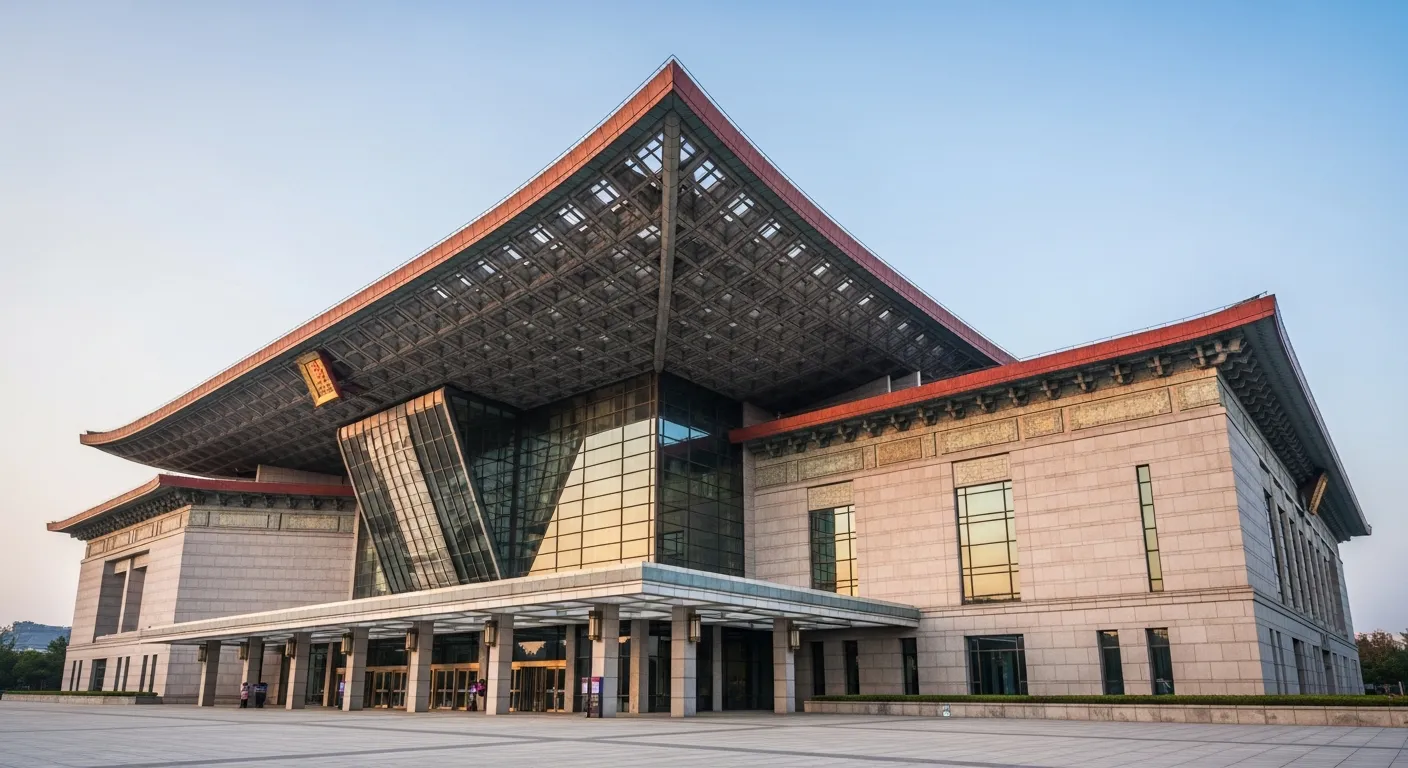
Capital Museum
Beijing · China · Founded 1981
Good for: History Enthusiasts · Families · First-Time Visitors to Beijing
1981
Founded
Free
Admission
2–3 hours
Recommended Visit
Quick answer
Capital Museum in Beijing, China — the Capital Museum was founded in 1981 inside the Confucius Temple and moved in 2006 to a vast new building in Beijing's Xicheng district. Open Tuesday to Sunday: 9:00 AM – 5:00 PM (Closed Mondays). Admission: ✓ Free standard admission. Book timed-entry tickets ahead in peak season. World Museum Guide covers the highlights, getting there, and how long to allow (2–3 hours).
Verified 2026-06-30 against official sources.
About Capital Museum
The Capital Museum was founded in 1981 inside the Confucius Temple and moved in 2006 to a vast new building in Beijing's Xicheng district. Architect Ren Qing's design features an angled bronze-clad elliptical hall that pierces the facade — one of the most distinctive museum buildings in China.
Galleries tell the story of Beijing through bronzes, jade, calligraphy, Buddhist sculpture, and a dedicated Old Beijing folklore display that recreates hutong life with period furnishings and street scenes.
The museum is free but requires advance timed reservations. It sits near Muxidi metro station, a short ride from Tiananmen Square and the Forbidden City.
Special exhibitions rotate through the bronze hall and temporary galleries, often featuring loans from other Chinese provincial museums.
2–3 hours highlights route
A focused route through 4 must-see highlights at Capital Museum without museum fatigue. · 2–3 hours
- 1
Bronze Nao Bell Set
📍 Ancient Beijing Gallery
A set of bronze bells excavated from a Western Zhou tomb in the Beijing area, demonstrating the region's early importance in Chinese ritual culture.
- 2
Buddha Head from Wanfosi Temple
📍 Buddhist Sculpture Gallery
A serene stone Buddha head from a temple destroyed during the Boxer Rebellion, among the finest Tang Buddhist sculpture in Beijing collections.
- 3
Blue-and-White Porcelain Vase
📍 Ceramics Gallery
Imperial blue-and-white porcelain from the Ming court, illustrating Beijing's role as capital and patron of the finest ceramic production.
- 4
Old Beijing Street Scene
📍 Folklore Gallery
A full-scale recreation of a Republican-era hutong with a barber shop, tea house, and cinema — one of the museum's most popular displays.
Masterworks & must-see highlights
The works that define Capital Museum — and why they matter.
Bronze Nao Bell Set
Western Zhou Dynasty · c. 11th century BCE
📍 Ancient Beijing Gallery
A set of bronze bells excavated from a Western Zhou tomb in the Beijing area, demonstrating the region's early importance in Chinese ritual culture.
Buddha Head from Wanfosi Temple
Tang Dynasty · 7th century
📍 Buddhist Sculpture Gallery
A serene stone Buddha head from a temple destroyed during the Boxer Rebellion, among the finest Tang Buddhist sculpture in Beijing collections.
Blue-and-White Porcelain Vase
Ming Dynasty · Jingdezhen
📍 Ceramics Gallery
Imperial blue-and-white porcelain from the Ming court, illustrating Beijing's role as capital and patron of the finest ceramic production.
Old Beijing Street Scene
Museum recreation · permanent
📍 Folklore Gallery
A full-scale recreation of a Republican-era hutong with a barber shop, tea house, and cinema — one of the museum's most popular displays.
Collections & highlights
- • Beijing history from prehistoric to modern
- • Bronze ceremonial hall architecture
- • Buddhist sculpture gallery
- • Old Beijing folk-life recreation
- • Imperial blue-and-white porcelain
Frequently asked questions
Is reservation required?
Yes, free timed reservations are required.
Is the museum near the metro?
Yes — it is a short walk from Muxidi station on Line 1.
How long should I spend at Capital Museum?
Plan 2–3 hours for the highlights. Add time for temporary exhibitions, the museum shop, and café.
What is Capital Museum best known for?
The Capital Museum was founded in 1981 inside the Confucius Temple. It moved in 2006 to a vast new building in Xicheng marked by an angled bronze hall that pierces the wall. Key highlights include Beijing history from prehistoric to modern, Bronze ceremonial hall architecture, Buddhist sculpture gallery.
How do I get tickets for Capital Museum?
✓ Free standard admission Tickets are usually available on the day, but booking online saves queue time in peak season. Official site: http://en.capitalmuseum.org.cn/
How does it compare to the National Museum of China?
The Capital Museum focuses specifically on Beijing's local history and culture, while the National Museum covers all of China from prehistory to the present. Both are free with reservations.
World Animal Rescue Network
Save pangolins
Pangolins are the world's most trafficked mammals. Donations fund confiscation response, rehabilitation, and demand-reduction campaigns. Please consider a donation to support this work.
Enjoying our free guides? Support World Museum Guide — optional, and every guide stays free.