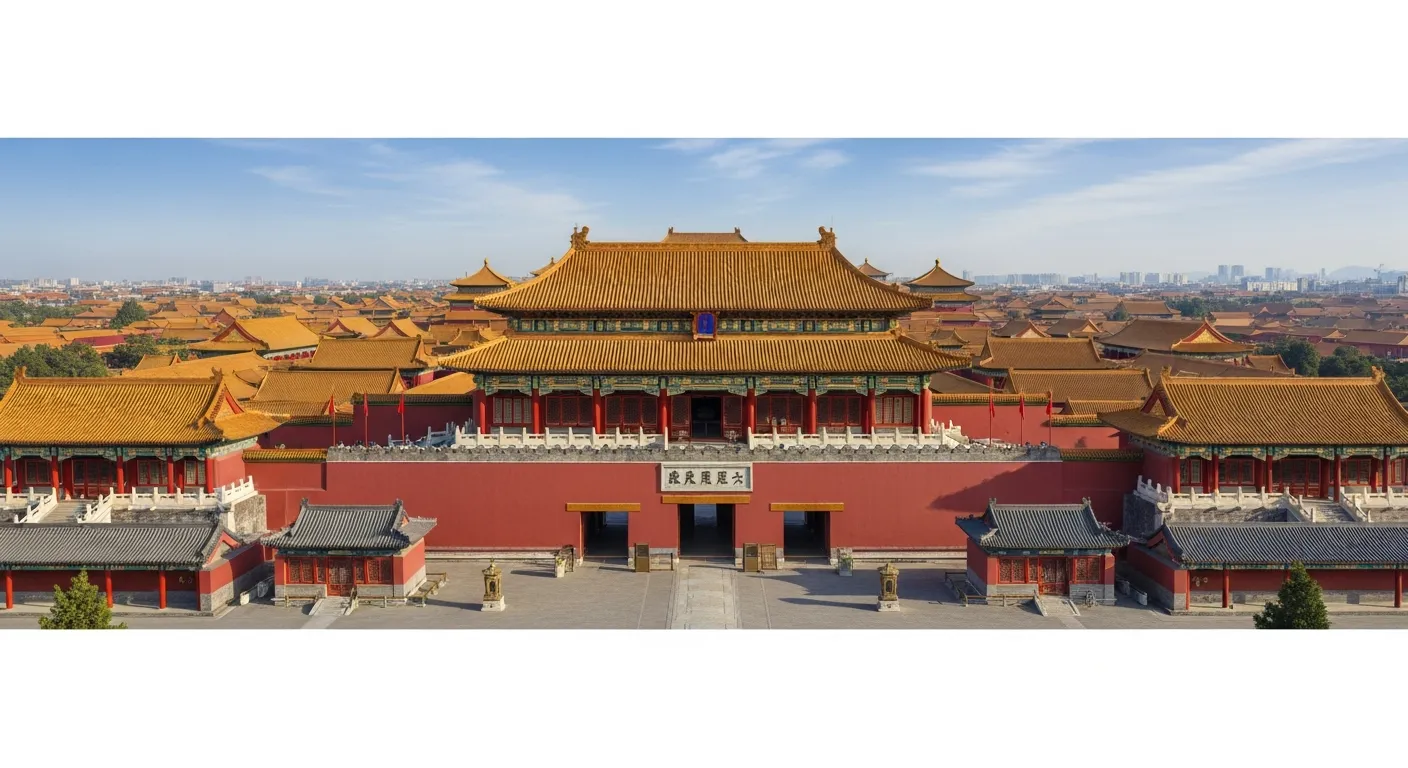
Palace Museum (Forbidden City)
Beijing · China · Founded 1925
Good for: History Enthusiasts · First-timers · Architecture enthusiasts
1420
Forbidden City Built
1.86 million
Objects in Collection
4–5 hours
Recommended Visit
Quick answer
Palace Museum (Forbidden City) in Beijing, China — the Forbidden City was the seat of Chinese emperors from 1420 to 1912. Open Tuesday to Sunday: 8:30 AM – 5:00 PM (Closed Mondays). Admission: 60 CNY standard admission. Book timed-entry tickets ahead in peak season. World Museum Guide covers the highlights, getting there, and how long to allow (4–5 hours).
Verified 2026-06-30 against official sources.
About Palace Museum (Forbidden City)
The Forbidden City was the seat of Chinese emperors from 1420 to 1912. After the abdication of the last Qing emperor Puyi, the Palace Museum was inaugurated in 1925, opening the imperial complex and its treasures to the public.
The Hall of Supreme Harmony (Taihe Dian) — the largest building in the Forbidden City — was where emperors held coronations and state ceremonies. The Treasure Gallery in the Palace of Tranquil Longevity holds gold, jade, and imperial ornaments.
The complex contains 980 surviving buildings across 72 hectares — the world's largest preserved wooden palace complex. Collections of 1.86 million objects include ceramics, paintings, calligraphy, bronzes, and clocks.
Advance online reservation with passport is mandatory. The basic ticket covers the main palace; Treasure Gallery and Clock Gallery require supplementary tickets.
4–5 hours highlights route
A focused route through 4 must-see highlights at Palace Museum (Forbidden City) without museum fatigue. · 4–5 hours
- 1
Hall of Supreme Harmony
📍 Outer Court, central axis
The largest hall in the Forbidden City — three tiers of marble terraces, dragon throne, and yellow glazed tiles.
- 2
Treasure Gallery
📍 Palace of Tranquil Longevity (Ningshou Gong)
Gold, jade, pearl, and gemstone objects from the Qing imperial collection — crowns, seals, and ritual vessels in dedicated gallery requiring supplementary ticket.
- 3
Clock Gallery
📍 Hall of Ancestor Worship (Fengxian Dian)
Ornate mechanical clocks from Europe and China — gifts to Qing emperors from missionaries and diplomats, many still functioning.
- 4
Imperial Garden
📍 North end of complex
The Yuhuayuan — ancient cypresses, rockeries, and pavilions where the imperial family relaxed.
Masterworks & must-see highlights
The works that define Palace Museum (Forbidden City) — and why they matter.
Hall of Supreme Harmony
Ming-Qing imperial architecture · 1420
📍 Outer Court, central axis
The largest hall in the Forbidden City — three tiers of marble terraces, dragon throne, and yellow glazed tiles. Where emperors held coronations and received New Year greetings.
Treasure Gallery
Qing imperial collection
📍 Palace of Tranquil Longevity (Ningshou Gong)
Gold, jade, pearl, and gemstone objects from the Qing imperial collection — crowns, seals, and ritual vessels in dedicated gallery requiring supplementary ticket.
Clock Gallery
Qing court · 18th–19th century
📍 Hall of Ancestor Worship (Fengxian Dian)
Ornate mechanical clocks from Europe and China — gifts to Qing emperors from missionaries and diplomats, many still functioning.
Imperial Garden
Ming-Qing landscape · 15th century onward
📍 North end of complex
The Yuhuayuan — ancient cypresses, rockeries, and pavilions where the imperial family relaxed. The northern exit toward Jingshan Hill.
Collections & highlights
- • Hall of Supreme Harmony — coronation hall
- • Treasure Gallery — imperial gold and jade
- • Clock Gallery — mechanical clocks
- • Imperial Garden — Yuhuayuan
- • Ceramics — Song, Ming, Qing dynasties
- • Painting and calligraphy collections
- • 980 surviving buildings on central axis
Frequently asked questions
Do I need ID to enter?
Yes — visitors must reserve in advance and present passport or ID at entry.
Is one ticket enough?
The basic ticket covers the main palace; the Treasure Gallery and Clock Gallery are extra.
How long should I spend at Palace Museum (Forbidden City)?
Plan 2–3 hours for the highlights. Add time for temporary exhibitions, the museum shop, and café.
What is Palace Museum (Forbidden City) best known for?
The Forbidden City was the seat of Chinese emperors from 1420 to 1912. After the abdication of the last Qing emperor, the Palace Museum was inaugurated in 1925, opening the imperial complex and treasures to the public. Key highlights include Hall of Supreme Harmony, Treasure Gallery in the Palace of Tranquil Longevity, Imperial Garden.
How do I get tickets for Palace Museum (Forbidden City)?
60 CNY standard admission Tickets are usually available on the day, but booking online saves queue time in peak season. Official site: https://en.dpm.org.cn/
Do I need passport to book tickets?
Yes — advance online reservation requires passport or ID number. Present the same document at Meridian Gate entry. Book 7–10 days ahead in peak season.
Which entrance should I use?
Meridian Gate (Wumen) on the south is the only visitor entrance. Exit north through the Gate of Divine Prowess toward Jingshan Park for the classic rooftop view back over the golden roofs.
World Animal Rescue Network
Help save wild tigers
Wild tigers — fewer than 4,000 remain. Donations support anti-poaching patrols, habitat corridors, and community conservation across Asia. Please consider a donation to support this work.
Enjoying our free guides? Support World Museum Guide — optional, and every guide stays free.