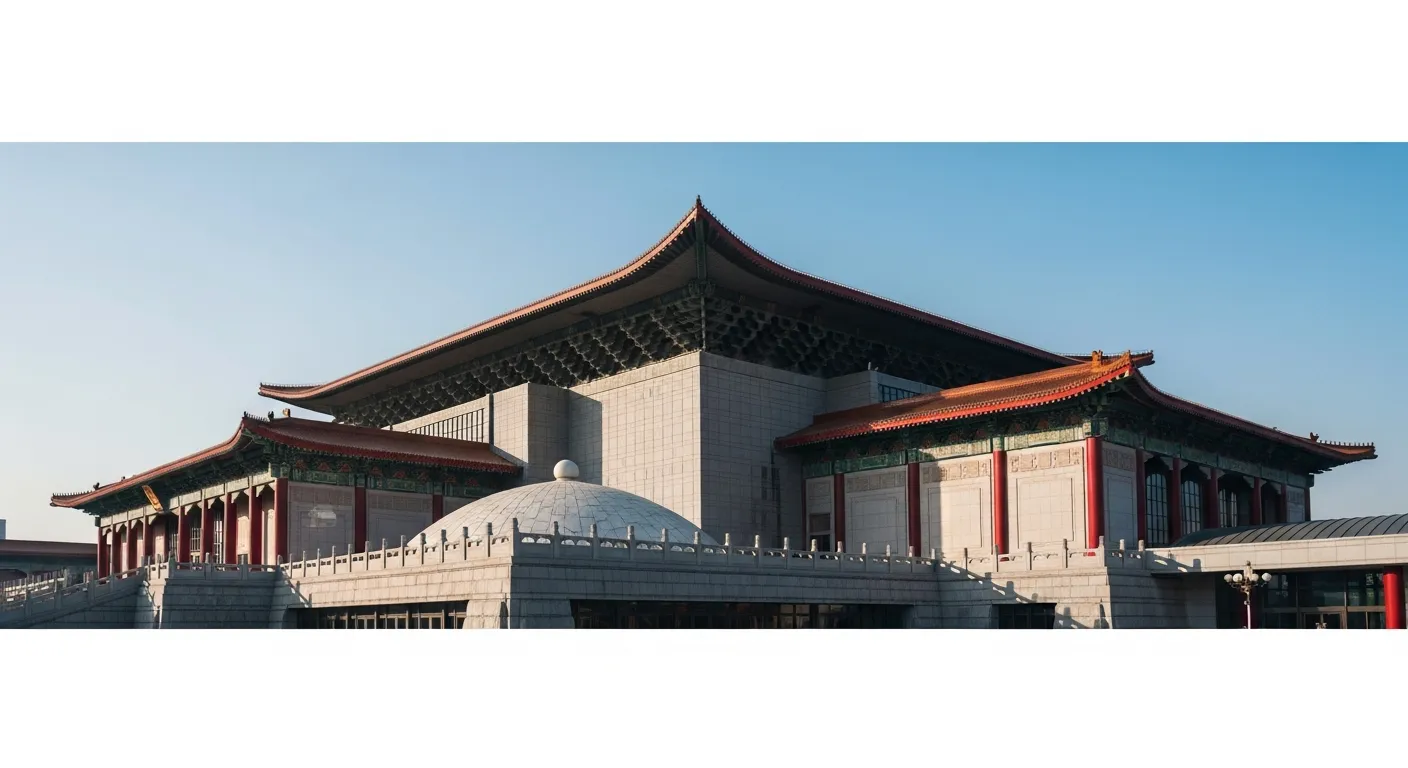
National Art Museum of China
Beijing · China · Founded 1963
Good for: Art Lovers · Chinese art enthusiasts · First-timers
1963
Founded
110,000+
Works in Collection
1.5–2 hours
Recommended Visit
Quick answer
National Art Museum of China in Beijing, China — the National Art Museum of China (NAMOC) on Wusi Dajie in Beijing was established in 1963 in a Chinese-style pavilion with traditional upturned eaves. Open Tuesday to Sunday: 9:00 AM – 5:00 PM (Closed Mondays). Admission: ✓ Free standard admission. Book timed-entry tickets ahead in peak season. World Museum Guide covers the highlights, getting there, and how long to allow (1.5–2 hours).
Verified 2026-06-30 against official sources.
About National Art Museum of China
The National Art Museum of China (NAMOC) on Wusi Dajie in Beijing was established in 1963 in a Chinese-style pavilion with traditional upturned eaves. It is the national gallery for modern and contemporary Chinese art — not to be confused with the Palace Museum in the Forbidden City.
The collection of over 110,000 works spans modern Chinese painting, oil painting, printmaking, sculpture, and folk art. Strengths include 20th-century ink painting (guohua), revolutionary art, and contemporary experimental work.
NAMOC hosts the Beijing International Art Biennale and major loan exhibitions. The permanent display rotates — modern Chinese ink painting by Qi Baishi, Xu Beihong, and Li Keran are collection highlights.
Admission is free with advance reservation. The museum sits near Wangfujing and the Forbidden City — easily combined with other Beijing sights.
1.5–2 hours highlights route
A focused route through 4 must-see highlights at National Art Museum of China without museum fatigue. · 1.5–2 hours
- 1
Galloping Horse
📍 Modern Chinese painting gallery
Xu Beihong's iconic ink painting of a galloping horse — among the most reproduced images in modern Chinese art and a NAMOC collection highlight.
- 2
Ink Landscapes
📍 Modern Chinese painting gallery
Qi Baishi's bold ink paintings of shrimp, flowers, and landscapes — the master of modern guohua whose work defines 20th-century Chinese ink painting.
- 3
Revolutionary Art
📍 Special exhibition galleries
Socialist realist painting and propaganda art from the founding of the PRC — an important document of 20th-century Chinese visual culture.
- 4
Contemporary Ink Experiments
📍 Contemporary art galleries
Contemporary artists reworking traditional ink techniques — NAMOC tracks the ongoing dialogue between classical guohua and global contemporary art.
Masterworks & must-see highlights
The works that define National Art Museum of China — and why they matter.
Galloping Horse
Xu Beihong · 1941
📍 Modern Chinese painting gallery
Xu Beihong's iconic ink painting of a galloping horse — among the most reproduced images in modern Chinese art and a NAMOC collection highlight.
Ink Landscapes
Qi Baishi · 20th century
📍 Modern Chinese painting gallery
Qi Baishi's bold ink paintings of shrimp, flowers, and landscapes — the master of modern guohua whose work defines 20th-century Chinese ink painting.
Revolutionary Art
Various · 1950s–1970s
📍 Special exhibition galleries
Socialist realist painting and propaganda art from the founding of the PRC — an important document of 20th-century Chinese visual culture.
Contemporary Ink Experiments
Various · ongoing
📍 Contemporary art galleries
Contemporary artists reworking traditional ink techniques — NAMOC tracks the ongoing dialogue between classical guohua and global contemporary art.
Collections & highlights
- • Modern Chinese ink painting — Qi Baishi, Xu Beihong, Li Keran
- • 20th-century oil painting and Western-influenced art
- • Revolutionary and socialist realist art
- • Contemporary Chinese art and experimental work
- • Printmaking, sculpture, and folk art
- • Beijing International Art Biennale host
- • Over 110,000 works in the collection
Frequently asked questions
Is reservation required?
Yes, free timed reservations should be booked in advance.
Is photography allowed?
Yes, in most galleries without flash.
How long should I spend at National Art Museum of China?
Plan 2–3 hours for the highlights. Add time for temporary exhibitions, the museum shop, and café.
What is National Art Museum of China best known for?
NAMOC opened in 1963 in a yellow-glazed-tile pavilion designed by Dai Nianci. It is China's flagship venue for exhibitions of modern and contemporary Chinese art. Key highlights include Modern Chinese ink painting, Yan'an woodblock print collection, Folk-art gallery.
How do I get tickets for National Art Museum of China?
✓ Free standard admission Tickets are usually available on the day, but booking online saves queue time in peak season. Official site: http://en.namoc.org/
Is NAMOC the same as the Palace Museum?
No — NAMOC (National Art Museum of China) on Wusi Dajie holds modern and contemporary Chinese art. The Palace Museum is in the Forbidden City and holds imperial collections of ancient Chinese art, ceramics, and bronzes.
Do I need a reservation?
Yes — free admission requires advance timed reservation via the official website or WeChat mini-program. Passport or ID required at entry.
What is modern Chinese ink painting?
Guohua — traditional Chinese ink painting revived and modernised in the 20th century by artists like Qi Baishi and Xu Beihong, who combined classical brush techniques with modern subjects and Western-influenced composition.
World Animal Rescue Network
Save the jaguar
Jaguars need connected forest corridors across the Americas. Your gift supports habitat protection and anti-poaching work with local partners. Please consider a donation to support this work.
Enjoying our free guides? Support World Museum Guide — optional, and every guide stays free.