Chinese History Museum
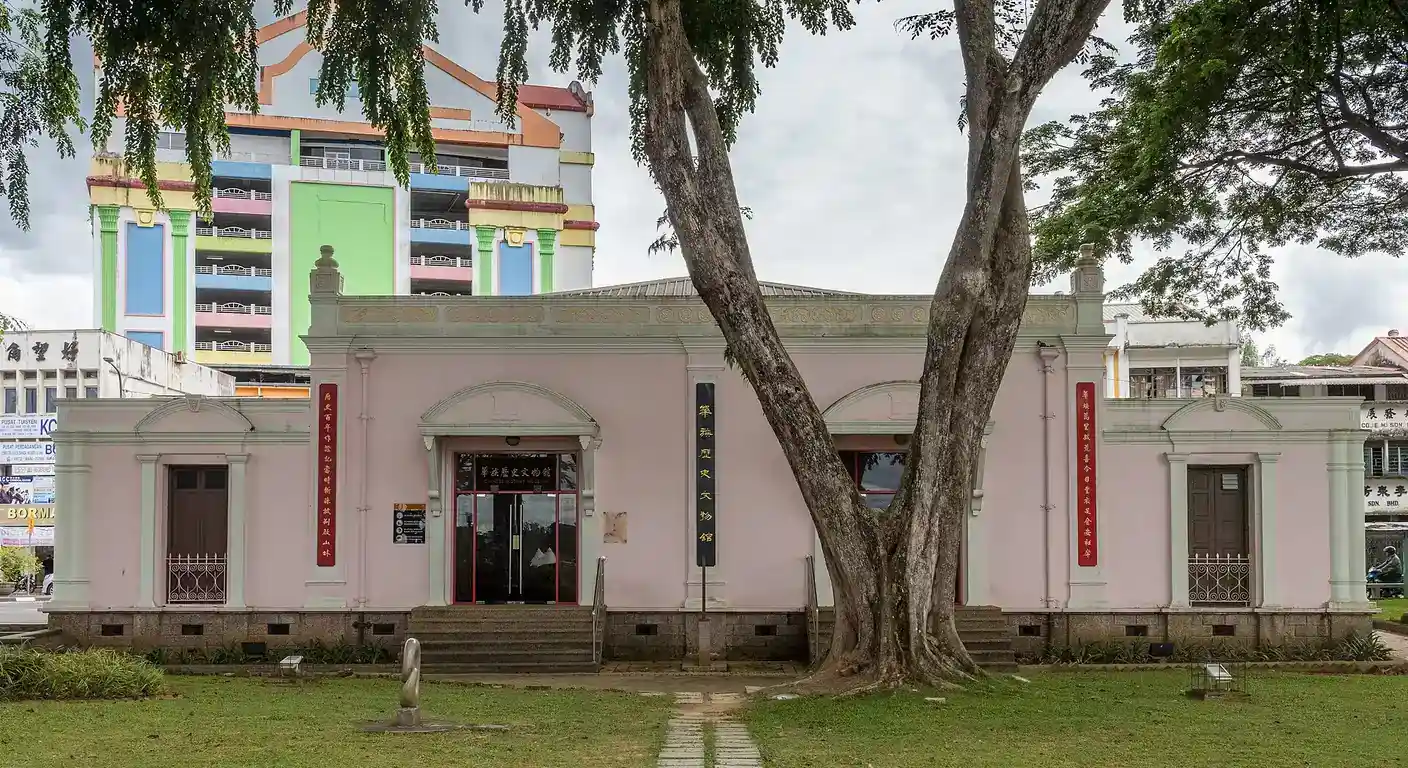
Photo: Graystravels · CC BY-SA 4.0
Quick answer
Chinese History Museum in Kuching, Malaysia — the Chinese History Museum occupies the 1912 Chinese court building on the Kuching Waterfront, opposite the Tua Pek Kong Temple. Open Monday to Friday: 9:00 AM – 4:45 PM; Saturday, Sunday and public holidays: 10:00 AM – 4:00 PM. Admission: free admission for all visitors. Allow 45 minutes.
Visitor information last reviewed 22 October 2026. Check the official museum site for current details.
Chinese History Museum at a glance: hours, tickets and time needed
| Opening hours | Monday to Friday: 9:00 AM – 4:45 PM; Saturday, Sunday and public holidays: 10:00 AM – 4:00 PM |
|---|---|
| Closed | on the first day of Chinese New Year, Hari Raya Aidilfitri and Gawai, and on Labour Day, National Day, the Sarawak Governor's birthday and Christmas Day |
| Admission | Free admission for all visitors |
| Booking | Tickets usually available on the day |
| Time needed | 45 minutes |
| Best time to visit | Any day except the seven listed holiday closures. |
| Getting there | Walk: On the Kuching Waterfront, directly opposite the Tua Pek Kong Temple; part of the Old Kuching Heritage Trail through the old town |
| Address | Kuching Waterfront, opposite the Tua Pek Kong Temple, Kuching, Sarawak, Malaysia |
| Official website | museum.sarawak.gov.my |
Checked 2026-10-22 against the official website. Prices and hours change — confirm before you travel.
What is Chinese History Museum known for?
The Chinese History Museum occupies one of the best-known buildings on the Kuching Waterfront, directly opposite the Tua Pek Kong Temple. Completed in 1912, it was built as a court for the Chinese community: under the Brooke Rajahs, communities were generally left to settle matters such as marriage, divorce and the division of property among themselves, and Chinese cases were heard here until 1921. The building then passed to the Chinese Chamber of Commerce; Sarawak Tourism dates the takeover by the Sarawak Chinese General Chamber of Commerce to 1930.
In 1993, as the Waterfront was being redeveloped, the building was restored and converted into a museum run by the Sarawak Museum Department. It was officially opened on 23 October 1993 by Alfred Yap Chin Loi, then Assistant Minister for Culture, Youth and Sports. The department says the museum sets out to help younger generations appreciate the struggles and values of the early Chinese pioneers, and to explain the origins of each Chinese dialect group in Sarawak, their traditional skills and their cultural heritage. The exhibition was renovated in 2010, when short videos were added.
The displays follow the Chinese story in Sarawak from early trade routes and migration from different regions of China to where the communities settled, the work of the early pioneers, traditional trades, the formation of trade and community associations, political history and the community's place in modern, multi-racial Sarawak. Objects include ceramics, among them Ming dynasty pieces, jade, musical instruments and historic photographs, along with memorabilia from the Brooke era. Sarawak Tourism also highlights galleries on traditional festivals and on the community's contribution to the economy.
Admission is free. The museum opens Monday to Friday from 9:00 AM to 4:45 PM and on weekends and public holidays from 10:00 AM to 4:00 PM, closing on the first day of Chinese New Year, Hari Raya Aidilfitri and Gawai, and on Labour Day, National Day, the Governor's birthday and Christmas Day. Visitors are asked to dress modestly. The building is compact, so a visit fits easily into a walk along the Waterfront, and the Tua Pek Kong Temple, on its site since 1770, is just across the road.
Best for: History Enthusiasts · Budget Travellers · First-timers
What are the must-see works at Chinese History Museum?
4 highlights that define the collection: The 1912 Chinese court building, Chinese ceramics, including Ming dynasty pieces, Jade and musical instruments and more.
The 1912 Chinese court building
Kuching Chinese community · 1912
📍 Kuching Waterfront
The museum building itself, completed in 1912 and used as the Chinese community's court until 1921 before it became the home of the Chinese Chamber of Commerce.
Chinese ceramics, including Ming dynasty pieces
Chinese ceramics · Ming dynasty and later
Ceramics brought to or used in Sarawak, which Sarawak Tourism lists among the museum's key exhibits alongside other artefacts from the early 1900s.
Jade and musical instruments
Sarawak Chinese community · Brooke era
Jade pieces and traditional musical instruments from the White Rajahs period, shown with photographs of Chinese community life in Sarawak.
Dialect groups and migration displays
Sarawak Museum Department exhibition · renovated 2010
Displays on early trade routes, migration from different regions of China and the origins, skills and heritage of each Chinese dialect group in Sarawak.
Collections and highlights
- • History of Sarawak's Chinese dialect groups
- • Early trade routes and migration from China
- • Traditional trades, skills and community associations
- • Ceramics, including Ming dynasty pieces
- • Jade, musical instruments and historic photographs
- • Chinese community life in the Brooke era
- • Short documentary videos (added 2010)
Tips for visiting Chinese History Museum
- 1.
Best time to visit
Any day except the seven listed holiday closures. Weekdays open earlier (9:00 AM) than weekends (10:00 AM), and the museum closes at 4:45 PM on weekdays and 4:00 PM at weekends, so go before mid-afternoon.
- 2.
Tickets & booking
No ticket or booking is needed: admission is free for everyone. Call +6082-231 520 with questions.
- 3.
Accessibility
No accessibility information is published; contact the museum before visiting.
- 4.
Photography rules
No photography policy is published. Follow any signs, ask staff if unsure and avoid flash near old photographs and ceramics.
How do you get to Chinese History Museum?
- walk On the Kuching Waterfront, directly opposite the Tua Pek Kong Temple; part of the Old Kuching Heritage Trail through the old town
- taxi Grab or taxi to the Kuching Waterfront by the Tua Pek Kong Temple; Sarawak Tourism puts the museum about 11 km from the airport
Address: Kuching Waterfront, opposite the Tua Pek Kong Temple, Kuching, Sarawak, Malaysia
Sources we checked
Visitor facts and history on this page come from these sources, checked on the dates shown.
- Chinese History Museum - Sarawak Museum Department (Wayback Machine snapshot of the official page, 15 Oct 2026) — Sarawak Museum Department (Jabatan Muzium Sarawak), checked 22 October 2026
- Chinese History Museum (2016 version of the Sarawak Museum Department page) — Sarawak Museum Department (Jabatan Muzium Sarawak), checked 22 October 2026
- Chinese History Museum | Sarawak Tourism Board — Sarawak Tourism Board, checked 22 October 2026
- Old Chinese Court (Chinese History Museum) | Sarawak Tourism Board — Sarawak Tourism Board, checked 22 October 2026
- Chinese History Museum, Kuching | Visit Sarawak (archived 2016) — Sarawak Tourism Board, checked 22 October 2026
- Old Kuching Heritage Trail (archived 2019) — Sarawak Tourism Board, checked 22 October 2026
- Chinese History Museum — Wikipedia, checked 22 October 2026
- 华人历史博物馆 (Chinese History Museum) — Chinese Wikipedia, checked 22 October 2026
- Chinese History Museum (Q7393554) — Wikidata, checked 22 October 2026
Chinese History Museum: frequently asked questions
How much is the entrance fee for the Chinese History Museum?
Entry is free. The Sarawak Museum Department lists admission to the Chinese History Museum as free for everyone, as it does for the Sarawak Islamic Heritage Museum and the Petroleum Museum in Miri. There is no ticket to buy and individual visitors do not need to book; simply walk in during opening hours. The department asks visitors to wear modest clothing.
Where is the Chinese History Museum and how do I get there?
The museum stands on the Kuching Waterfront, directly opposite the Tua Pek Kong Temple in the city centre. It is a stop on the Old Kuching Heritage Trail, whose historic buildings Sarawak Tourism describes as lying within walking distance of each other. Sarawak Tourism puts it about 11 km from the airport, so a Grab or taxi is the easiest way in if you are arriving by air.
How long should I spend at the Chinese History Museum?
Plan 45 minutes for the highlights of Chinese History Museum. Add extra time for temporary exhibitions, the shop and the café.
What are the highlights of the Chinese History Museum?
Start with the building itself, completed in 1912 as the Chinese community's court. Inside, follow the displays on early trade routes and migration from different regions of China, the origins of each dialect group, traditional trades and associations, and the community's role in modern Sarawak. Objects include ceramics with Ming dynasty pieces, jade, musical instruments and historic photographs from the Brooke era.
Can I take photos inside the Chinese History Museum?
The Sarawak Museum Department does not publish a photography policy for this museum. Follow any signs in the galleries, ask the staff if you are unsure, and avoid flash near old photographs and ceramics. The pale 1912 facade is easy to photograph from the Waterfront promenade, and the Tua Pek Kong Temple opposite makes a good companion shot.
Is the Chinese History Museum open at weekends?
Yes. The Sarawak Museum Department lists Saturday, Sunday and public-holiday hours of 10:00 AM to 4:00 PM, and weekday hours of 9:00 AM to 4:45 PM. It closes on the first day of Chinese New Year, Hari Raya Aidilfitri and Gawai, and on Labour Day, National Day, the Governor's birthday and Christmas Day. Sarawak Tourism's listing shows weekday hours only, so call +6082-231 520 if in doubt.
What else is near the Chinese History Museum?
The Tua Pek Kong Temple faces the museum; Sarawak Tourism says a temple has stood on that site since 1770, with major rebuilding in 1856, 1965 and 2002. The museum also sits on the Kuching Waterfront and the Old Kuching Heritage Trail, which links it with the Old Court House, home of the Ranee Museum, and the river crossing to Fort Margherita's Brooke Gallery.
What are Chinese History Museum's opening hours?
Chinese History Museum is open Monday to Friday: 9:00 AM – 4:45 PM; Saturday, Sunday and public holidays: 10:00 AM – 4:00 PM, and closed on the first day of Chinese New Year, Hari Raya Aidilfitri and Gawai, and on Labour Day, National Day, the Sarawak Governor's birthday and Christmas Day. Hours can change for holidays and events, so check the official website before you go.
Is Chinese History Museum free to visit?
Yes — free admission for all visitors.