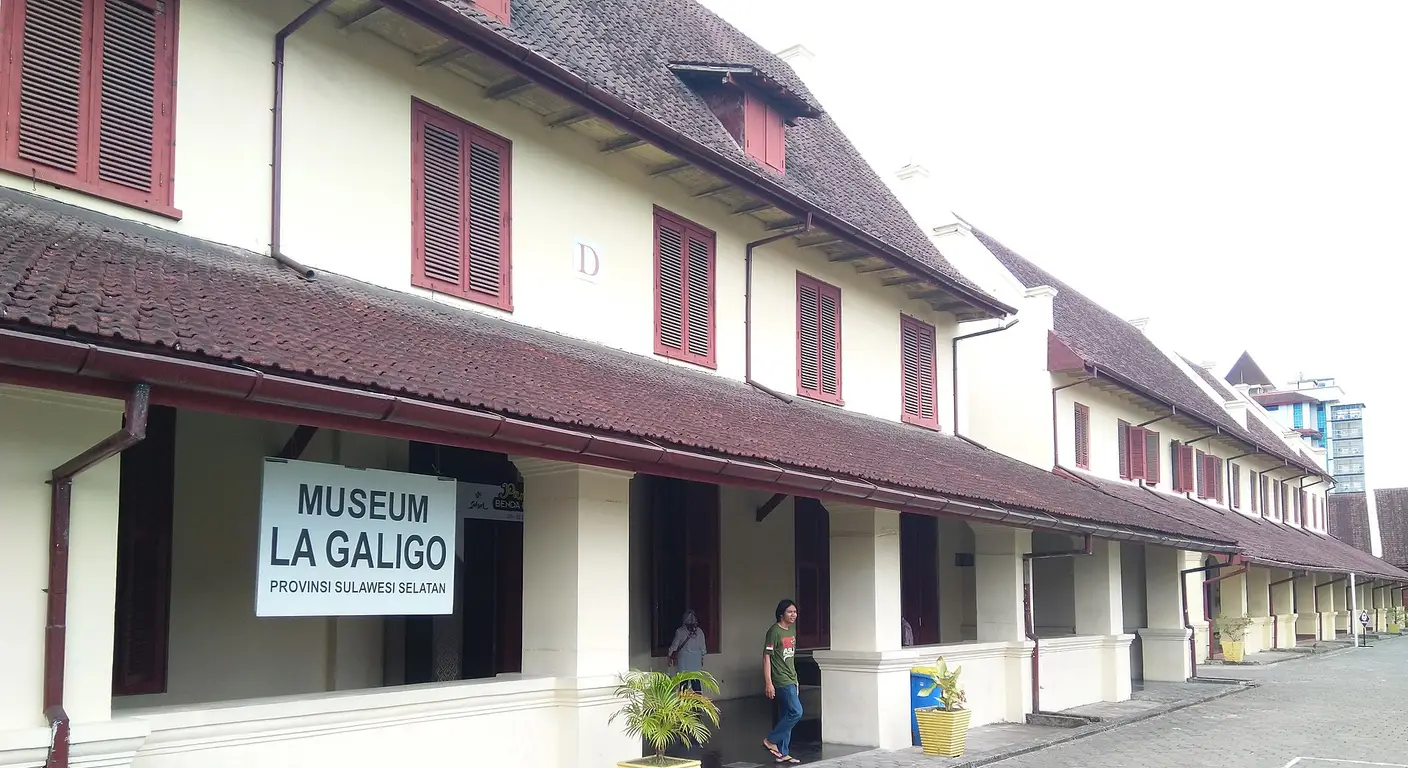
Makassar City Museum
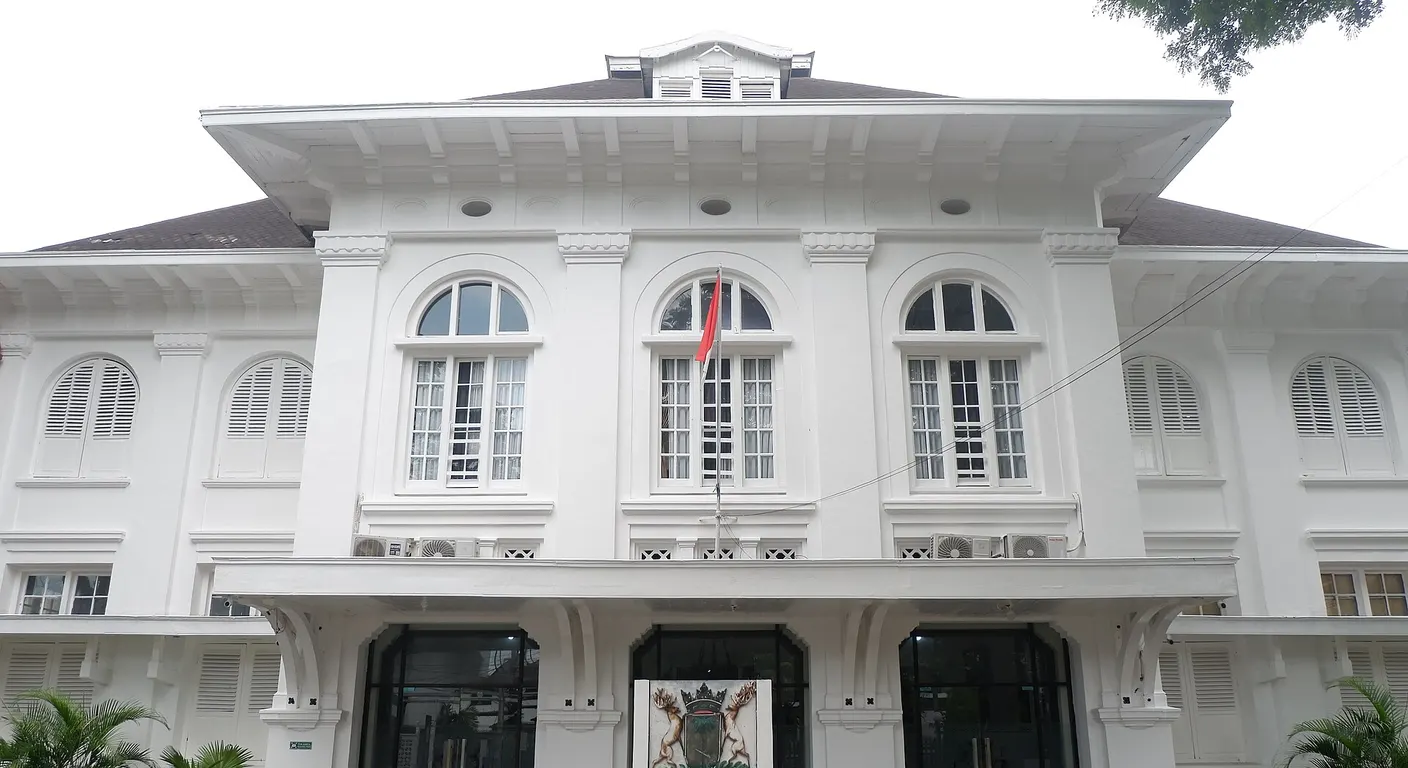
Photo: Wadaihangit · CC BY-SA 4.0
Quick answer
Makassar City Museum occupies the 1916 former town hall on Jalan Balaikota, a short walk from Fort Rotterdam. Open Monday to Thursday: 9:00 AM – 4:00 PM; Friday: 9:00 AM – 4:30 PM; Saturday and Sunday: 9:00 AM – 3:00 PM. Admission: free admission for all visitors. Allow 45 minutes–1 hour.
Visitor information last reviewed 22 October 2026. Check the official museum site for current details.
Makassar City Museum at a glance: hours, tickets and time needed
| Opening hours | Monday to Thursday: 9:00 AM – 4:00 PM; Friday: 9:00 AM – 4:30 PM; Saturday and Sunday: 9:00 AM – 3:00 PM |
|---|---|
| Closed | on public holidays |
| Admission | Free admission for all visitors |
| Booking | Tickets usually available on the day |
| Time needed | 45 minutes–1 hour |
| Best time to visit | Weekday mornings, when it opens at 9 AM; weekend hours end at 3 PM and the museum is closed on public holidays. |
| Getting there | Walk: A few hundred metres from Fort Rotterdam and the La Galigo Museum in Makassar's old centre |
| Address | Jl. Balaikota No. 11, Baru, Ujung Pandang, Makassar, South Sulawesi 90111, Indonesia |
| Official website | museum.kemenbud.go.id |
Checked 2026-10-22 against the official website. Prices and hours change — confirm before you travel.
What is Makassar City Museum known for?
Makassar City Museum is housed in one of the city's landmark colonial buildings. Built in 1916 during the Dutch East Indies period, it was the municipal headquarters — recorded in the museum registry as the Gemeente Huis, or town hall — and later served as the office of Makassar's mayors and as a regional government office. The idea of turning it into a museum came from Mayor H.B. Amiruddin Maula, and the museum opened to the public on 7 June 2000 to present the identity, history and culture of the city's people. It is owned by the Makassar city government and run by the City Culture Office.
The building is recognised as a heritage building for its architectural and historical value, and its grand features remain remarkably well preserved. Its neoclassical design blends Renaissance and Gothic touches, with evenly spaced pilasters, arched windows and ceilings more than four metres high. A main building at the front and a support building behind are set in gardens in the 'garden city' manner, and a cannon stands before the entrance. Inside, besides the galleries, are an auditorium, also used as a meeting hall, and an audiovisual room.
The displays trace Makassar's growth into a major port and cosmopolitan city and the seafaring tradition of Bugis-Makassar sailors. Antique world maps once used for trading and shipping routes hang alongside ancient currency and artefacts of the Gowa and Tallo kingdoms, colonial coins, trade ceramics that record the port's commercial links — among them an 18th-century Japanese kaolin ewer — cannonballs, historical photographs and documents and ethnographic objects. A statue of Queen Wilhelmina recalls the colonial period, accounts of the struggle for independence follow, and a photographic gallery presents the city's mayors from earlier times to the present.
Entry is free, according to the Ministry of Culture's national museum registry. The museum opens Monday to Thursday from 9 AM to 4 PM, Friday until 4:30 PM and at weekends from 9 AM to 3 PM, and it closes on public holidays. It stands at Jalan Balaikota No. 11 in the old city centre, about 1 km from Soekarno-Hatta seaport and roughly 21 km from Sultan Hasanuddin International Airport. Fort Rotterdam and the La Galigo Museum are a few hundred metres away, so the two museums combine easily in a single morning.
Best for: History Enthusiasts · Architecture Enthusiasts · Budget Travellers
What are the must-see works at Makassar City Museum?
5 highlights that define the collection: Antique world maps, Gowa and Tallo kingdom relics, Statue of Queen Wilhelmina and more.
Antique world maps
European cartography
Old maps of the world that once supported trading and shipping routes through the region, illustrating Makassar's role as a port.
Gowa and Tallo kingdom relics
South Sulawesi kingdoms
Ancient currency and objects linked to the Gowa and Tallo kingdoms, which shaped Makassar's early history.
Statue of Queen Wilhelmina
Dutch colonial period
A statue of the Dutch queen, kept in the former colonial town hall as a reminder of the colonial era.
Japanese kaolin ewer
Japan · 18th century
An 18th-century Japanese kaolin ewer (ceret), one of the trade ceramics that document the port's commercial links.
Portraits of Makassar's mayors
Photographic archive
A photographic record of the city's mayors from earlier periods to the present, fitting for a building that once housed their office.
Collections and highlights
- • Antique world and trade maps
- • Coins and currency from the Gowa-Tallo era to independence
- • Trade ceramics from Asia and Europe
- • Gowa and Tallo kingdom artefacts
- • Historical photographs and documents
- • Cannon and cannonballs
- • Ethnographic objects
Tips for visiting Makassar City Museum
- 1.
Best time to visit
Weekday mornings, when it opens at 9 AM; weekend hours end at 3 PM and the museum is closed on public holidays. Pair it with Fort Rotterdam the same morning.
- 2.
Tickets & booking
Entry is free and no ticket or booking is needed; groups should contact the museum in advance.
- 3.
Accessibility
No accessibility information is published; contact the museum before visiting.
- 4.
Photography rules
No photography policy is published. Ask staff before photographing inside and keep flash off near photographs, maps and documents.
How do you get to Makassar City Museum?
- walk A few hundred metres from Fort Rotterdam and the La Galigo Museum in Makassar's old centre
- taxi Taxi, Grab or Gojek to Jalan Balaikota No. 11; Sultan Hasanuddin International Airport is about 21 km away and Soekarno-Hatta seaport about 1 km
Address: Jl. Balaikota No. 11, Baru, Ujung Pandang, Makassar, South Sulawesi 90111, Indonesia
Sources we checked
Visitor facts and history on this page come from these sources, checked on the dates shown.
- UPT Museum Kota Makassar — Sistem Registrasi Nasional Museum — Ministry of Culture of the Republic of Indonesia, checked 22 October 2026
- Museum Kota Makassar: A Window Into the City's Past (18 September 2026) — RRI Voice of Indonesia, checked 22 October 2026
- UPT Museum Kota Makassar — Wonderful Indonesia / Ministry of Tourism, checked 22 October 2026
- Museum Kota Makassar — Wikipedia (Bahasa Indonesia), checked 22 October 2026
Makassar City Museum: frequently asked questions
How much is the entrance fee for Makassar City Museum?
Entry is free: the Ministry of Culture's national museum registry lists the admission price as Rp0 on every opening day. There is no ticket to buy and no booking system is published, so you can simply walk in during opening hours. Groups may wish to contact the museum, which is run by the Makassar City Culture Office, before visiting.
Where is Makassar City Museum and how do I get there?
The museum is at Jalan Balaikota No. 11 in the old centre of Makassar, a few hundred metres from Fort Rotterdam and about 1 km from Soekarno-Hatta seaport. Sultan Hasanuddin International Airport is roughly 21 km away; a taxi, Grab or Gojek is the easiest way in. From Fort Rotterdam it is a short walk.
How long should I spend at Makassar City Museum?
Plan 45 minutes–1 hour for the highlights of Makassar City Museum. Add extra time for temporary exhibitions, the shop and the café.
What are the highlights of Makassar City Museum?
Look for the antique world maps once used to plan shipping and trade routes, ancient currency and artefacts of the Gowa and Tallo kingdoms, an 18th-century Japanese kaolin ewer among the trade ceramics, a statue of Queen Wilhelmina, cannonballs, and the gallery of photographs of Makassar's mayors from colonial times to the present. The 1916 building is an exhibit in its own right.
Can I take photos inside Makassar City Museum?
The museum does not publish a photography policy. Ask staff before photographing inside, and keep your flash off near old photographs, maps and documents, which fade with light. The white neoclassical façade on Jalan Balaikota, with a cannon in front of the entrance, can be photographed from the street.
Can I visit Makassar City Museum and Fort Rotterdam on the same day?
Yes. The museum on Jalan Balaikota is a few hundred metres from Fort Rotterdam, home of the La Galigo Museum. The City Museum opens at 9 AM and closes at 3 PM at weekends and 4 PM or 4:30 PM on weekdays, while La Galigo closes at 4 PM, so start at one in the morning and move to the other before lunch or early afternoon.
What are Makassar City Museum's opening hours?
Makassar City Museum is open Monday to Thursday: 9:00 AM – 4:00 PM; Friday: 9:00 AM – 4:30 PM; Saturday and Sunday: 9:00 AM – 3:00 PM, and closed on public holidays. Hours can change for holidays and events, so check the official website before you go.
Is Makassar City Museum free to visit?
Yes — free admission for all visitors.