National Textile Museum
Kuala Lumpur · Malaysia · Founded 2010
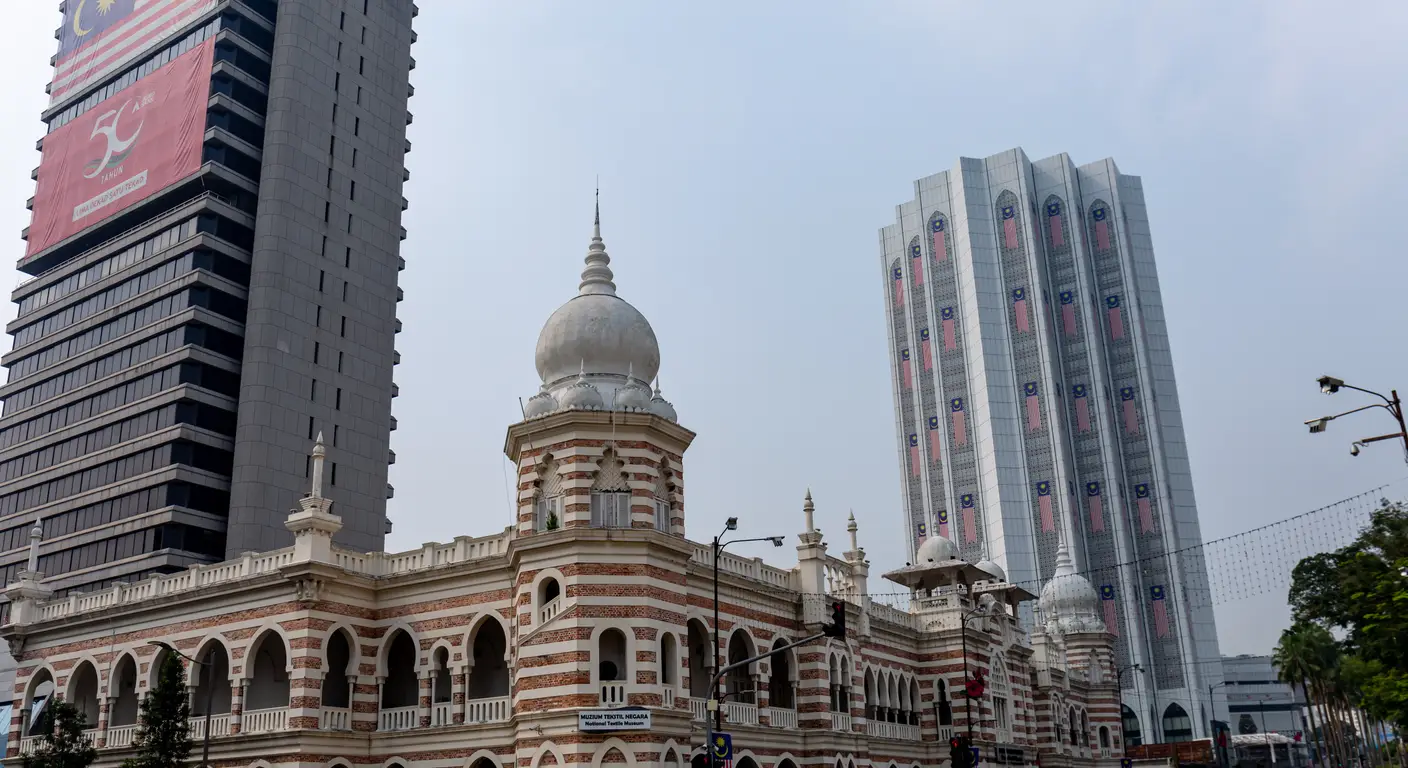
Photo: Balon Greyjoy · CC0
Quick answer
National Textile Museum in Kuala Lumpur, Malaysia — the National Textile Museum (Muzium Tekstil Negara) opened in 2010 in a striped, Moorish-style colonial building beside Merdeka Square in Kuala Lumpur. Open daily, 9:00 AM – 5:00 PM. Admission: RM2 for Malaysian adults; RM5 for foreign adults. Allow 1 hour.
Visitor information last reviewed 25 September 2026. Check the official museum site for current details.
National Textile Museum at a glance: hours, tickets and time needed
| Opening hours | Daily: 9:00 AM – 5:00 PM |
|---|---|
| Closed | on the first two days of Hari Raya Aidilfitri and the first day of Hari Raya Aidiladha |
| Admission | RM2 for Malaysian adults; RM5 for foreign adults |
| Free or reduced entry | Malaysian children 12 and under free · Malaysian secondary students in school uniform free · Foreign children under 6 free; foreign children 6–12 RM2 · Malaysian seniors and OKU RM1 · ICOM members free · Last ticket sale 4:30 PM |
| Booking | Tickets usually available on the day |
| Time needed | 1 hour |
| Best time to visit | Open daily. |
| Getting there | Metro: Masjid Jamek station (LRT Kelana Jaya and Ampang/Sri Petaling lines): a few minutes' walk south-west |
| Address | JKR 26, Jalan Sultan Hishamuddin, 50050 Kuala Lumpur, Malaysia |
| Official website | jmm.gov.my |
Checked 2026-09-25 against the official website. Prices and hours change — confirm before you travel.
What is National Textile Museum known for?
The museum is housed in JKR Building 26 on Jalan Sultan Hishamuddin, a heritage building designed by Arthur Benison Hubback in the Indo-Saracenic Revival style. It was built as the headquarters of the Federated Malay States Railways. The Department of Museums says it was completed in 1896, while other histories give 1905. The railway moved to its new administration building in 1917. After that, the building housed the Selangor Public Works Department, the Selangor Water Department, the central bank, the Agricultural Bank and the High Court, among others. It was gazetted as a historical building in 1983.
After conversion, the building opened to the public as the National Textile Museum on 9 January 2010, run by the Department of Museums Malaysia. It has two and a half storeys and about 3,145 square metres of floor space. Bands of red brick and white plaster, domed corner towers and arcaded verandas give it a Moorish look that matches the neighbouring Sultan Abdul Samad Building. Its position on Merdeka Square makes it an easy stop on a walk around Kuala Lumpur's colonial core, and the building itself is one of the reasons to visit.
Four galleries tell the story of textiles in Malaysia. Pohon Budi traces cloth from prehistory through trade and shows how weaving, embroidery, batik, gold embroidery, knitting and beadwork are done. Pelangi covers the history of batik and the textiles of the Chinese and Baba-Nyonya communities and of Sabah and Sarawak. Teluk Berantai is named after a classic songket motif and shows Malay heritage cloths such as tekatan gold embroidery, kain limar and telepuk. Ratna Sari displays jewellery and adornments from Malaysia's many communities, from crowns and hairpins to silver pending belt buckles.
The museum is open daily from 9:00 AM to 5:00 PM, with last ticket sales at 4:30 PM. It closes on the first two days of Hari Raya Aidilfitri and the first day of Hari Raya Aidiladha. Admission is RM5 for foreign adults and RM2 for Malaysians. Malaysian children 12 and under and foreign children under 6 enter free. A visit takes about an hour. Masjid Jamek LRT station is a few minutes' walk away, and the museum pairs well with the Sultan Abdul Samad Building, Masjid Jamek and Central Market.
Best for: Design Lovers · Culture Enthusiasts · Architecture Enthusiasts · Budget Travellers
How long do you need at National Textile Museum?
Allow 1 hour. Four galleries in sequence: techniques, communities, Malay court textiles and jewellery. Follow the stops in order:
- 1
Pohon Budi Gallery
📍 Pohon Budi Gallery
Start with the tools and techniques: looms, batik-making, gold embroidery and beadwork, plus Iban pua kumbu.
- 2
Pelangi Gallery
📍 Pelangi Gallery
Follow batik's development, then compare Baba-Nyonya beadwork with Sabah and Sarawak textiles.
- 3
Teluk Berantai Gallery
📍 Teluk Berantai Gallery
The Malay heritage gallery: look closely at the gold-thread songket, tekatan relief embroidery and kain limar.
- 4
Ratna Sari Gallery
📍 Ratna Sari Gallery
Finish with the jewellery, from crowns and hairpins to dokoh pendants and silver pending belt buckles.
What are the must-see works at National Textile Museum?
5 highlights that define the collection: Songket and kain limar, Tekatan gold embroidery, Pua kumbu and more.
Songket and kain limar
Malay court weaving · silk with gold thread
📍 Teluk Berantai Gallery
Malay songket woven with gold thread in motifs such as teluk berantai (interlocking bays), displayed with kain limar and the gold-heavy limar songket tenggarung.
Tekatan gold embroidery
Malay heritage embroidery on velvet
📍 Teluk Berantai Gallery
Gold thread stitched over padding to create raised relief on velvet, used for ceremonial and royal textiles. It is shown alongside kelingkan appliqué and telepuk cloth printed with gold leaf.
Pua kumbu
Iban ceremonial cloth · Sarawak
📍 Pohon Budi Gallery
Multicoloured patterned ceremonial cloth of Sarawak's Iban. It is shown with other regional traditions such as Sarawak Malay keringkam embroidery and the Lotud linangkit of Sabah.
Baba-Nyonya textiles and beadwork
Peranakan Chinese · silk, gold thread and beads
📍 Pelangi Gallery
Richly beaded and embroidered textiles of the Baba-Nyonya community, shown with the development of Malaysian batik and the textiles of Sabah and Sarawak.
Pending and dokoh jewellery
Malay, Chinese, Indian and indigenous craftsmen
📍 Ratna Sari Gallery
Personal adornments from head to toe, including crowns, cucuk sanggul hairpins, dokoh pendants, large silver pending belt buckles and anklets from Malaysia's many communities.
Collections and highlights
- • Pohon Budi Gallery: textile origins and techniques
- • Pelangi Gallery: batik, Chinese, Baba-Nyonya, Sabah and Sarawak textiles
- • Teluk Berantai Gallery: Malay songket, tekatan and limar
- • Ratna Sari Gallery: jewellery and personal adornment
Tips for visiting National Textile Museum
- 1.
Best time to visit
Open daily. Visit in the morning and combine with Merdeka Square; allow about an hour. Last ticket 4:30 PM.
- 2.
Crowds & busy periods
Usually quiet; occasional school groups on weekdays.
- 3.
Tickets & booking
No advance booking needed; buy at the counter. Malaysians show MyKad/MyKid for citizen rates.
- 4.
Food & cafés nearby
Central Market (Pasar Seni) and the Masjid Jamek area have many cafés and hawker stalls within 10 minutes' walk.
- 5.
Accessibility
A heritage building of two and a half storeys; ask staff about access to upper-level galleries.
- 6.
Photography rules
No official policy is published for this museum. The Department of Museums allows non-flash photography at Muzium Negara; never use flash near the textiles.
How do you get to National Textile Museum?
- metro Masjid Jamek station (LRT Kelana Jaya and Ampang/Sri Petaling lines): a few minutes' walk south-west
- metro Pasar Seni station (LRT Kelana Jaya Line and MRT Kajang Line): about a 10-minute walk via Central Market
- walk Beside the Sultan Abdul Samad Building on Merdeka Square (Dataran Merdeka), Jalan Sultan Hishamuddin
Address: JKR 26, Jalan Sultan Hishamuddin, 50050 Kuala Lumpur, Malaysia
National Textile Museum: frequently asked questions
How much is admission to the National Textile Museum?
Foreign adults pay RM5, foreign children aged 6–12 pay RM2, and foreign children under 6 enter free. Malaysian adults pay RM2 and Malaysian seniors and visitors with disabilities (OKU) pay RM1. Malaysian children aged 12 and under enter free, as do secondary students in school uniform. ICOM members also enter free.
What are the opening hours?
The museum opens every day from 9:00 AM to 5:00 PM, and the last tickets are sold at 4:30 PM. It closes on the first two days of Hari Raya Aidilfitri and the first day of Hari Raya Aidiladha. The museum is run by the Department of Museums Malaysia, so check its website for any temporary closures before you go.
How long does a visit take?
Most visitors need about an hour for the four galleries. Allow 90 minutes if you want to study the weaving and batik techniques in the Pohon Budi Gallery or the jewellery in Ratna Sari. The museum fits easily into a half-day walk around Merdeka Square and Kuala Lumpur's colonial core.
How do I get to the National Textile Museum?
The museum is on Jalan Sultan Hishamuddin, next to the Sultan Abdul Samad Building on Merdeka Square. Masjid Jamek LRT station, served by the Kelana Jaya and Ampang/Sri Petaling lines, is a few minutes' walk to the north-east. Pasar Seni station (LRT Kelana Jaya Line and MRT Kajang Line) and Central Market are about 10 minutes away on foot.
What will I see inside?
There are four galleries. Pohon Budi covers the origins of textiles and techniques such as weaving, batik, gold embroidery and beadwork. Pelangi covers batik and the textiles of the Chinese, Baba-Nyonya and Sabah and Sarawak communities. Teluk Berantai shows Malay songket, tekatan embroidery and kain limar. Ratna Sari displays jewellery and adornments, from crowns to silver pending belt buckles.
Is photography allowed?
The museum's official page does not list a photography policy. At Muzium Negara, which is run by the same department, photography without flash is allowed. Textiles are especially sensitive to light, so never use flash here. Follow any signs or staff instructions in the galleries, especially in temporary exhibitions.
Is the building itself worth a look?
Yes. Arthur Benison Hubback designed it in the Indo-Saracenic Revival style as the headquarters of the Federated Malay States Railways. Its bands of red brick and white plaster, domed towers and arcades make it one of the most photographed buildings on Merdeka Square. It was gazetted as a historical building in 1983, before becoming a museum in 2010.
What else can I see nearby?
The museum is on Merdeka Square, beside the Sultan Abdul Samad Building. Masjid Jamek, one of Kuala Lumpur's oldest mosques, and Central Market (Pasar Seni) are a short walk away. The Islamic Arts Museum and the National Mosque are about 15–20 minutes further on foot, or a short taxi ride.
Is National Textile Museum open on Mondays?
Yes — National Textile Museum is open every day of the week, including Mondays and Sundays: 9:00 AM – 5:00 PM. It closes on on the first two days of Hari Raya Aidilfitri and the first day of Hari Raya Aidiladha. Check the official website for holiday hours.
Is National Textile Museum free to visit?
Not for everyone. Standard admission: RM2 for Malaysian adults; RM5 for foreign adults. Free or reduced entry: Malaysian children 12 and under free; Malaysian secondary students in school uniform free; Foreign children under 6 free; foreign children 6–12 RM2; Malaysian seniors and OKU RM1; ICOM members free; Last ticket sale 4:30 PM.