Sultan Mahmud Badaruddin II Museum
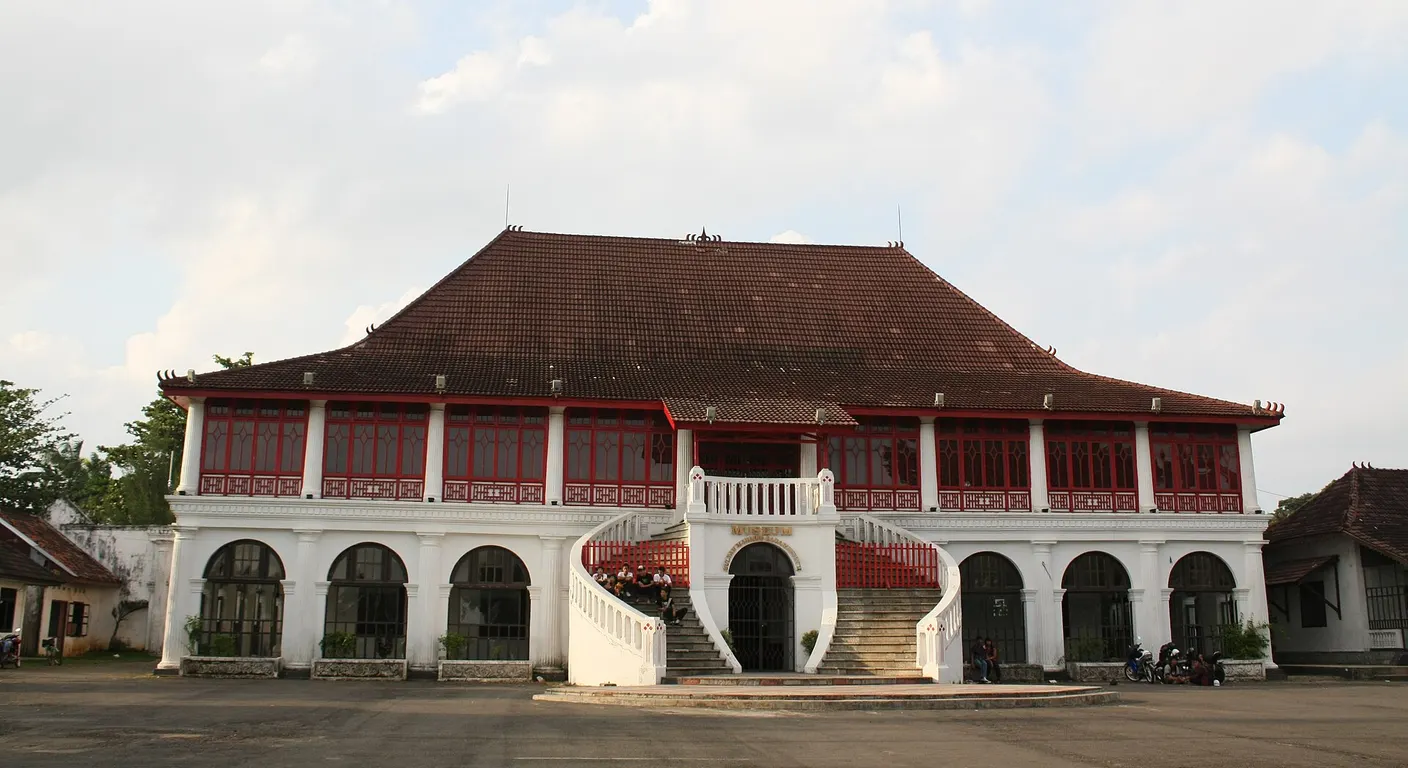
Photo: fitri agung from Pekanbaru, Riau, Indonesia · CC BY 2.0
Quick answer
Sultan Mahmud Badaruddin II Museum in Palembang, Indonesia — the Sultan Mahmud Badaruddin II Museum occupies a 19th-century colonial residency built on the site of Kuto Lama, an old palace of the Palembang sultans, beside Kuto Besak fort on the Musi riverfront. Open Tuesday to Friday: 8:00 AM – 3:00 PM; Saturday and Sunday: 9:00 AM – 3:00 PM; closed Mondays. Admission: Rp5,000 for adults; separate rates for children, students and foreign visitors (not published online). Allow 1 hour.
Visitor information last reviewed 22 October 2026. Check the official museum site for current details.
Sultan Mahmud Badaruddin II Museum at a glance: hours, tickets and time needed
| Opening hours | Tuesday to Friday: 8:00 AM – 3:00 PM; Saturday and Sunday: 9:00 AM – 3:00 PM |
|---|---|
| Closed | Mondays |
| Admission | Rp5,000 for adults; separate rates for children, students and foreign visitors (not published online) |
| Booking | Tickets usually available on the day |
| Time needed | 1 hour |
| Best time to visit | Visit on a weekday morning from 8:00 AM (9:00 AM at weekends), then walk the Musi riverfront in the late afternoon; the museum is closed on Mondays and shuts at 3:00 PM. |
| Getting there | Walk: Beside Kuto Besak fort on the Musi riverfront, about 300 m from Ampera Bridge |
| Address | Jl. Sultan Mahmud Badaruddin II No. 2, 19 Ilir, Ilir Barat I, Palembang, South Sumatra, Indonesia |
| Official website | museum.kemenbud.go.id |
Checked 2026-10-22 against the official website. Prices and hours change — confirm before you travel.
What is Sultan Mahmud Badaruddin II Museum known for?
The museum stands on the site of Kuto Lama — also called Kuto Tengkuruk or Kuto Batu — the palace of Sultan Mahmud Badaruddin I (1724–1758), ruler of the Palembang sultanate. After the sultanate fell to the Dutch in 1821 and was abolished, the colonial government demolished the palace on 7 October 1823 and began a new building on its ruins; the first, completed in 1824, was known as Gedung Siput, the 'snail building'. It was later rebuilt as the present two-storey stone building, which from 1825 served as the office of the colonial Resident and was renovated with more glass in the 1920s.
During the Second World War the Japanese occupying forces used the building as their military headquarters, and after independence it briefly housed the headquarters of the Indonesian Army's Kodam II/Sriwijaya command. It then passed to the city of Palembang and became a museum in 1984. It is named after Sultan Mahmud Badaruddin II, who resisted Dutch and British forces and was exiled to Ternate in 1821. Today it is registered as a Type A general museum, owned by the city and run by its culture office, and the building also houses the city's tourism office.
Collecting began in 1984, when some objects formerly kept in an authentic limas house, the rumah bari, were transferred here as that house was moved to the Balaputra Dewa Museum. The galleries show Palembang songket and traditional dress, sultanate weapons such as keris, swords and spears, crafts and cultural accessories, and coins and currency tracing the city's economic history, together with replica inscriptions from the Srivijaya era. The garden holds Srivijaya-period statues, including a Ganesha and a fragmented Buddha. The residency itself, which blends European style with Palembang's tropical rumah bari architecture, is as much a part of the visit as the collection.
According to the national museum registry, the museum opens Tuesday to Friday from 8:00 AM to 3:00 PM and at weekends from 9:00 AM to 3:00 PM, and is closed on Mondays. Adult admission is Rp5,000, with separate rates for other visitor groups charged at the desk. It stands at Jalan Sultan Mahmud Badaruddin II No. 2, beside the 18th-century Kuto Besak fort — still used by the army and closed to the public — and about 300 metres from Ampera Bridge, so a visit fits easily into a walk along the Musi riverfront.
Best for: History Enthusiasts · Architecture Enthusiasts · Budget Travellers
What are the must-see works at Sultan Mahmud Badaruddin II Museum?
5 highlights that define the collection: The Resident's house, Ganesha statue, Fragmented Buddha statue and more.
The Resident's house
Colonial architecture with Palembang rumah bari influences · 1820s, renovated 1920s
📍 Museum building
A two-storey stone building raised on the ruins of the Kuto Lama palace and used as the colonial Resident's office from 1825, later a Japanese military headquarters.
Ganesha statue
Srivijaya period
📍 Museum garden
A Ganesha figure among the Srivijaya-period statues displayed in the museum's garden.
Fragmented Buddha statue
Srivijaya period
📍 Museum garden
A broken Buddha figure shown in the museum yard, a reminder of Palembang's past as a centre of the Buddhist Srivijaya kingdom.
Palembang songket
Palembang weaving tradition
Palembang's traditional songket textiles, displayed with traditional clothing and cultural accessories.
Sultanate weapons
Palembang Darussalam sultanate
Keris, swords and spears from the sultanate era, part of a collection that also includes coins and currency from Palembang's economic history.
Collections and highlights
- • Palembang songket and traditional dress
- • Sultanate weapons: keris, swords and spears
- • Coins and currency
- • Crafts and cultural accessories
- • Srivijaya-era statues and replica inscriptions
- • Archaeology, ceramics and fine art
Tips for visiting Sultan Mahmud Badaruddin II Museum
- 1.
Best time to visit
Visit on a weekday morning from 8:00 AM (9:00 AM at weekends), then walk the Musi riverfront in the late afternoon; the museum is closed on Mondays and shuts at 3:00 PM.
- 2.
Tickets & booking
Pay at the desk on arrival: Rp5,000 for adults; rates for children, students and foreign visitors are set separately and not published online. No advance booking is published.
- 3.
Accessibility
No accessibility information is published; contact the museum before visiting. The galleries are spread over a two-storey historic building.
- 4.
Photography rules
No photography policy is published online; ask staff before photographing inside and avoid flash near textiles.
How do you get to Sultan Mahmud Badaruddin II Museum?
- walk Beside Kuto Besak fort on the Musi riverfront, about 300 m from Ampera Bridge
- taxi Taxi or ride-hailing car to Jl. Sultan Mahmud Badaruddin II No. 2, 19 Ilir, Palembang
Address: Jl. Sultan Mahmud Badaruddin II No. 2, 19 Ilir, Ilir Barat I, Palembang, South Sumatra, Indonesia
Sources we checked
Visitor facts and history on this page come from these sources, checked on the dates shown.
- Museum Sultan Mahmud Badaruddin II Palembang — national museum registry profile — Ministry of Culture of the Republic of Indonesia, checked 22 October 2026
- Data Museum — registry listing (Jl. Sultan Mahmud Badaruddin II No. 2) — Ministry of Culture of the Republic of Indonesia, checked 22 October 2026
- Sultan Mahmud Badaruddin II Museum – National Museum — Ministry of Tourism of the Republic of Indonesia (Wonderful Indonesia), checked 22 October 2026
- Museum Sultan Mahmud Badaruddin II (13 May 2024) — RRI (Radio Republik Indonesia), checked 22 October 2026
- Sultan Mahmud Badaruddin II Museum — Wikipedia, checked 22 October 2026
- Museum Sultan Mahmud Badaruddin II — Wikipedia (Bahasa Indonesia), checked 22 October 2026
- Kuto Besak — Wikipedia, checked 22 October 2026
- Ampera Bridge (coordinates) — Wikidata, checked 22 October 2026
- Buddha statue displayed in the yard of the Sultan Mahmud Badaruddin II Museum — Wikimedia Commons, checked 22 October 2026
Sultan Mahmud Badaruddin II Museum: frequently asked questions
How much is the entrance fee for the Sultan Mahmud Badaruddin II Museum?
Indonesia's national museum registry lists admission at Rp5,000. Separate rates are charged for children, students and foreign visitors, but the museum does not publish them online, so check at the ticket desk when you arrive. The museum is owned by the city of Palembang and run by its culture office.
Is the Sultan Mahmud Badaruddin II Museum open on Mondays?
No. According to the national museum registry, the museum opens Tuesday to Friday from 8:00 AM to 3:00 PM and on Saturdays and Sundays from 9:00 AM to 3:00 PM, and is closed on Mondays. Hours reported elsewhere differ slightly, so plan a morning visit and confirm before travelling on a public holiday.
Where is the Sultan Mahmud Badaruddin II Museum and how do I get there?
The museum is at Jalan Sultan Mahmud Badaruddin II No. 2 in the 19 Ilir area of central Palembang, beside the Kuto Besak fort on the Musi riverfront and roughly 300 metres from Ampera Bridge, so it is easy to reach on foot from the riverside. Taxis and ride-hailing cars can also drop you at the entrance.
How long should I spend at the Sultan Mahmud Badaruddin II Museum?
Plan 1 hour for the highlights of Sultan Mahmud Badaruddin II Museum. Add extra time for temporary exhibitions, the shop and the café.
What are the highlights of the Sultan Mahmud Badaruddin II Museum?
Start with the building itself, a two-storey colonial residency that blends European style with Palembang's rumah bari architecture. Then see the Srivijaya-era Ganesha and Buddha statues in the garden, replica inscriptions from the Srivijaya period, Palembang songket and traditional dress, and the sultanate's keris, swords and spears, plus coins tracing the city's economic history.
Can I take photos inside the Sultan Mahmud Badaruddin II Museum?
No photography policy is published online, so ask staff at the entrance before photographing the galleries. The garden statues and the facade can be photographed from the grounds. Indoors, keep your flash off near songket and other textiles, which are sensitive to light, and do not touch the weapons or other displays.
Who was Sultan Mahmud Badaruddin II?
Sultan Mahmud Badaruddin II ruled the Palembang Darussalam sultanate and is remembered for resisting Dutch and British colonial forces to defend its sovereignty. After Palembang fell to the Dutch in June 1821 he was exiled to Ternate in Maluku, where he died in 1852. The museum carries his name to honour his role in the city's history.
What are Sultan Mahmud Badaruddin II Museum's opening hours?
Sultan Mahmud Badaruddin II Museum is open Tuesday to Friday: 8:00 AM – 3:00 PM; Saturday and Sunday: 9:00 AM – 3:00 PM, and closed Mondays. Hours can change for holidays and events, so check the official website before you go.
Is Sultan Mahmud Badaruddin II Museum free to visit?
No — standard admission is Rp5,000 for adults; separate rates for children, students and foreign visitors (not published online).