Asian-African Conference Museum
Quick answer
Asian-African Conference Museum in Bandung, Indonesia — the Asian-African Conference Museum occupies Gedung Merdeka on Jalan Asia Afrika in central Bandung, the hall where 29 nations met in April 1955 for the Bandung Conference. Open Wednesday, Thursday and Saturday: 9:00 AM – 12:00 PM and 1:00 PM – 3:00 PM; Friday: 9:00 AM – 11:30 AM and 1:30 PM – 3:30 PM; closed Mondays, Tuesdays and Sundays. Admission: free admission for all visitors (online registration required). Allow 1 hour and book a timed ticket ahead.
Visitor information last reviewed 22 October 2026. Check the official museum site for current details.
Asian-African Conference Museum at a glance: hours, tickets and time needed
| Opening hours | Wednesday, Thursday and Saturday: 9:00 AM – 12:00 PM and 1:00 PM – 3:00 PM; Friday: 9:00 AM – 11:30 AM and 1:30 PM – 3:30 PM |
|---|---|
| Closed | Sundays, Mondays, Tuesdays and national public holidays |
| Admission | Free admission for all visitors (online registration required) |
| Booking | Book a timed ticket in advance — peak slots sell out |
| Time needed | 1 hour |
| Best time to visit | Book a morning slot from 9:00 AM on a Wednesday or Thursday. |
| Getting there | Taxi: Grab, Gojek or a taxi to Gedung Merdeka, Jl. Asia Afrika No. 65 — the most practical option from hotels or Bandung station |
| Address | Gedung Merdeka, Jl. Asia Afrika No. 65, Braga, Sumur Bandung, Bandung 40111, West Java, Indonesia |
| Official website | mkaa.kemlu.go.id |
Checked 2026-10-22 against the official website. Prices and hours change — confirm before you travel.
What is Asian-African Conference Museum known for?
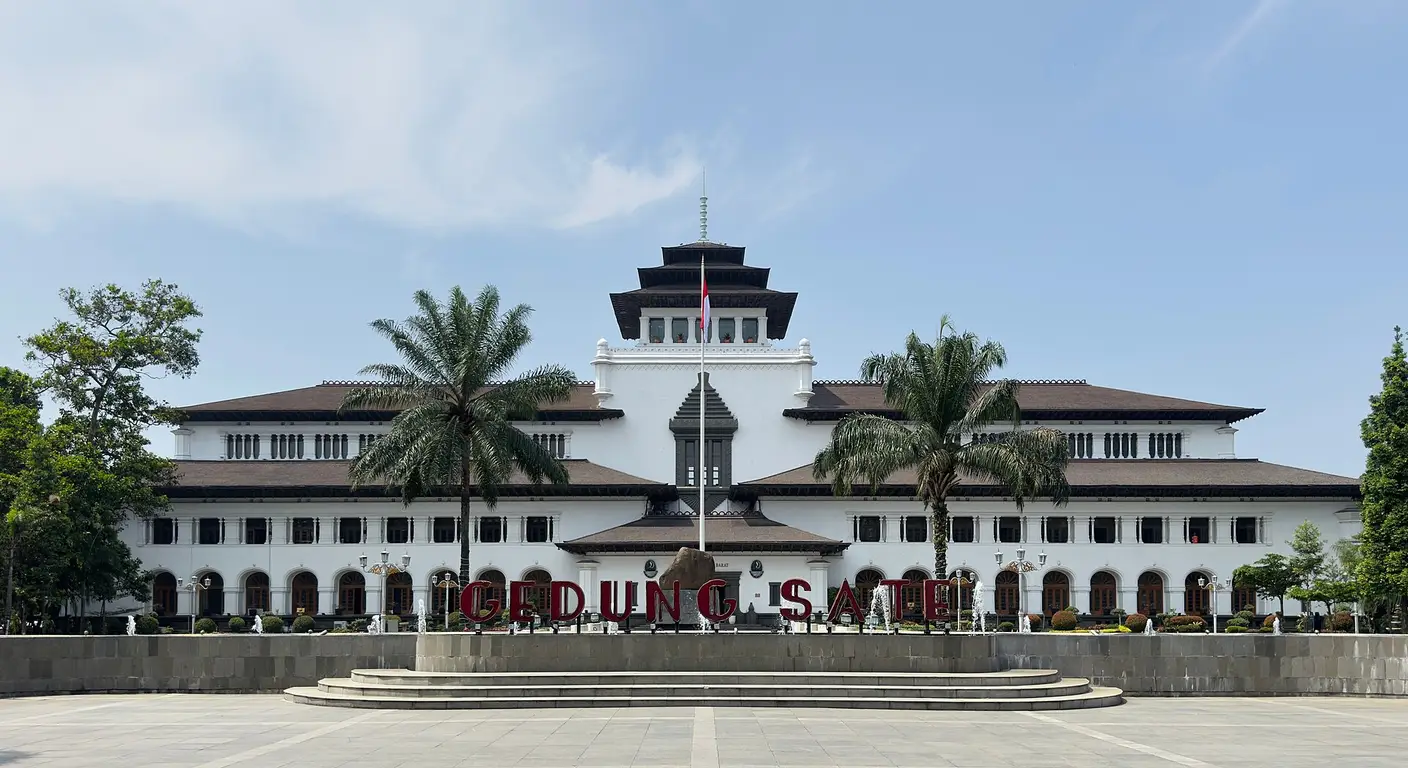
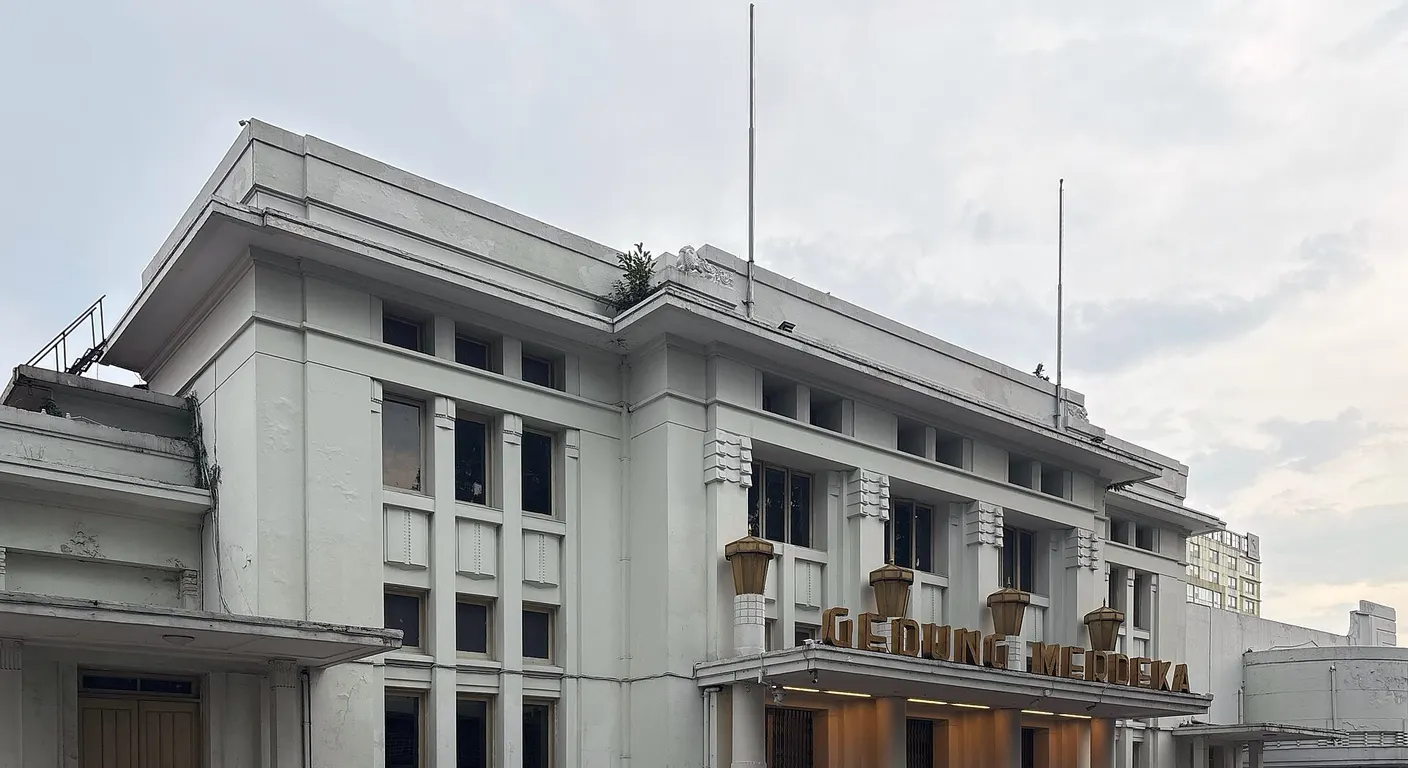
Gedung Merdeka began life in 1895 as the clubhouse of the Sociëteit Concordia, a social club for Bandung's wealthy residents. It was rebuilt in Art Deco style in 1926 by Van Galen and C.P. Wolff Schoemaker, professors at the Technische Hoogeschool (now ITB), and extended in 1940 to a Streamline Moderne design by Albert Aalbers. On 7 April 1955 President Soekarno renamed it Gedung Merdeka, and from 18 to 24 April 1955 it hosted the Asian-African Conference, sponsored by Burma, Ceylon, India, Indonesia and Pakistan, which closed with the ten principles known as the Dasasila Bandung.
The idea for a museum came from Foreign Minister Mochtar Kusumaatmadja, who was often asked about the building by Asian and African leaders. The committee for the conference's 25th anniversary, chaired by Joop Ave, carried it out with several ministries, the West Java government and Padjadjaran University, and President Soeharto opened the museum on 24 April 1980. A library and audio-visual room followed in 1985, and on 18 June 1986 the museum passed from the Ministry of Education and Culture to the Foreign Ministry, which still runs it. The displays were redesigned for the 2005 Asian-African Summit and the conference's 50th anniversary.
The permanent exhibition traces the road to Bandung through objects and documentary photographs of the Colombo Conference of April–May 1954, the Tugu and Bogor preparatory meetings and the conference itself, followed by displays on its background, its global impact, the history of Gedung Merdeka and multimedia profiles of the participating countries. The best-known exhibit is a diorama of the opening session, created in 1992 when Indonesia hosted the Non-Aligned Movement summit. The registered collection also includes statues of Soekarno and Mohammad Hatta and the typewriters, cameras and teleprinter of the conference-era press, while the audio-visual room screens a documentary.
Visiting is free but must be booked: register online for a date and time slot, then show the confirmation on arrival. The museum opens Wednesday to Saturday in morning and afternoon sessions, with a longer midday break on Fridays, and is closed Sunday to Tuesday and on national holidays. It received about 35,000 visitors in the first half of 2026, more than 3,500 of them from abroad, according to Metro TV, and booked groups get a free educator-led tour in Indonesian, English or Mandarin. Photography without flash is allowed, but food and drink are not, and there are no lockers.
Best for: History Enthusiasts · Budget Travellers · Architecture Enthusiasts
What are the must-see works at Asian-African Conference Museum?
4 highlights that define the collection: Diorama of the opening of the Asian-African Conference, Statues of Soekarno and Mohammad Hatta, Siemens teleprinter, typewriters and cameras and more.
Diorama of the opening of the Asian-African Conference
Made 1992 · depicts 18 April 1955
A three-dimensional scene of the conference's opening session, created for the visit of delegates to the 10th Non-Aligned Movement summit, which Indonesia hosted in 1992.
Statues of Soekarno and Mohammad Hatta
Portrait statues · Indonesia's first president and vice president
Figures of the two founding leaders, listed in the museum's registered collection alongside statues of the prime ministers of Indonesia and Burma.
Siemens teleprinter, typewriters and cameras
Press and film equipment · conference era
A Siemens Blattschreiber teleprinter, Royal and Remington typewriters, a Leica camera and a Mitchell film camera recall how the 1955 conference was reported to the world.
Photographs of the Colombo, Bogor and Bandung meetings
Documentary photographs · 1954–1955
📍 Main exhibition hall
Photographs and objects in the main hall follow the preparatory meetings in Colombo, at Tugu and in Bogor through to the conference in Bandung.
Collections and highlights
- • Documentary photographs of the 1954–1955 preparatory meetings and the conference
- • Diorama of the conference's opening session
- • Statues of conference-era leaders
- • Typewriters, cameras and teleprinters of the conference-era press
- • Multimedia profiles of the participating countries
- • History of Gedung Merdeka
- • Library of conference documents, books, magazines and newspapers
Tips for visiting Asian-African Conference Museum
- 1.
Best time to visit
Book a morning slot from 9:00 AM on a Wednesday or Thursday. The museum is closed Sunday to Tuesday and on national holidays, breaks for lunch from 12:00 to 1:00 PM (11:30 AM to 1:30 PM on Fridays), and is popular with student groups during school holidays.
- 2.
Tickets & booking
Entry is free, but every visit must be registered online through the museum's Simkuring page. Individual slots hold 25 people per 15 minutes; groups of more than 20 book at least 7 days ahead. Cancellations go through the museum's WhatsApp customer care (0851-7343-1955) at least 3 days before.
- 3.
Accessibility
No accessibility information is published; contact the museum's customer care on WhatsApp (0851-7343-1955) or email [email protected] before visiting.
- 4.
Photography rules
Photos and video are allowed without flash, strobes or extra lighting; commercial or political recording is restricted. No food, drink or chewing gum inside, and no lockers are provided.
How do you get to Asian-African Conference Museum?
- taxi Grab, Gojek or a taxi to Gedung Merdeka, Jl. Asia Afrika No. 65 — the most practical option from hotels or Bandung station
- train Bandung station (Stasiun Bandung) is the city's main intercity rail station; continue by ride-hailing or taxi to Jalan Asia Afrika
- walk Gedung Merdeka is on Jalan Asia Afrika in the Braga area of central Bandung, so it fits easily into a walk around the old town centre
Address: Gedung Merdeka, Jl. Asia Afrika No. 65, Braga, Sumur Bandung, Bandung 40111, West Java, Indonesia
Sources we checked
Visitor facts and history on this page come from these sources, checked on the dates shown.
- Museum Konperensi Asia Afrika — Museum Konperensi Asia Afrika / Ministry of Foreign Affairs of Indonesia, checked 22 October 2026
- Registrasi - Museum Konperensi Asia Afrika — Museum Konperensi Asia Afrika / Ministry of Foreign Affairs of Indonesia, checked 22 October 2026
- Tentang Museum KAA — Museum Konperensi Asia Afrika / Ministry of Foreign Affairs of Indonesia, checked 22 October 2026
- KAA 1955 — Museum Konperensi Asia Afrika / Ministry of Foreign Affairs of Indonesia, checked 22 October 2026
- Museum KAA Bandung Jadi Destinasi Wisata Sejarah Favorit Selama Libur Sekolah (4 July 2026) — Metro TV, checked 22 October 2026
- 7 Rekomendasi Museum di Bandung: Lokasi, Jam Buka dan Harga Tiket (24 September 2026) — detikJabar, checked 22 October 2026
- Museum Konperensi Asia Afrika — Sistem Registrasi Nasional Museum — Ministry of Culture of Indonesia, checked 22 October 2026
- Museum Konperensi Asia Afrika — Wonderful Indonesia (Ministry of Tourism), checked 22 October 2026
- Merdeka Building — Wikipedia, checked 22 October 2026
Asian-African Conference Museum: frequently asked questions
How much is the entrance fee for the Asian-African Conference Museum?
Nothing: entry and the museum's guiding service are free for every visitor. You do need to register first through the museum's online booking page (Simkuring) on mkaa.kemlu.go.id, choosing a date and time slot, and show the confirmation to staff at the entrance. Individual slots take 25 people every 15 minutes; groups of more than 20 must book at least seven days ahead.
Where is the Asian-African Conference Museum and how do I get there?
The museum is inside Gedung Merdeka at Jalan Asia Afrika No. 65, in the Braga area of central Bandung. From Bandung railway station, your hotel or anywhere else in the city, the simplest option is a Grab or Gojek ride or a taxi to Gedung Merdeka. The museum has no lockers, so travel light and keep your bag with you during the visit.
How long should I spend at the Asian-African Conference Museum?
Plan 1 hour for the highlights of Asian-African Conference Museum. Add extra time for temporary exhibitions, the shop and the café.
What are the highlights of the Asian-African Conference Museum?
The centrepiece is a diorama of the conference's opening session on 18 April 1955, made in 1992 when Indonesia hosted the Non-Aligned Movement summit. Look too for the statues of President Soekarno and Vice President Mohammad Hatta, the typewriters, cameras and Siemens teleprinter of the conference-era press, documentary photographs of the preparatory meetings and multimedia profiles of the participating countries.
Can I take photos inside the Asian-African Conference Museum?
Yes, for personal use. The museum's visitor rules allow photography and video without flash, strobes or extra lighting, but recording for commercial or political purposes is restricted. Eating, drinking and chewing gum are not allowed anywhere in the museum, and there are no lockers, so keep your belongings with you as you walk round.
Can I visit the Asian-African Conference Museum at the weekend?
Only on Saturday. The museum admits visitors on Wednesday, Thursday, Friday and Saturday and is closed on Sunday, Monday, Tuesday and national holidays. On Fridays the midday break is longer, from 11:30 AM to 1:30 PM, around Friday prayers. Older guidebooks and the museum's previous website list Tuesday and Sunday opening, but that schedule no longer applies.
Is Asian-African Conference Museum open on Mondays?
No — Asian-African Conference Museum is closed every Monday, Tuesday and Sunday (closing days: Sundays, Mondays, Tuesdays and national public holidays). It is open Wednesday, Thursday and Saturday: 9:00 AM – 12:00 PM and 1:00 PM – 3:00 PM; Friday: 9:00 AM – 11:30 AM and 1:30 PM – 3:30 PM. Plan a different museum for those days, and check the official website for holiday changes.
What are Asian-African Conference Museum's opening hours?
Asian-African Conference Museum is open Wednesday, Thursday and Saturday: 9:00 AM – 12:00 PM and 1:00 PM – 3:00 PM; Friday: 9:00 AM – 11:30 AM and 1:30 PM – 3:30 PM, and closed Sundays, Mondays, Tuesdays and national public holidays. Hours can change for holidays and events, so check the official website before you go.
Is Asian-African Conference Museum free to visit?
Yes — free admission for all visitors (online registration required).