Bank Indonesia Museum
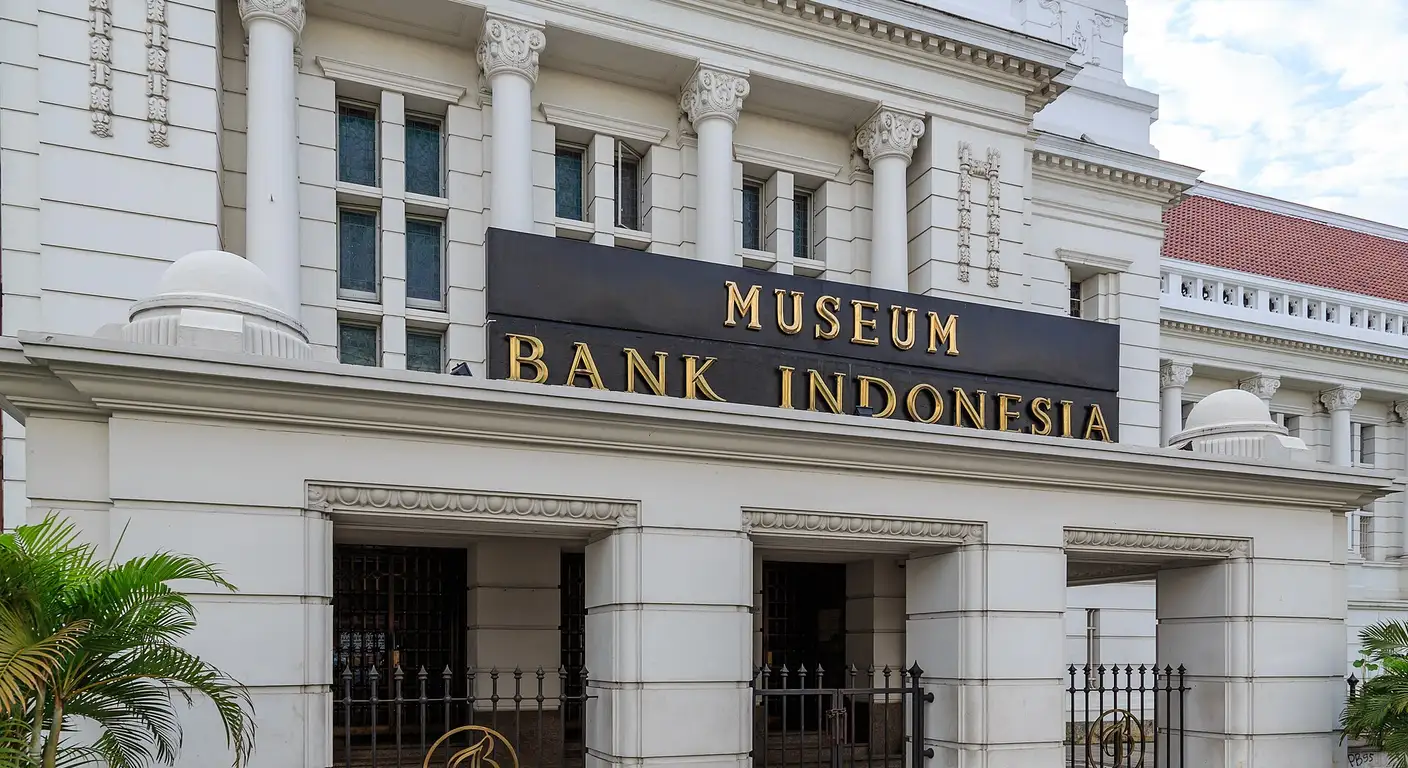
Photo: CEphoto, Uwe Aranas · CC BY-SA 3.0
Quick answer
Bank Indonesia Museum in Jakarta, Indonesia — the Bank Indonesia Museum fills the former De Javasche Bank head office in Kota Tua, opposite Jakarta Kota station, with the story of Indonesian money and central banking. Open Tuesday to Sunday: 8:00 AM – 3:30 PM; closed Mondays. Admission: Rp5,000 per person (walk-in visitors). Allow 1–1.5 hours.
Visitor information last reviewed 22 October 2026. Check the official museum site for current details.
Bank Indonesia Museum at a glance: hours, tickets and time needed
| Opening hours | Tuesday to Sunday: 8:00 AM – 3:30 PM |
|---|---|
| Closed | Mondays, national public holidays and collective leave days |
| Last entry | 3:00 PM |
| Admission | Rp5,000 per person (walk-in visitors) |
| Free or reduced entry | Free for school and university students with a student card · Free for children under 12 with a KIA child ID card · Free for seniors over 60 with a KTP · Free for KIP, KIPJ and KJP card holders · Free for visitors with disabilities · Free for registered groups |
| Booking | Tickets usually available on the day |
| Time needed | 1–1.5 hours |
| Best time to visit | Mid-morning or just after 1:00 PM on a weekday, avoiding the lunchtime pause in ticket sales and arriving before the 3:00 PM last ticket. |
| Getting there | Train: KRL Commuter Line to Jakarta Kota station — the museum stands directly opposite the station on Jalan Pintu Besar Utara |
| Address | Jl. Pintu Besar Utara No. 3, Pinangsia, Taman Sari, Kota Tua, West Jakarta, Indonesia |
| Official website | bi.go.id |
Checked 2026-10-22 against the official website. Prices and hours change — confirm before you travel.
What is Bank Indonesia Museum known for?
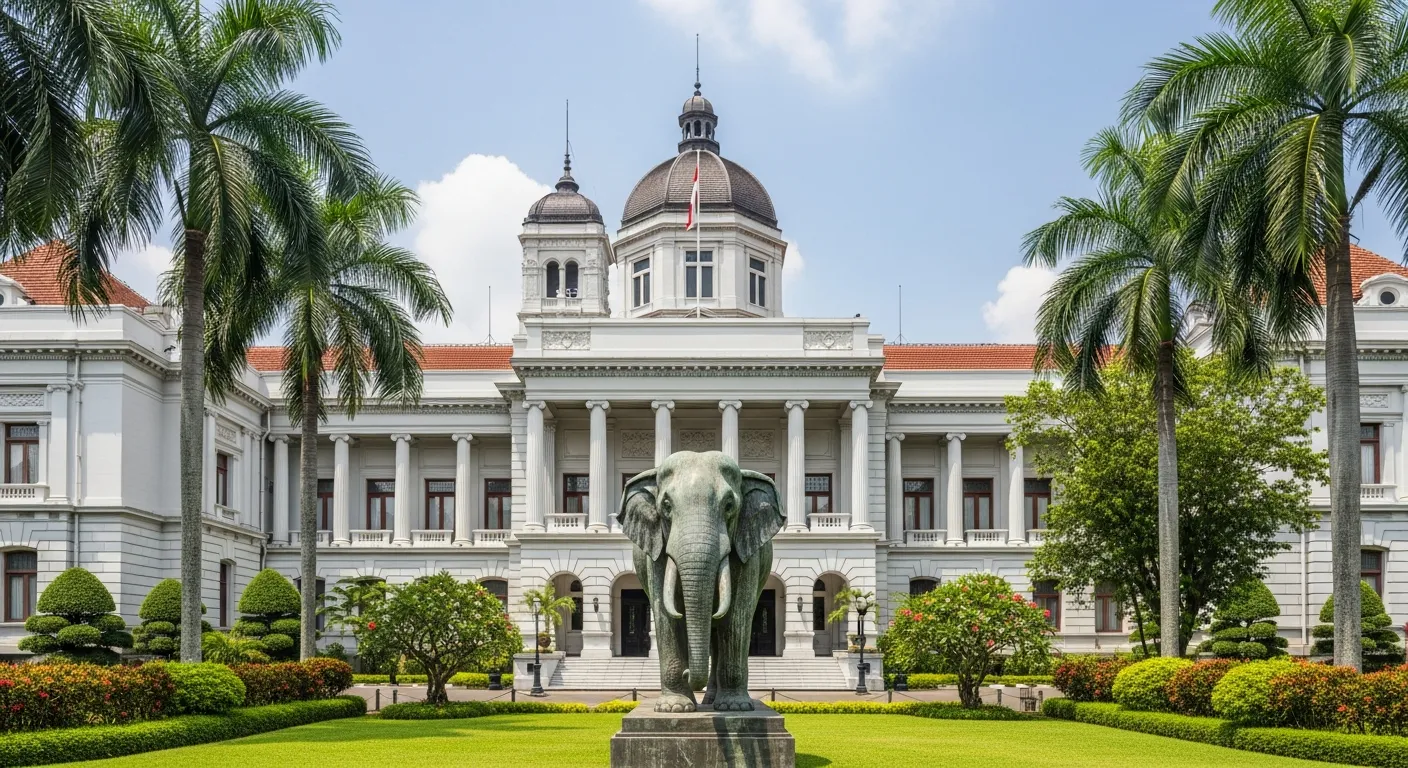
The museum occupies the former head office of De Javasche Bank, founded in 1828 as the circulation bank of the Dutch East Indies. The site once held Batavia's inner hospital, the Binnenhospitaal, which was abandoned in 1780, sold in 1801 and bought by the bank in 1831. In the early 20th century the old hospital was demolished and replaced by a building designed by the architect Eduard Cuypers, whose neo-Renaissance front with Javanese ornament was completed in 1913. The inner court took its present form after an extension in 1924–1928, and the Fermont-Cuypers office gave the building a new front in 1936.
De Javasche Bank was nationalised as Bank Indonesia in 1953, and once a new head office was completed in 1962 the old Kota building was left to deteriorate. Jakarta designated it a heritage building by governor's decree in 1993. After restoration, Bank Indonesia opened the museum to the public on 15 December 2006, and President Susilo Bambang Yudhoyono inaugurated it on 19 July 2009, when an expanded layout and interactive multimedia were added. Bank Indonesia presents the project as part of Jakarta's effort to revive Kota Tua, the old town.
The displays combine the history of Indonesian money with the central bank's own story and the reasoning behind its policies. The Numismatic Room follows money through six periods: coins of the archipelago's kingdoms, such as the gold and silver Krisnala of Jenggala from the early 12th century and Majapahit's copper gobog; colonial money; the first currency of the independent republic, including ORI; government and Bank Indonesia notes; tokens; and special issues. Other spaces include the Monetary Gold Room with its gold bars, a room on Islamic finance, a gallery on the changing Bank Indonesia logo and an Immersive Cinema.
The museum faces Jakarta Kota station on Jalan Pintu Besar Utara, next to the Mandiri Museum and a short walk from Fatahillah Square, so it fits easily into a day in Kota Tua. It opens Tuesday to Sunday from 8:00 AM to 3:30 PM, with last tickets at 3:00 PM and a pause in ticket sales over lunch. Entry costs Rp5,000, and students, children under 12 with a KIA card, seniors over 60, visitors with disabilities and registered groups enter free. Groups of 20 to 150 people can book one of three daily sessions through the museum's WhatsApp registration line.
Best for: History Enthusiasts · Budget Travellers · Architecture Enthusiasts
What are the must-see works at Bank Indonesia Museum?
5 highlights that define the collection: Monetary Gold Room, Krisnala (Ma) coins of Jenggala, Majapahit gobog and more.
Monetary Gold Room
Bank Indonesia · gold bullion display
📍 Ruang Emas Moneter
A room of stacked gold bars presented as monetary gold, and one of the most photographed spaces in the museum.
Krisnala (Ma) coins of Jenggala
Jenggala kingdom, East Java · early 12th century
📍 Numismatic Room
Gold and silver coins that open the museum's account of money in the archipelago's kingdoms; Bank Indonesia lists them as the earliest coins in this part of the collection.
Majapahit gobog
Majapahit · c. 14th–16th century
📍 Numismatic Room
Copper coins from the Majapahit era that, according to Bank Indonesia, were also used as sacred objects.
Metamorphosis of the Bank Indonesia Logo
Bank Indonesia · institutional history
A display on how the central bank's logo has changed over the decades, one of the four permanent display areas Bank Indonesia lists for the museum.
Immersive Cinema
Audio-visual presentation
A projection room listed by Bank Indonesia among the museum's permanent displays, with sessions at 9:00 AM, 11:00 AM, 1:30 PM and 2:30 PM.
Collections and highlights
- • Coins and money of the archipelago's kingdoms
- • Colonial-era coins and banknotes
- • Early independence money, including ORI (Oeang Republik Indonesia)
- • Government and Bank Indonesia currency
- • Token money and special issues
- • History of Bank Indonesia's role and policies
- • Islamic finance room
- • De Javasche Bank building and its architecture
Tips for visiting Bank Indonesia Museum
- 1.
Best time to visit
Mid-morning or just after 1:00 PM on a weekday, avoiding the lunchtime pause in ticket sales and arriving before the 3:00 PM last ticket. Closed Mondays, national holidays and collective leave (cuti bersama) days.
- 2.
Tickets & booking
Individuals buy a Rp5,000 ticket at the counter; students and other exempt groups show their card. Groups of 20–150 register in advance through the museum's WhatsApp line (0812-9157-3940) with an official letter and receive free entry for a set session.
- 3.
Accessibility
Visitors with disabilities enter free. The displays are spread over two floors of the historic building, but Bank Indonesia publishes no further accessibility information; contact the museum before visiting.
- 4.
Photography rules
No photography policy is published online. Visitors often photograph the Monetary Gold Room; avoid flash near notes and documents and ask staff before filming or using a tripod.
How do you get to Bank Indonesia Museum?
- train KRL Commuter Line to Jakarta Kota station — the museum stands directly opposite the station on Jalan Pintu Besar Utara
- bus TransJakarta to the Kota stop beside Jakarta Kota station, then cross to the museum
- walk Next door to the Mandiri Museum and a short walk south of Fatahillah Square and the Jakarta History Museum
Address: Jl. Pintu Besar Utara No. 3, Pinangsia, Taman Sari, Kota Tua, West Jakarta, Indonesia
Sources we checked
Visitor facts and history on this page come from these sources, checked on the dates shown.
- Kunjungan BI — Bank Indonesia, checked 22 October 2026
- Museum BI — Bank Indonesia, checked 22 October 2026
- Museum BI (English) — Bank Indonesia, checked 22 October 2026
- Uang Kerajaan di Nusantara — Bank Indonesia, checked 22 October 2026
- Museum Bank Indonesia Buka di Akhir Pekan (21 October 2022) — Bank Indonesia, checked 22 October 2026
- Ada Pameran Lingkungan di Museum Bank Indonesia, Cek Jadwal dan Harga Tiketnya (12 January 2026) — Metro TV News, checked 22 October 2026
- Virtual Tour Museum Bank Indonesia (20 December 2023) — Directorate General of Treasury, Ministry of Finance, checked 22 October 2026
- Bank Indonesia Museum — Wikipedia, checked 22 October 2026
- Museum Bank Indonesia — Wikipedia (Indonesian), checked 22 October 2026
- Museum di Kawasan Kota Tua Jakarta Ada yang Tutup saat Libur Lebaran (24 March 2026) — iNews, checked 22 October 2026
Bank Indonesia Museum: frequently asked questions
How much is the entrance fee for the Bank Indonesia Museum?
Walk-in tickets cost Rp5,000 per person, bought at the counter. Entry is free for school and university students with a student card, children under 12 with a KIA card, seniors over 60 with a KTP, holders of KIP, KIPJ or KJP education cards, visitors with disabilities and registered groups. Bank Indonesia publishes no separate rate for foreign visitors.
Where is the Bank Indonesia Museum and how do I get there?
The museum is at Jalan Pintu Besar Utara No. 3 in Kota Tua, West Jakarta, directly opposite Jakarta Kota station on the KRL Commuter Line. TransJakarta buses also stop at Kota. It stands next to the Mandiri Museum and a short walk from Fatahillah Square, so you can arrive on foot from the other Kota Tua museums.
How long should I spend at the Bank Indonesia Museum?
Plan 1–1.5 hours for the highlights of Bank Indonesia Museum. Add extra time for temporary exhibitions, the shop and the café.
What are the highlights of the Bank Indonesia Museum?
The Monetary Gold Room, with its stacked gold bars, is the room visitors photograph most often. The Numismatic Room traces money from the gold and silver Krisnala coins of the Jenggala kingdom and Majapahit's copper gobog through colonial money to the first currency of the independent republic, ORI. The building itself, designed by Eduard Cuypers with a neo-Renaissance front completed in 1913, is part of the visit.
Can I take photos inside the Bank Indonesia Museum?
Bank Indonesia does not publish photography rules online. Visitors often photograph the gold bars in the Monetary Gold Room. Keep flash off near banknotes and documents, ask staff before filming or using a tripod, and follow any signs in individual rooms or temporary exhibitions.
Does the Bank Indonesia Museum close at lunchtime?
The galleries open from 8:00 AM to 3:30 PM, Tuesday to Sunday, but ticket sales pause over lunch: Bank Indonesia gives a break from noon to 1:00 PM (from 11:30 AM on Fridays), and recent reports note the counter closing from 11:30 AM. Arrive mid-morning or after 1:00 PM. The museum is also closed on Mondays, national holidays and collective leave days.
Is Bank Indonesia Museum open on Mondays?
No — Bank Indonesia Museum is closed every Monday (closing days: Mondays, national public holidays and collective leave days). It is open Tuesday to Sunday: 8:00 AM – 3:30 PM. Plan a different museum for that day, and check the official website for holiday changes.
What are Bank Indonesia Museum's opening hours?
Bank Indonesia Museum is open Tuesday to Sunday: 8:00 AM – 3:30 PM, and closed Mondays, national public holidays and collective leave days. Last entry: 3:00 PM. Hours can change for holidays and events, so check the official website before you go.
Is Bank Indonesia Museum free to visit?
Not for everyone. Standard admission: Rp5,000 per person (walk-in visitors). Free or reduced entry: Free for school and university students with a student card; Free for children under 12 with a KIA child ID card; Free for seniors over 60 with a KTP; Free for KIP, KIPJ and KJP card holders; Free for visitors with disabilities; Free for registered groups.