Jakarta History Museum
Quick answer
Jakarta History Museum in Jakarta, Indonesia — the Jakarta History Museum, known locally as Museum Fatahillah, occupies Batavia's former city hall (Stadhuis), completed in 1710 on today's Fatahillah Square in Kota Tua. Open Tuesday to Friday: 9:00 AM – 3:00 PM; Saturday and Sunday: 9:00 AM – 8:00 PM; closed Mondays. Admission: Rp10,000 for adults on weekdays and Rp15,000 on weekends; Rp50,000 for foreign visitors. Allow 1–1.5 hours.
Visitor information last reviewed 25 September 2026. Check the official museum site for current details.
Jakarta History Museum at a glance: hours, tickets and time needed
| Opening hours | Tuesday to Friday: 9:00 AM – 3:00 PM; Saturday and Sunday: 9:00 AM – 8:00 PM |
|---|---|
| Closed | Mondays |
| Admission | Rp10,000 for adults on weekdays and Rp15,000 on weekends; Rp50,000 for foreign visitors |
| Free or reduced entry | Children, school and university students: Rp5,000 · Free Tuesday–Friday for seniors, visitors with disabilities and KJP student-card holders (ID required) |
| Booking | Tickets usually available on the day |
| Time needed | 1–1.5 hours |
| Best time to visit | Visit Tuesday to Friday morning for the calmest experience, or on a Saturday or Sunday afternoon to combine the museum with the square after dark. |
| Getting there | Train: KRL Commuter Line to Jakarta Kota station — about a 5-minute walk to Fatahillah Square |
| Address | Jl. Taman Fatahillah No. 1, Pinangsia, Taman Sari, West Jakarta 11110, Indonesia |
| Official website | museum.kemenbud.go.id |
Checked 2026-09-25 against the official website. Prices and hours change — confirm before you travel.
What is Jakarta History Museum known for?
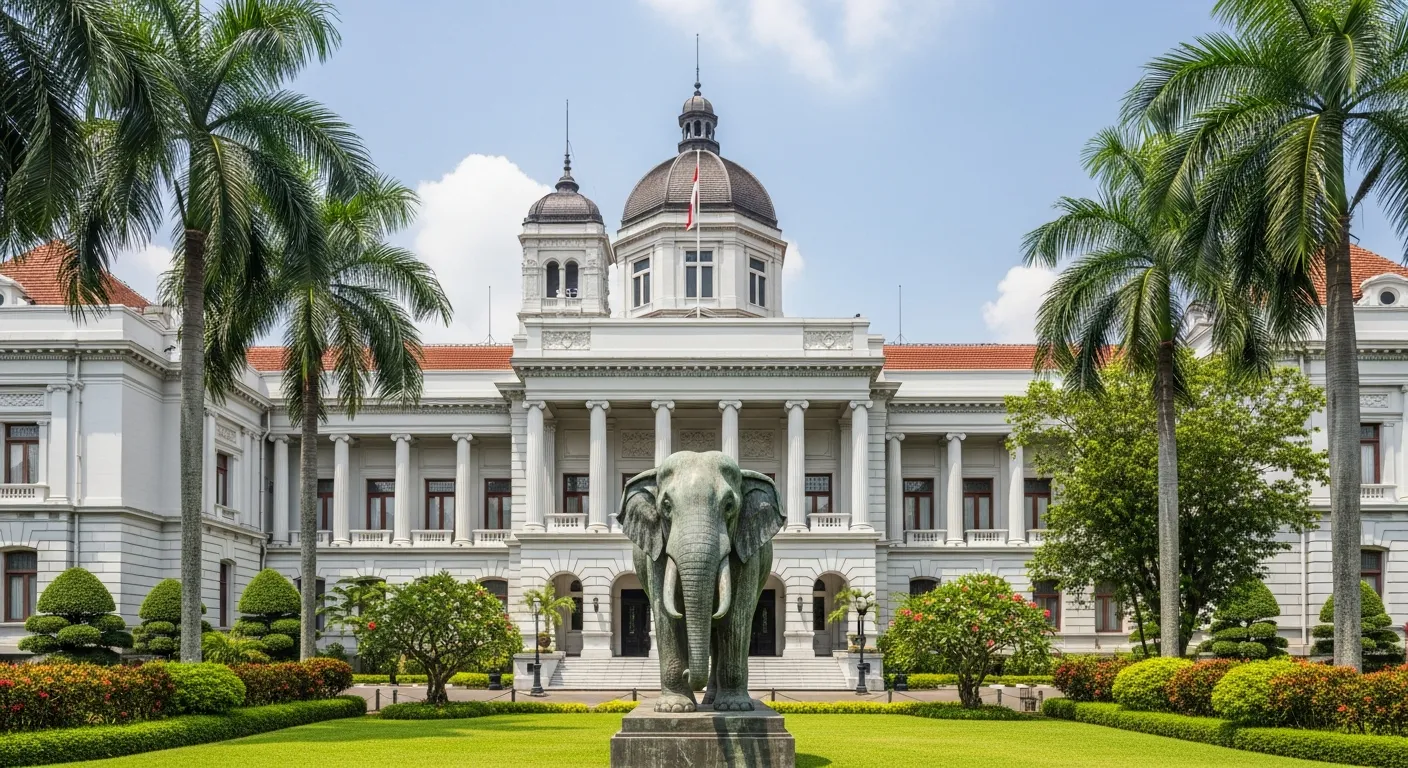
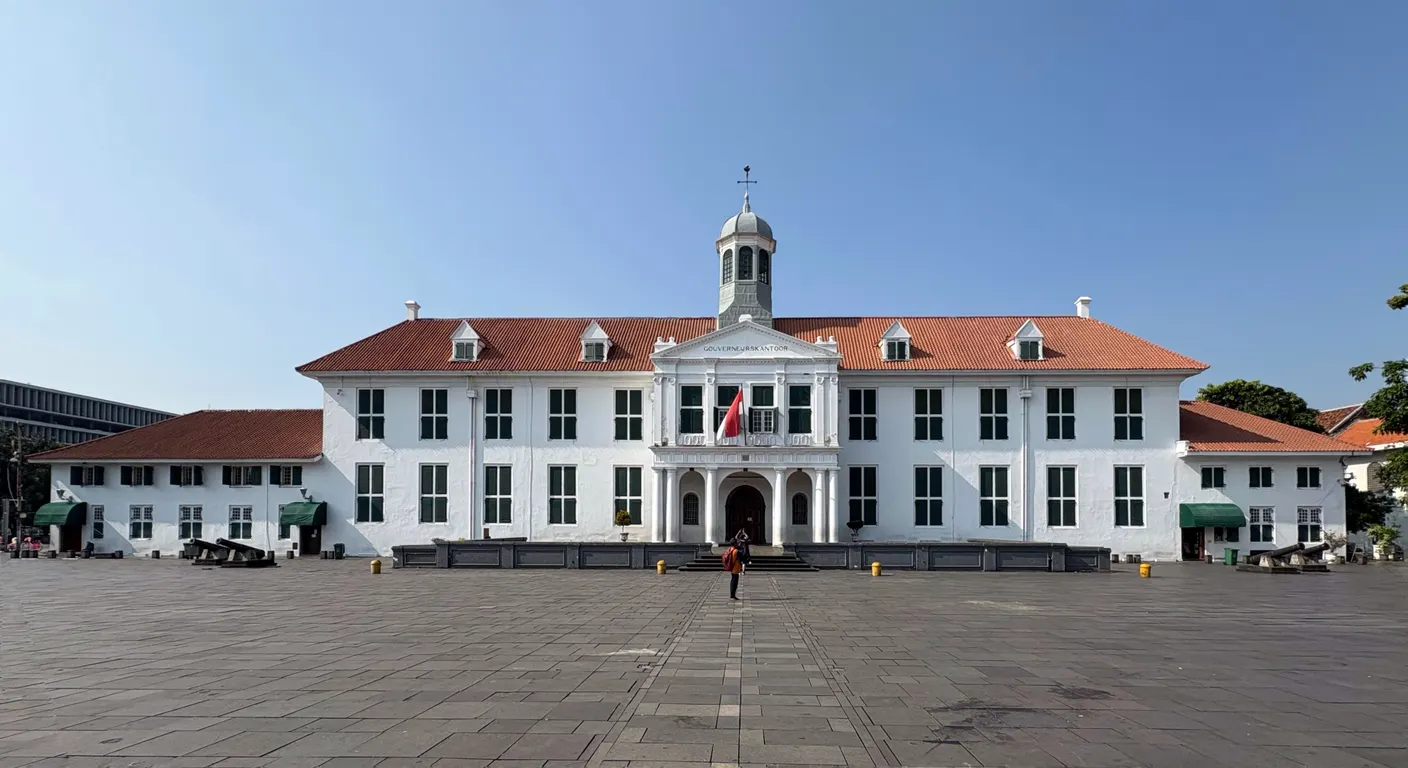
The Jakarta History Museum occupies the Stadhuis, the city hall of Dutch Batavia. A first town hall stood here from 1627; the present building was completed in 1710 and inaugurated by Governor-General Abraham van Riebeeck as an administrative seat of the Dutch East India Company (VOC). Its domed cupola and proportions are often compared to Amsterdam's Paleis op de Dam. After serving as city hall until 1913, it housed the West Java governor's office and a military command before Governor Ali Sadikin opened it as the Jakarta History Museum on 30 March 1974.
The building's past is part of the visit. Beneath the front portico are cramped cells that served as a prison until 1846, and the courtroom recalls the Stadhuis's role in colonial justice. Prince Diponegoro, leader of the Java War against Dutch rule, was held here in 1830 before his exile to Manado, and a room in the museum is named after him. The museum closed in 2011 for a conservation programme carried out with Dutch government support from 2012 and completed in February 2015, which added a room on the Jakarta Old Town Reborn revitalisation plan.
The collection of around 23,500 objects follows Jakarta from prehistoric finds and the Tarumanegara kingdom — represented by a replica of the Tugu inscription, whose original is in the National Museum — through Sunda Kelapa, Jayakarta and the VOC city of Batavia. Rooms are arranged by period, including the Tarumanegara, Jayakarta, Fatahillah, Sultan Agung and M.H. Thamrin rooms. The museum is particularly known for Betawi-style and Dutch colonial furniture from the 17th to 19th centuries, alongside maps, paintings, ceramics, weapons and inscriptions.
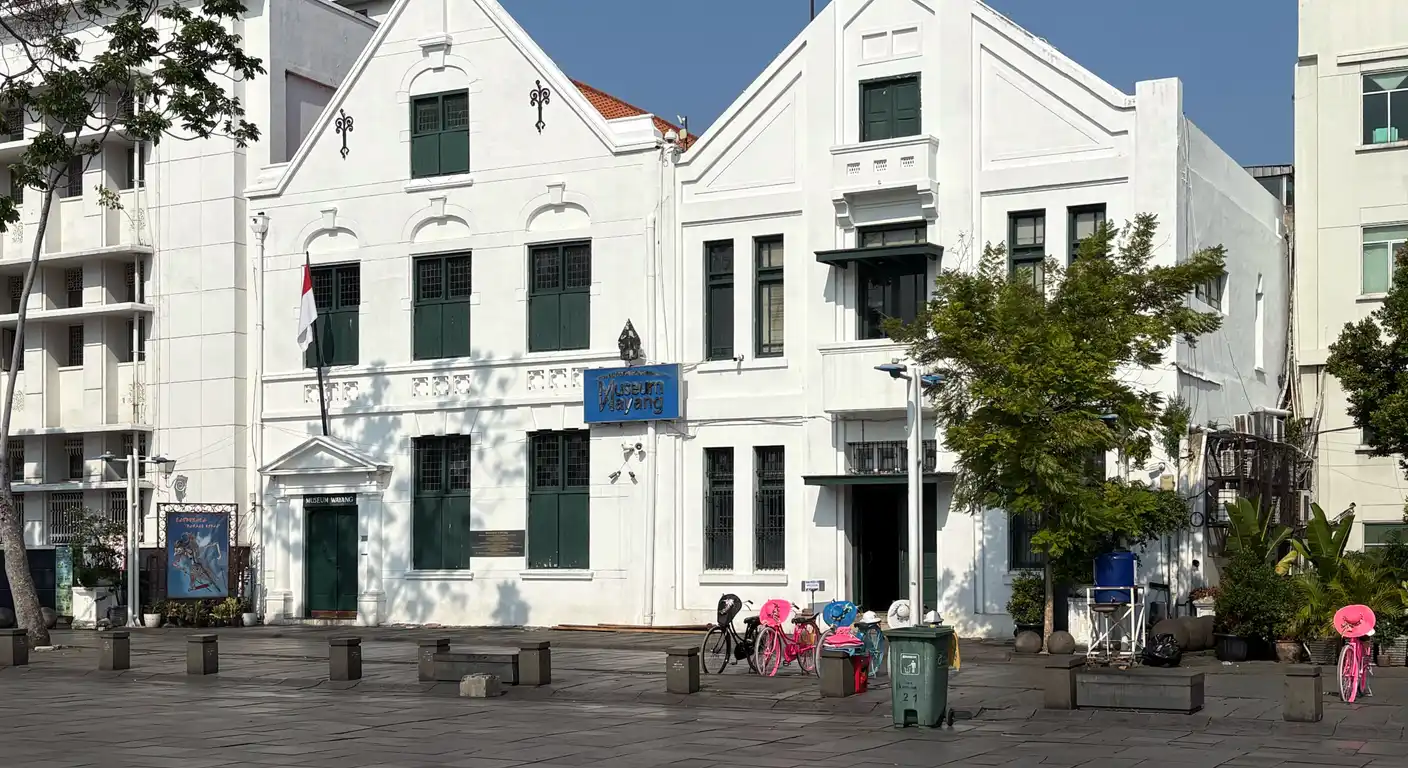
The museum faces Fatahillah Square at the heart of Kota Tua, alongside the Wayang Museum and the Fine Art and Ceramics Museum. Si Jagur, a Portuguese bronze cannon whose clenched-fist ornament inspired local fertility beliefs, is part of the museum's collection. Since May 2025 the museum stays open until 8:00 PM on Saturdays and Sundays, making a late-afternoon visit followed by the lit-up square a popular plan. Entry remains inexpensive — Rp10,000 on weekdays and Rp15,000 at weekends for adults, or Rp50,000 for foreign visitors.
Best for: History Enthusiasts · Architecture fans · First-timers
How long do you need at Jakarta History Museum?
Allow 1–1.5 hours. The essentials of Batavia's old city hall, from the square outside to the cells below and the furniture rooms upstairs. Follow the stops in order:
- 1
Fatahillah Square and façade
📍 Fatahillah Square
Take in the 1710 façade and cupola, then look for the Si Jagur cannon before entering.
- 2
Chronology rooms
📍 Ground floor
Walk from prehistory and the Tarumanegara room — with the Tugu inscription replica — to Jayakarta and the VOC city.
- 3
Underground cells
📍 Beneath the front portico
The low ceilings and small openings show the harsh conditions for prisoners before 1846.
- 4
Furniture and Diponegoro rooms
📍 Upper floor
Look at the carved Betawi and colonial furniture and the room associated with Prince Diponegoro's 1830 detention.
What are the must-see works at Jakarta History Museum?
5 highlights that define the collection: Underground prison cells, Tugu Inscription (replica), Prince Diponegoro's room and more.
Underground prison cells
VOC-era Stadhuis · used until 1846
📍 Beneath the front portico
Low, cramped cells under the city hall where prisoners were held during the colonial period — one of the most sobering spaces in Kota Tua.
Tugu Inscription (replica)
Tarumanegara kingdom · 5th century (replica)
📍 Tarumanegara room
A replica of the Sanskrit stone inscription of King Purnawarman found in the Tugu area of North Jakarta, evidence of the ancient Tarumanegara kingdom near the Jakarta coast. The original is in the National Museum.
Prince Diponegoro's room
Java War era · 1830
A room associated with the detention of Prince Diponegoro, the Javanese leader of the Java War, who was held in the Stadhuis in 1830 before being exiled to Manado.
Betawi and Dutch colonial furniture
Batavia · 17th–19th century
Carved cabinets, chairs and tables that make up what is considered the richest collection of Betawi-style furniture, showing how European and local craftsmanship merged in Batavia.
Si Jagur cannon
Portuguese bronze cannon · colonial era
📍 Fatahillah Square / museum grounds
A heavy bronze cannon whose breech ends in a clenched fist with the thumb between the fingers — a gesture that gave rise to local fertility beliefs. It has been displayed at Fatahillah Square since the 1970s.
Collections and highlights
- • Prehistoric finds from the Jakarta area
- • Tarumanegara and Sunda Kelapa history, including the Tugu inscription replica
- • VOC and Dutch colonial Batavia
- • Betawi and colonial furniture, 17th–19th century
- • Historic maps, paintings and ceramics
- • Underground prison cells of the Stadhuis
- • Si Jagur cannon
Tips for visiting Jakarta History Museum
- 1.
Best time to visit
Visit Tuesday to Friday morning for the calmest experience, or on a Saturday or Sunday afternoon to combine the museum with the square after dark.
- 2.
Crowds & busy periods
Fatahillah Square is packed at weekends and on holidays; weekday mornings bring school groups but are calmer overall.
- 3.
Tickets & booking
No advance booking needed; buy at the ticket counter on arrival. Payment is by e-money card such as JakCard, and staff can help visitors paying cash.
- 4.
Food & cafés nearby
Cafés and street-food stalls around Fatahillah Square and along Kali Besar.
- 5.
Accessibility
An early-18th-century building with steps and upper floors; step-free access is limited — ask staff on arrival.
- 6.
Photography rules
Casual photography is common in the rooms and courtyard; avoid flash near paintings and follow any room signage.
How do you get to Jakarta History Museum?
- train KRL Commuter Line to Jakarta Kota station — about a 5-minute walk to Fatahillah Square
- bus TransJakarta Corridor 1 (Blok M–Kota) to the Kota terminus beside Jakarta Kota station
- metro MRT Jakarta to Bundaran HI, then TransJakarta Corridor 1 north to Kota (the MRT does not yet reach Kota Tua)
- walk The Wayang Museum and Fine Art and Ceramics Museum are across Fatahillah Square, a 1–2 minute walk
Address: Jl. Taman Fatahillah No. 1, Pinangsia, Taman Sari, West Jakarta 11110, Indonesia
Jakarta History Museum: frequently asked questions
How much does the Jakarta History Museum cost?
Under Jakarta's 2024 regional regulation on user fees, adults pay Rp10,000 from Tuesday to Friday and Rp15,000 on Saturdays and Sundays. Children and school or university students pay Rp5,000, and foreign visitors pay Rp50,000. Tickets are sold at the counter, where payment is by e-money card such as JakCard; staff help visitors who only have cash.
What are the opening hours?
The museum opens Tuesday to Friday from 9:00 AM to 3:00 PM and on Saturday and Sunday from 9:00 AM to 8:00 PM; it is closed on Mondays. The weekend evening hours began in May 2025 as part of a Jakarta government programme that also covers the Wayang Museum and the Fine Art and Ceramics Museum. Hours can change around major holidays such as Eid.
Is it the same as Museum Fatahillah?
Yes. The official name is Museum Sejarah Jakarta (Jakarta History Museum), but it is widely called Museum Fatahillah after the square it faces, and sometimes the Batavia Museum. The building itself is the former Stadhuis, or city hall, of Dutch Batavia, which the Jakarta government opened as a history museum on 30 March 1974.
What are the highlights?
The building is the main exhibit: a VOC-era city hall completed in 1710, with cramped prison cells beneath the front portico that were used until 1846. Inside, look for the replica Tugu inscription from the Tarumanegara kingdom, rooms arranged by period from prehistory to the colonial city, the room associated with Prince Diponegoro's detention in 1830, and fine Betawi and Dutch colonial furniture.
Who can visit for free?
Jakarta's city museums, including this one, offer free entry from Tuesday to Friday to seniors, visitors with disabilities and pupils holding a Kartu Jakarta Pintar (KJP) card, on showing ID or the card. The concession does not apply at weekends or on national holidays. Everyone else pays the standard Rp10,000–15,000 fee, or Rp50,000 for foreign visitors.
How do I get there?
Take the KRL Commuter Line to Jakarta Kota station; the museum is about a five-minute walk north across Fatahillah Square. TransJakarta Corridor 1 (Blok M–Kota) ends at the Kota stop beside the station. The MRT does not yet reach Kota Tua, so from MRT Bundaran HI change to TransJakarta Corridor 1. Grab and Gojek can drop off near Fatahillah Square.
How long should I spend here?
Allow about 60 to 90 minutes for the ground-floor chronology rooms, the underground cells and the upper-floor furniture and Diponegoro rooms. The Wayang Museum and the Fine Art and Ceramics Museum face the same square, so it is easy to spend half a day in Kota Tua visiting two or three museums and the historic streets around them.
When is the best time to visit?
Weekday mornings are quietest and slightly cheaper. On Saturdays and Sundays the museum stays open until 8:00 PM, so a late-afternoon visit followed by the lit-up Fatahillah Square is a popular plan, though the square itself gets very crowded at weekends. Jakarta's midday heat makes early or late visits more comfortable.
Is Jakarta History Museum open on Mondays?
No — Jakarta History Museum is closed every Monday. It is open Tuesday to Friday: 9:00 AM – 3:00 PM; Saturday and Sunday: 9:00 AM – 8:00 PM. Plan a different museum for that day, and check the official website for holiday changes.