Siwalima Museum
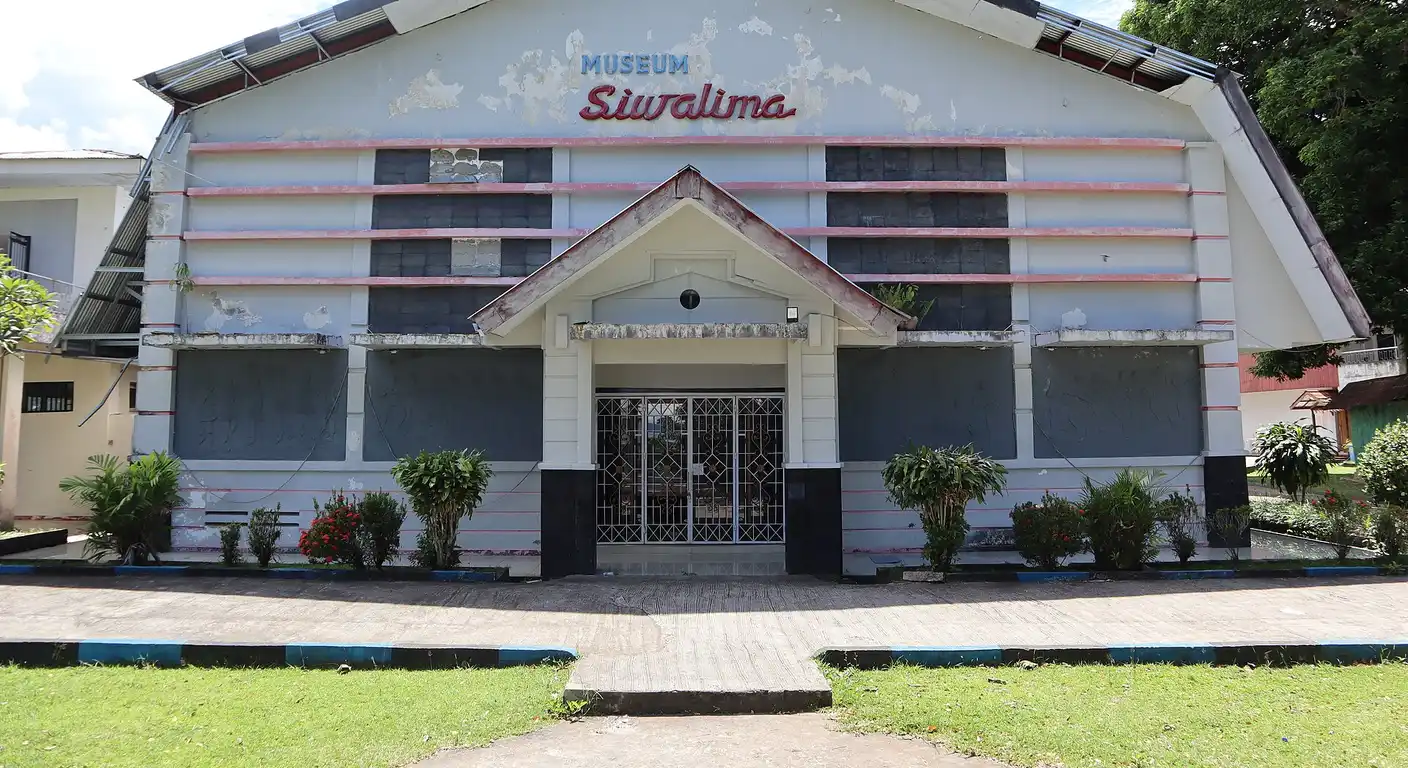
Photo: Zhilal Darma · CC BY-SA 4.0
Quick answer
Siwalima Museum is the provincial museum of Maluku, set on a hill overlooking Ambon Bay in Taman Makmur, Amahusu, about 5 km from central Ambon. Open Monday to Thursday: 8:00 AM – 4:00 PM; Friday: 8:00 AM – 4:30 PM; Saturday: 9:00 AM – 4:00 PM; Sunday: 11:00 AM – 4:00 PM. Admission: Rp5,000 per person. Allow 1–1.5 hours.
Visitor information last reviewed 22 October 2026. Check the official museum site for current details.
Siwalima Museum at a glance: hours, tickets and time needed
| Opening hours | Monday to Thursday: 8:00 AM – 4:00 PM; Friday: 8:00 AM – 4:30 PM; Saturday: 9:00 AM – 4:00 PM; Sunday: 11:00 AM – 4:00 PM |
|---|---|
| Closed | on public holidays |
| Admission | Rp5,000 per person |
| Booking | Tickets usually available on the day |
| Time needed | 1–1.5 hours |
| Best time to visit | Weekday mornings, when the museum opens at 8 AM; on Saturday it opens at 9 AM and on Sunday only at 11 AM. |
| Getting there | Taxi: Taxi or ride-hail from central Ambon to Taman Makmur, Amahusu, in Nusaniwe district — about 5 km |
| Address | Taman Makmur, Amahusu, Nusaniwe, Ambon, Maluku, Indonesia |
| Official website | museum.kemenbud.go.id |
Checked 2026-10-22 against the official website. Prices and hours change — confirm before you travel.
What is Siwalima Museum known for?
Siwalima Museum grew out of a 1971 exhibition of objects collected by the Protestant Church of Maluku (Gereja Protestan Maluku), which were then handed to the regional office of the Department of Education and Culture. Collections from Southeast Maluku seized from two foreign researchers in 1972–73 followed. On 8 November 1973 the Director General of Culture, Ida Bagus Mantra, accompanied by the Director of Museums, Amir Sutarga, opened the provincial museum at Karang Panjang in Ambon under the name Siwalima, and it was formally inaugurated on 26 March 1977. The museum is owned by the Maluku provincial government and run by its Education and Culture Office.
The name joins siwa (nine) and lima (five), recalling the two traditional groupings of Maluku society: Patasiwa and Patalima in Central Maluku, Ursiw and Urlim in the south-east. The museum's present site is in Taman Makmur, Amahusu, in Nusaniwe district, on a hill facing Ambon Bay about 5 km from the city centre, and visitors are greeted at the entrance with the words Usu mae upu, 'please come in'. It began with collections of Maluku culture and customary objects, and over the years added three exhibition halls.
More than 5,300 objects are registered in ten categories, from geological and biological specimens to ethnography, archaeology, history, coins and seals, manuscripts, ceramics, technology and fine art. About 2,000 of them are carved ethnographic statues, too many to display at once. The halls cover Indonesian wedding costumes with a focus on Maluku; Maluku history and culture, with traditional houses, customary dress, farming tools, weapons, ceremonial objects, old coins and jars; and the sea and its transport, where whale and crocodile skeletons are shown. Much of the material comes from Maluku Tenggara Barat, Maluku Barat Daya and Central Maluku, including Ming-dynasty ceramics from the southern islands.
The museum opens Monday to Thursday from 8 AM to 4 PM, Friday until 4:30 PM, Saturday from 9 AM and Sunday from 11 AM, closing at 4 PM, and it is closed on public holidays. Admission is Rp5,000. Guided tours cover the whole museum, and music, dance and weaving demonstrations can be arranged on request. The buildings have needed repairs in the past — in 2021 the museum reported roof and ceiling damage and sought funds for its main exhibition building and maritime hall — so ask whether any rooms are closed before making the trip out to Amahusu.
Best for: History Enthusiasts · Families · First-timers
What are the must-see works at Siwalima Museum?
4 highlights that define the collection: Ethnographic statues of Maluku, Whale skeleton, Ming-dynasty ceramics and more.
Ethnographic statues of Maluku
Peoples of Maluku · carved ritual and ancestral figures
Around 2,000 carved statues form the core of the ethnographic collection; only a selection can be displayed at any time, and others have been shown through photographs.
Whale skeleton
Marine fauna of the Maluku seas
📍 Maritime hall
A whale skeleton displayed with a crocodile skeleton in the hall devoted to Maluku's seas and traditional transport.
Ming-dynasty ceramics
China · Ming dynasty
Chinese trade ceramics that reached the southern Maluku islands, collected in Maluku Tenggara Barat and Maluku Barat Daya.
Indonesian wedding costumes
Maluku and other regions of Indonesia
📍 Wedding costume hall
A gallery of bridal dress from across the archipelago, with particular attention to the wedding traditions of Maluku.
Collections and highlights
- • Carved ethnographic and ritual statues
- • Traditional dress and wedding costumes
- • Weapons, farming tools and ceremonial objects
- • Old coins and trade jars
- • Ming-dynasty ceramics
- • Maritime collection, including whale and crocodile skeletons
- • Geological and biological specimens
Tips for visiting Siwalima Museum
- 1.
Best time to visit
Weekday mornings, when the museum opens at 8 AM; on Saturday it opens at 9 AM and on Sunday only at 11 AM. Closed on public holidays.
- 2.
Tickets & booking
Rp5,000 at the entrance. No online booking is published; contact the museum in advance if you would like a guided tour or a music, dance or weaving demonstration.
- 3.
Accessibility
No accessibility information is published; the museum is on a hillside, so contact it before visiting if you need step-free access.
- 4.
Photography rules
No photography policy is published. Ask staff before photographing, especially ancestral statues and ceremonial objects, and keep flash off near textiles.
How do you get to Siwalima Museum?
- taxi Taxi or ride-hail from central Ambon to Taman Makmur, Amahusu, in Nusaniwe district — about 5 km
- car By hired car or motorbike from the city centre; the museum sits on a hill facing Ambon Bay, about 5 km from central Ambon
Address: Taman Makmur, Amahusu, Nusaniwe, Ambon, Maluku, Indonesia
Sources we checked
Visitor facts and history on this page come from these sources, checked on the dates shown.
- UPTD Museum Siwalima Provinsi Maluku — Sistem Registrasi Nasional Museum — Ministry of Culture of the Republic of Indonesia, checked 22 October 2026
- UPTD Museum Siwalima Provinsi Maluku — Wonderful Indonesia / Ministry of Tourism, checked 22 October 2026
- Museum Siwalima — Wikipedia (Bahasa Indonesia), checked 22 October 2026
- Museum Siwalima Ambon akan buka ruang pameran foto (4 February 2021) — ANTARA Ambon, checked 22 October 2026
Siwalima Museum: frequently asked questions
How much is the entrance fee for Siwalima Museum?
Admission is Rp5,000 per person, the rate listed for every opening day in the Ministry of Culture's national museum registry. Pay at the entrance; no online booking system is published. Guided tours of the whole museum are offered, and local music, dance or weaving demonstrations can be arranged on request, so ask about these when you arrive or contact the museum beforehand.
Where is Siwalima Museum and how do I get there?
The museum stands on a hill facing Ambon Bay in Taman Makmur, Amahusu, in Ambon's Nusaniwe district, about 5 km from the city centre. The easiest way there is by taxi, ride-hail, hired car or motorbike; ask for Museum Siwalima in Taman Makmur and agree a return trip if you are not driving yourself.
How long should I spend at Siwalima Museum?
Plan 1–1.5 hours for the highlights of Siwalima Museum. Add extra time for temporary exhibitions, the shop and the café.
What are the highlights of Siwalima Museum?
Look for the carved ethnographic statues — the museum holds about 2,000, more than it can show at once — the whale and crocodile skeletons in the maritime hall, traditional houses, customary dress, weapons and ceremonial objects in the Maluku history hall, old coins and trade jars, Ming-dynasty ceramics from the southern islands of Maluku, and the gallery of wedding costumes from across Indonesia.
Can I take photos inside Siwalima Museum?
The museum does not publish a photography policy. Ask staff before photographing inside, particularly near ancestral statues and ceremonial objects, which carry cultural meaning for Maluku communities, and keep your flash off near textiles and wedding costumes. The grounds on the hill look out over Ambon Bay.
What does the name Siwalima mean?
Siwalima combines siwa (nine) and lima (five), the names of the two traditional groupings of Maluku society — Patasiwa and Patalima in Central Maluku, and Ursiw and Urlim in Southeast Maluku. The words Usu mae upu, meaning 'please come in', greet visitors at the entrance, and the museum's collections reflect peoples from across the province.
Is Siwalima Museum open on Sundays?
Yes, but later than on other days. According to the Ministry of Culture's registry, the museum opens on Sunday from 11:00 AM to 4:00 PM Eastern Indonesia Time (WIT), on Saturday from 9:00 AM, and on weekdays from 8:00 AM, closing at 4:00 PM (4:30 PM on Fridays). It is closed on public holidays.
What are Siwalima Museum's opening hours?
Siwalima Museum is open Monday to Thursday: 8:00 AM – 4:00 PM; Friday: 8:00 AM – 4:30 PM; Saturday: 9:00 AM – 4:00 PM; Sunday: 11:00 AM – 4:00 PM, and closed on public holidays. Hours can change for holidays and events, so check the official website before you go.
Is Siwalima Museum free to visit?
No — standard admission is Rp5,000 per person.