Bung Karno Library and Museum
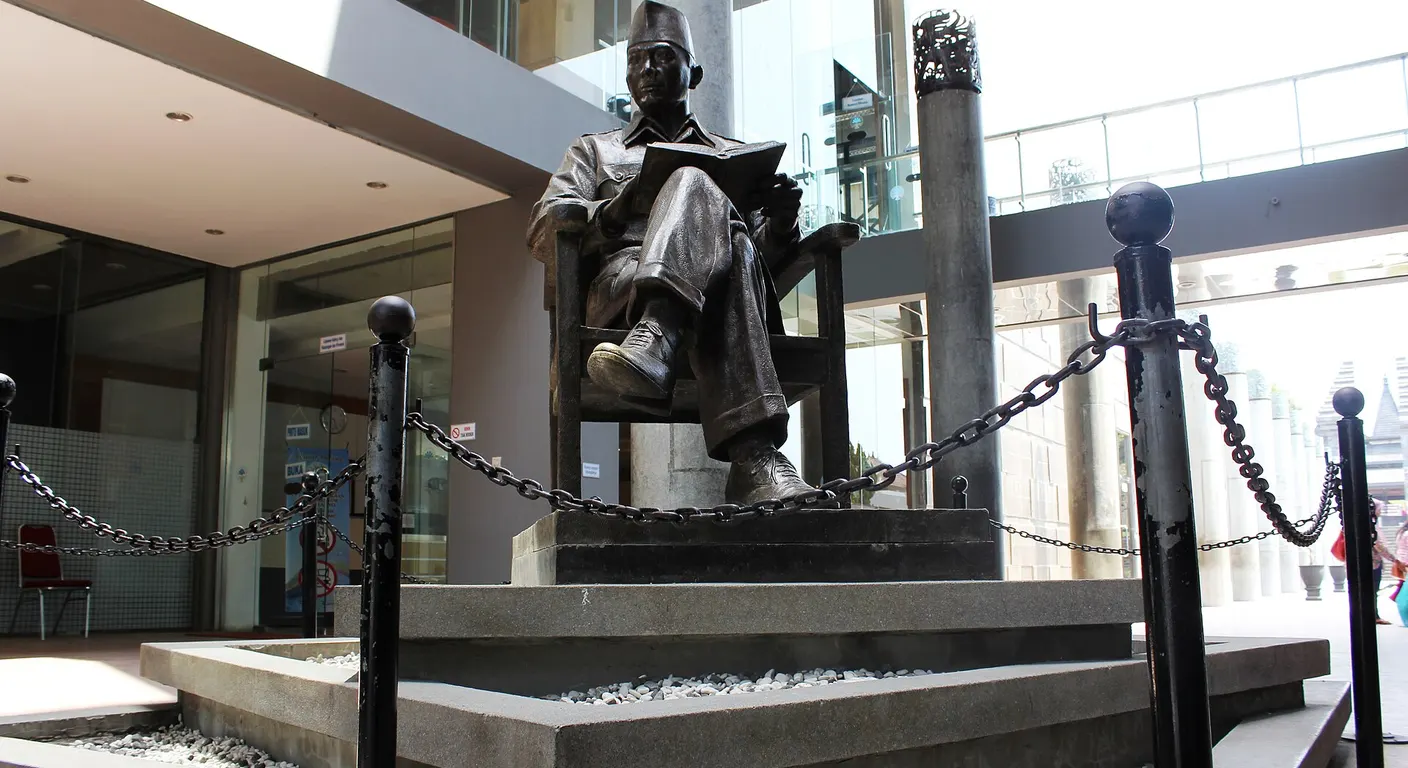
Photo: Perpusbk · CC BY-SA 4.0
Quick answer
Bung Karno Library and Museum in Blitar, Indonesia — the Bung Karno Library and Museum in Blitar is a National Library of Indonesia institution opened in 2004 beside the tomb of Sukarno, Indonesia's first president. Open Monday to Saturday: 8:00 AM – 8:00 PM; Sunday and national public holidays: 8:00 AM – 4:00 PM. Admission: free admission for all visitors. Allow 1–1.5 hours.
Visitor information last reviewed 22 October 2026. Check the official museum site for current details.
Bung Karno Library and Museum at a glance: hours, tickets and time needed
| Opening hours | Monday to Saturday: 8:00 AM – 8:00 PM; Sunday and national public holidays: 8:00 AM – 4:00 PM |
|---|---|
| Admission | Free admission for all visitors |
| Free access | Guided memorabilia tours are also free |
| Booking | Tickets usually available on the day |
| Time needed | 1–1.5 hours |
| Best time to visit | Monday to Saturday give the longest hours (until 8:00 PM); on Sundays and national holidays the library closes at 4:00 PM. |
| Getting there | Walk: The library stands in the same complex as the Bung Karno tomb on Jalan Kalasan, so visitors to the grave can walk straight in |
| Address | Jl. Kalasan No. 1, Blitar, East Java, Indonesia |
| Official website | perpusbungkarno.perpusnas.go.id |
Checked 2026-10-22 against the official website. Prices and hours change — confirm before you travel.
What is Bung Karno Library and Museum known for?
Sukarno, who proclaimed Indonesia's independence in 1945 and became its first president, died on 21 June 1970. President Suharto decided to bury him not near Bogor, as Sukarno had wished, but in Blitar, East Java, beside his mother Ida Ayu Nyoman Rai. The grave was turned into a mausoleum inaugurated in 1979 and became a major site of political and spiritual pilgrimage. The Bung Karno Library (Perpustakaan Proklamator Bung Karno), built with the support of the Blitar city government, was inaugurated on 3 July 2004 by his daughter, President Megawati Sukarnoputri, in the same complex on Jalan Kalasan.
The library is a technical unit of the National Library of Indonesia (Perpusnas), charged with collecting and managing literature about Bung Karno, as Sukarno is affectionately known. Its core collection brings together his own writings, works by others about him, books he read and writings by other national independence figures, alongside general, children's, reference and rare-book collections and a digital service, iSukarno. A large statue of Bung Karno seated and reading a book stands inside the building as a symbol of the library; the library's own photo caption says it weighs 8 tonnes, a nod to August, the month of independence.
The memorabilia hall is what makes this a museum. Visitors are greeted by the 'beating' portrait of Bung Karno: according to a popular myth, his heart seems to pulse when the painting is viewed from the side. Then come objects he often wore or used, including a jacket, peci cap, glasses, perfume, watch and pen, and the suitcase that accompanied him into exile. The collection counts 40 paintings, 504 photographs, five dioramas of the houses where he was exiled, five Bung Karno-series banknotes and eight personal attributes, and its catalogue includes the passport of Sukarno and Fatmawati, an Arrow shirt and a gold Sukarno stamp.
Entry is free, and so is the guided memorabilia tour, which lasts about an hour and can include storytelling and a documentary film about Bung Karno. The library opens daily: from 8:00 AM to 8:00 PM Monday to Saturday, and from 8:00 AM to 4:00 PM on Sundays and national public holidays. Institutions and organised groups must send a letter at least a week ahead stating group size, purpose and time. Dress neatly and politely, and do not eat, drink or smoke in the collection rooms. The library was conceived so that pilgrims to the tomb could also study Bung Karno's ideas, and the tomb is busiest around the anniversary of his death on 21 June.
Best for: History Enthusiasts · Budget Travellers · First-timers
What are the must-see works at Bung Karno Library and Museum?
5 highlights that define the collection: The 'beating heart' portrait of Bung Karno, Bung Karno's personal belongings, Dioramas of the exile houses and more.
The 'beating heart' portrait of Bung Karno
Portrait of Sukarno · memorabilia collection
📍 Entrance to the memorabilia hall
The painting that greets visitors to the memorabilia hall; a popular myth holds that, seen from the side, Bung Karno's heart appears to beat.
Bung Karno's personal belongings
Owned and used by Sukarno
📍 Memorabilia hall
Objects he often wore or used, including a jacket, peci cap, glasses, perfume, watch and pen, displayed with the suitcase that accompanied him into exile.
Dioramas of the exile houses
Memorabilia collection · five dioramas
📍 Memorabilia hall
Five dioramas of the houses where Sukarno lived in exile, used to tell the story of his years of banishment.
Passport of Bung Karno and Fatmawati
Sukarno and Fatmawati · realia collection
The passport of Sukarno and his wife Fatmawati, listed among the library's catalogued Sukarno realia alongside an Arrow shirt and a gold Sukarno stamp.
Statue of Bung Karno reading
Statue · library building
📍 Inside the library building
A large statue of Sukarno seated with a book, placed as a symbol of the library; the library's caption gives its weight as 8 tonnes, a reference to August, the month of independence.
Collections and highlights
- • Books by and about Bung Karno
- • 40 paintings, including portraits of Sukarno and his mother
- • 504 photographs
- • Dioramas of his exile houses
- • Personal belongings and attributes
- • Bung Karno-series banknotes and a gold stamp
- • General, children's and rare-book collections
- • Documentary films and storytelling
Tips for visiting Bung Karno Library and Museum
- 1.
Best time to visit
Monday to Saturday give the longest hours (until 8:00 PM); on Sundays and national holidays the library closes at 4:00 PM. The tomb next door is busiest around the anniversary of Sukarno's death on 21 June.
- 2.
Tickets & booking
Entry and the guided memorabilia tour are free for members and non-members alike. Institutions and groups must send a visit request letter at least one week ahead stating group size, purpose, time and a contact number.
- 3.
Accessibility
No accessibility information is published; contact the library's information line (0897 5555 300, WhatsApp) before visiting.
- 4.
Photography rules
The visitor rules for group visits forbid recording or copying the collections with any device, so ask staff before taking photos in the memorabilia hall. Eating, drinking and smoking are not allowed in collection and reading rooms.
How do you get to Bung Karno Library and Museum?
- walk The library stands in the same complex as the Bung Karno tomb on Jalan Kalasan, so visitors to the grave can walk straight in
- taxi Grab, Gojek or taxi to Jl. Kalasan No. 1, Blitar
Address: Jl. Kalasan No. 1, Blitar, East Java, Indonesia
Sources we checked
Visitor facts and history on this page come from these sources, checked on the dates shown.
- UPT Perpus Bung Karno Blitar (home page: Jam Layanan, contact) — Perpustakaan Proklamator Bung Karno (National Library of Indonesia), checked 22 October 2026
- Standar Pelayanan Tahun 2026 (No. B.126/9/JIP.01/II.2026, linked PDF) — Perpustakaan Proklamator Bung Karno (National Library of Indonesia), checked 22 October 2026
- Layanan Koleksi Memorabilia — Perpustakaan Proklamator Bung Karno (National Library of Indonesia), checked 22 October 2026
- Tata Tertib Pengunjung — Perpustakaan Proklamator Bung Karno (National Library of Indonesia), checked 22 October 2026
- Realia (catalogue of Sukarno objects) — Perpustakaan Proklamator Bung Karno (National Library of Indonesia), checked 22 October 2026
- Koleksi Lukisan — Perpustakaan Proklamator Bung Karno (National Library of Indonesia), checked 22 October 2026
- Peta Lokasi — Perpustakaan Proklamator Bung Karno (National Library of Indonesia), checked 22 October 2026
- Perpustakaan Proklamator Bung Karno — Wikipedia (Bahasa Indonesia), checked 22 October 2026
- Makam Soekarno — Wikipedia (Bahasa Indonesia), checked 22 October 2026
- File:Bungkarnomembaca.jpg (uploaded by the library, user Perpusbk) — Wikimedia Commons, checked 22 October 2026
Bung Karno Library and Museum: frequently asked questions
How much is the entrance fee for the Bung Karno Library and Museum?
Nothing. The library's 2026 service standards list no fee for its reading rooms, membership or the memorabilia service, including a guided tour of about an hour. Institutions and organised groups should send a letter requesting a visit at least a week ahead. The neighbouring tomb complex of Bung Karno is managed separately by the Blitar city government, which has charged its own small entry levy.
Where is the Bung Karno Library and Museum and how do I get there?
It is at Jl. Kalasan No. 1 in the city of Blitar, East Java, in the same complex as the tomb of Bung Karno, so pilgrims visiting the grave can walk straight in. From elsewhere in Blitar, take a Grab or Gojek ride or a taxi to Jalan Kalasan. The library's information line is 0897 5555 300 (WhatsApp).
How long should I spend at the Bung Karno Library and Museum?
Plan 1–1.5 hours for the highlights of Bung Karno Library and Museum. Add extra time for temporary exhibitions, the shop and the café.
What are the highlights of the Bung Karno Library and Museum?
The memorabilia hall opens with the famous 'beating' portrait of Bung Karno, whose heart is said to seem to pulse when seen from the side. Beyond are his jacket, peci cap, glasses, perfume, watch, pen and the suitcase that went with him into exile, five dioramas of his exile houses, 40 paintings, 504 photographs and his passport with Fatmawati.
Can I take photos inside the Bung Karno Library and Museum?
Be careful. The library's visitor rules for group visits forbid recording or copying the collections with any device, so ask staff before photographing anything in the memorabilia hall. The statue of Bung Karno seated with a book, the symbol of the library, makes a fine photo; check with staff first. Do not eat, drink or smoke in the collection rooms.
Is the library next to Bung Karno's tomb?
Yes. Sukarno died on 21 June 1970 and was buried in Blitar beside his mother, Ida Ayu Nyoman Rai; a mausoleum was inaugurated over the grave in 1979. The library, opened by his daughter, President Megawati Sukarnoputri, on 3 July 2004, stands in the same complex and was conceived so that pilgrims to the grave could also explore his ideas; crowds peak around the anniversary of his death.
What are Bung Karno Library and Museum's opening hours?
Bung Karno Library and Museum is open Monday to Saturday: 8:00 AM – 8:00 PM; Sunday and national public holidays: 8:00 AM – 4:00 PM. Hours can change for holidays and events, so check the official website before you go.
Is Bung Karno Library and Museum free to visit?
Yes — free admission for all visitors. Guided memorabilia tours are also free.